

3175x175(CURRENT).thumb.jpg.b05acc060982b36f5891ba728e6d953c.jpg)
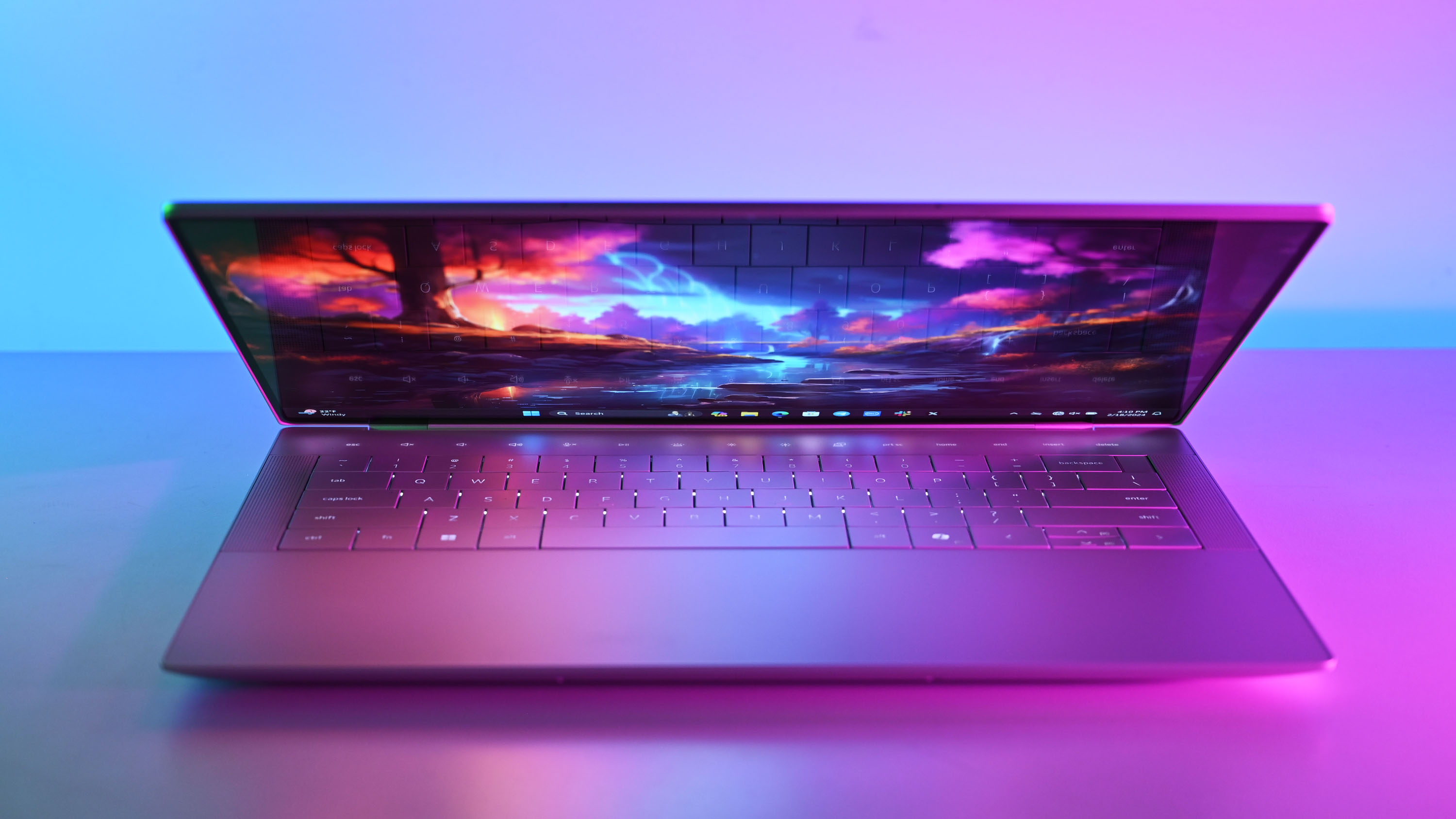
With Windows turning 40, we take a look at how it got here, the current state of the platform, and whether or not it will even be here in another 40 years.
Windows is celebrating its 40th anniversary today. On November 20, 1985, Microsoft released Windows 1.0, a graphical user interface that ran on top of Microsoft DOS. 40 years later, it's a platform that powers over 1.4 billion devices across the globe and is the desktop platform when you think of the "PC."
Popular versions like Windows 95, Windows XP, Windows 7, and Windows 10 have remained in people's hearts and cemented themselves in pop culture forever. These are the versions of Windows people will reference as "the good old days" when it comes to Windows. The children of the 90s and 00s who grew up with Windows will always remember it fondly.

Seem familiar?
(Image credit: Mauro Huculak)
Although the party started with Windows 1.0 in 1985, it wasn't until Windows 95 that Microsoft really found its footing when it came to UI design and feature set. 30 years later, and the version of Windows we use today still uses design cues that debuted with that release, from the Start menu and Taskbar, right down to window controls and file management.
It's actually insane to think that Windows hasn't really changed in all those years. Yes, the UI is prettier now and more fluid thanks to animations and sound design, but the core fundamentals of Windows remain the same. Even the desktop itself, where you can set a custom wallpaper and place icons, hasn't really changed at all since 1995.
Windows 8 was a pivotal moment
The one time Microsoft tried to change up the Windows UX, it was met with such backlash that just a couple of years later, they reverted pretty much all of the changes. Windows 8 will always stand out as the version of Windows that tried to be different, and its customer base almost unanimously rejected it.
Since then, Windows has felt different. Not in regard to how it functions, but how it exists on the market. It feels like the platform hasn't really tried to innovate much since, probably because it was burned so hard, it's afraid to even try. Windows 10 had a few bold visions with OneCore and the concept of running one OS across phones, PCs, and Xbox.
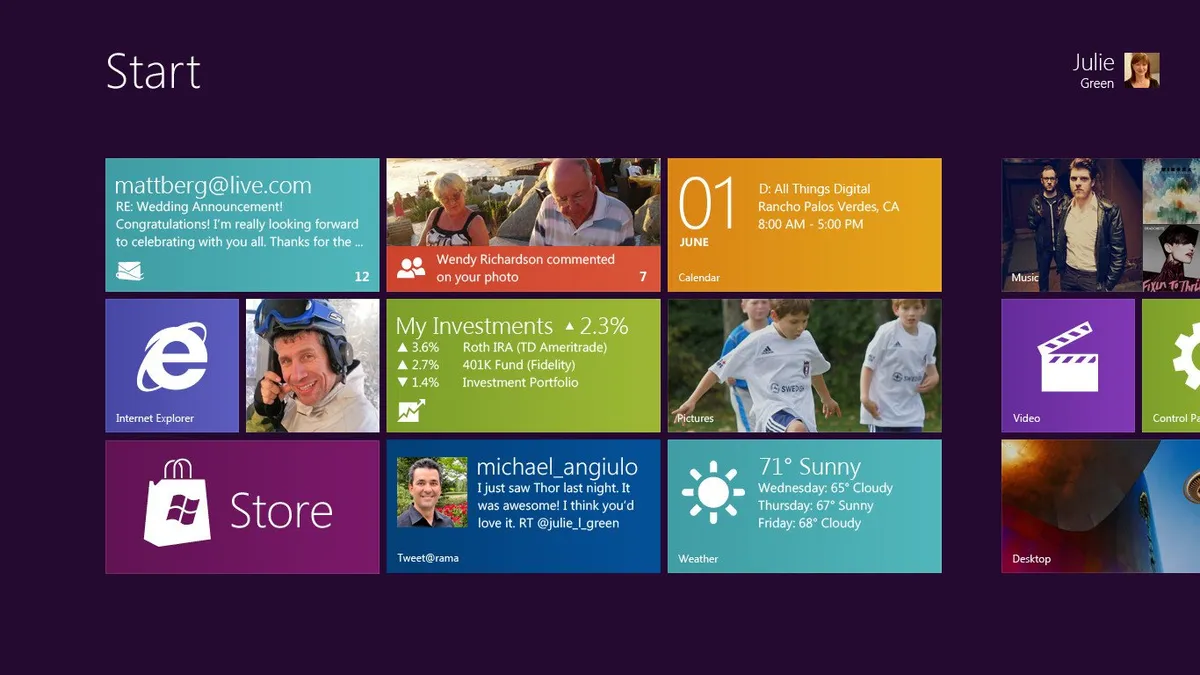
This is the last version of Windows (to ship) that felt truly new.
(Image credit: Microsoft)
But it was all ultimately abandoned in the end. Windows 10 ended its life as just another desktop operating system that did little to push the boat out in regard to platform or desktop UX innovation. Windows today is the same as it's always been, even with new form factors and computing paradigms coming along and shaking things up.
If you take a look at the numbers, it's clear that general usage of Windows has been declining over the last decade. More people than ever are using alternative platforms, like children in schools, meaning they're no longer growing up with Windows, which gives them less incentive to want to use it as an adult. A lot of schools now choose ChromeOS or even the iPad as the "computer" for the classroom.
And it's not just children, either. Even adults who were lifelong Windows users as kids have been looking over the fence ever since the Windows 8 debacle. A lot of people made the switch to a Mac in the early to mid-2010s, and again in 2020 when Apple launched the M1 Mac.
And that's a big problem for Windows, as over time it's slowly generated this reputation of being the lesser choice when it comes to Mac. Apple Silicon held up a mirror to the Windows ecosystem and revealed the ugly truth: there had been no innovation here in years.

The Surface Pro is one example where Microsoft used Windows to push innovation forward.
(Image credit: Daniel Rubino)
In fact, a lot of what Microsoft has been doing with Windows in the last decade feels reactionary. Windows 10's OneCore vision was a response to Apple's iOS running on both the iPad and iPhone, and Copilot+ PCs are just a response to Apple Silicon. For whatever reason, Microsoft is no longer first to even attempt to set the narrative when it comes to computing anymore.
The company has had some hits, mainly the Surface Pro, which has influenced the wider market and forced companies like Apple to reevaluate their products and software design. The iPad Pro today is a Surface Pro copycat, and Apple is even moving to change iPadOS so that it works more like a Windows 2-in-1.
But in regard to Windows as a software product, there really hasn't been much change, and that has limited Microsoft in what it can do or where it can take Windows. If it's not a PC, the company seems no longer interested in trying to build a version of Windows for it, and I'm worried that's putting a shelf life on the platform.
The wrong path?

This was the last time Windows felt exciting and innovative.
(Image credit: Windows Central)
There was a fleeting moment in 2019 when I thought Windows was about to enter a new era, with Windows 10X and the Surface Neo. This was the last time Windows felt truly exciting. It was a genuinely new version of Windows, built on a new modern platform, with a fresh new UX. And it was launching first on a new device, the Surface Neo.
But that moment really was fleeting, because not even a year later, the entire vision was abandoned. I can't lie, my enthusiasm for Windows faded almost entirely at that moment. When I realized Microsoft had chosen the future of Windows to be a continuation of the legacy platform that Windows 10 was based on, that was the moment I lost all faith.
With the launch of Windows 11, the company didn't announce anything new. Yes, it announced a new Start menu and some new productivity features, but Windows 11 is just a continuation of Windows 10, which was a continuation of Windows 7, after the debacle that was Windows 8, which was the last version of Windows that tried to be new. Windows 11 doesn't really do anything to push the boat out or attempt to be viable on new and interesting form factors.

Windows 11 was a continuation of the status quo.
(Image credit: Daniel Rubino | Windows Central)
Wearables are up and coming, whether that be computers you wear on your wrist or on your face, and Windows is nowhere to be seen. It's the same story with phones, which Microsoft abandoned early on in Windows 10's run. Windows today exists solely as a PC operating system, which is unfortunate if PCs are eventually replaced.
Now AI is risking everything
Now, with AI upon us, the idea of AI hardware is inevitable. A device that fits in your pocket, or around your neck, that runs an OS that handles AI capabilities is going to be a thing, and Windows will never be part of that picture. If something comes along that is viable enough to replace the PC, Windows is doomed.
I think Windows 11 is a great PC OS, though it seems the wider market doesn't agree. The platform has come under fire in recent months for focusing too much on AI and not enough on fundamental issues such as bloat, "enshittification", and bugs. I do think there are some major problems with Windows 11, but I also think it's still the best version of Windows yet.
Unfortunately, the mainstream market has already decided that Windows 11 is the latest "bad" version of Windows, right after Windows 8. If Windows XP, 7, and 10 are the good ones, Windows ME, Vista, 8, and now 11 are the bad ones. I don't think that's fair, but it is what it is.

Now Windows is all about AI, and people aren't happy.
(Image credit: Windows Central)
The timing is terrible, as Microsoft just announced that Windows 11 is evolving to become an agentic OS, one that is woven with AI designed to help you be more productive. This vision has been met with major backlash, but it doesn't look like it's going to stop.
This push has likely worsened Windows' reputation in the last few months, and I wouldn't be surprised if we get a "Windows 12" in the next couple of years that attempts to address some of the issues people have with Windows 11, though I suspect AI will always be part of the picture going forward.
AI can be an advantage if it's done right. It can't be all-encompassing like Microsoft is trying to make it right now. AI could be another Windows 8 moment, except done right if Microsoft is careful enough, but as things currently stand, it's being too heavy handed and turning people off.
And that makes me wonder, will Windows even be here in another 40 years? If AI does come along and shake up the definition of the computer, and Microsoft isn't able to execute on an AI vision that people like, then I think it might not be. Sure, Windows will likely always have a place in the enterprise, and I can fully see Windows evolving as an enterprise-first OS that runs in the cloud for most clients, but for consumers, I think Windows is at risk of falling out of fashion given its legacy roots and inability to change for the better.

(Image credit: Valve)
Not even PC gaming is a done deal for Windows anymore. With the likes of Valve and SteamOS pushing forward with their own PC gaming ecosystem, it's only a matter of time before more game devs begin taking that platform seriously, and it won't be long before the anti-cheat problem is solved, too.
Shoehorning AI into a legacy platform isn't innovation
AI can be a moment of innovation. Agentic AI is a promising look at the future of computing, but Microsoft's current implementation isn't resonating with customers. I think that stems back to Microsoft's inability to push the boat out when it comes to Windows design. It's trying to maintain the status quo while also introducing AI into the UX, and it's not working.
It feels like Microsoft is scrambling to add AI to what Windows is today, instead of worrying and thinking about what the future of computing as a whole might look like in the wake of AI. What Windows is today will be irrelevant in 10 years, so it's time to start making moves to ensure Windows stays relevant.
Shoehorning AI into the existing Windows product isn't innovation, it's adding more bloat on top of a platform that's already bloated. It also limits what's possible with agentic AI, being boxed in to a UX paradigm that's now 30 years old. AI is only going to work on Windows if it's built from the ground up with AI in mind.
That's why a "Windows 12" would have made perfect sense alongside this AI push. Microsoft should have pushed forward a radical, new, modern version of Windows alongside baked with its agentic AI efforts. A new Windows OS that is attempting to innovate and introduce new ways of computing.
(Image credit: Windows Central)
We've been stuck with the same interface since 1995, and while the legacy interface should always stick around for the people who prefer it, I also think it's time to try something new. With AI, this is possible, but it needs to be automatic and invisible. AI is at its best when we're not talking about it, and Microsoft would do well to remember that.
There's also nothing wrong with maintaining the status quo for people who want that, and also venturing out and trying something new alongside it. If Microsoft is serious about building an AI OS, it should branch off and go full ham into it. Leave the current version of Windows for people who want it, and go all-in on a separate, dedicated AI version of Windows that does push the boat out and innovate.
Ultimately, unless Microsoft is able to position Windows as a tool to innovate again, it's not going to be around in another 40 years. It needs to start modernizing the platform, debloating it of decades of legacy code, ensuring it runs better on low-end hardware, fixing Windows Update so that it's faster with less downtime, and just making the OS lighter and easier to use. That's the only way it's going to compete with more modern rivals like iPadOS, Chrome OS, and Android.
It think that if AI really is useful like Microsoft insists it is, people will flock to a new, modern version of Windows that's built from the ground up with AI at the heart. At least that way, everybody wins.
So, happy birthday, Windows. I can't wait to see how you navigate the next 10 years. Hopefully, your next moves will be one that prolongs you as a consumer product for decades to come.
Hope you enjoyed this news post. Feedback welcome.
Posted Friday 21 November 2025 at 3:59 am AEST (my time).
News posts... 2023: 5,800+ | 2024: 5,700+ | 2025 (till end of October): 5,009
- Matt
-
 1
1
Recommended Comments
There are no comments to display.
Join the conversation
You can post now and register later. If you have an account, sign in now to post with your account.
Note: Your post will require moderator approval before it will be visible.