

3175x175(CURRENT).thumb.jpg.b05acc060982b36f5891ba728e6d953c.jpg)
Don't know what a keyboard stabilizer is? You're about to find out.
While most people don't spend a lot of time thinking about the keys they tap all day, mechanical keyboard enthusiasts certainly do. As interest in DIY keyboards expands, there are plenty of things to obsess over, such as keycap sets, layout, knobs, and switches. But you have to get deep into the hobby before you realize there's something more important than all that: the stabilizers.
Even if you have the fanciest switches and a monolithic aluminum case, bad stabilizers can make a keyboard feel and sound like garbage. Luckily, there's a growing ecosystem of weirdly fancy stabilizers that can upgrade your typing experience, packing an impressive amount of innovation into a few tiny bits of plastic and metal.
What is a stabilizer, and why should you care?
Most keys on a keyboard are small enough that they go up and down evenly, no matter where you press. That's not the case for longer keys: Space, Enter, Shift, Backspace, and, depending on the layout, a couple more on the number pad. These keys have wire assemblies underneath called stabilizers, which help them go up and down when the switch does.
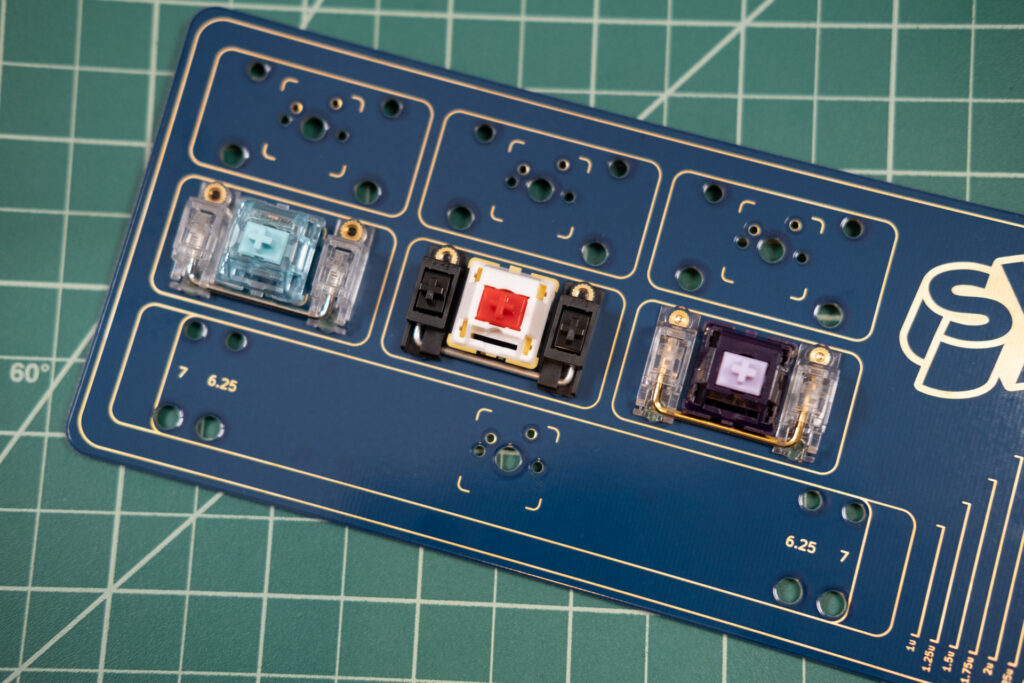
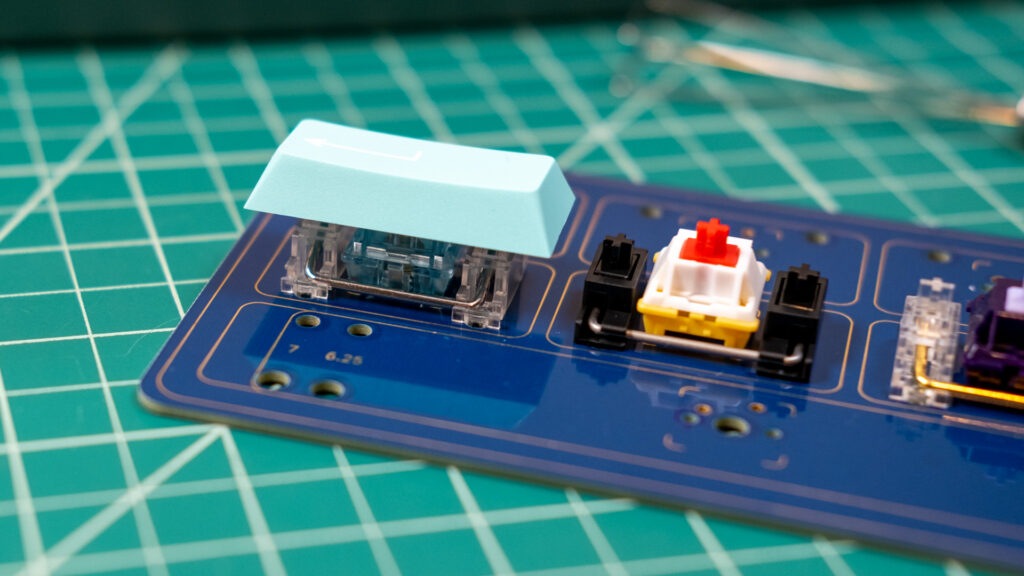
A cheap stabilizer will do this, but it won't necessarily do it well. Stabilizers can be loud and move unevenly, or a wire can even pop out and really ruin your day. But what's good? A stabilizer is there to, well, stabilize, and that's all it should do. It facilitates smooth up and down movement of frequently used keys—if stabilizers add noise, friction, or wobble, they're not doing their job and are, therefore, bad. Most keyboards have bad stabilizers.
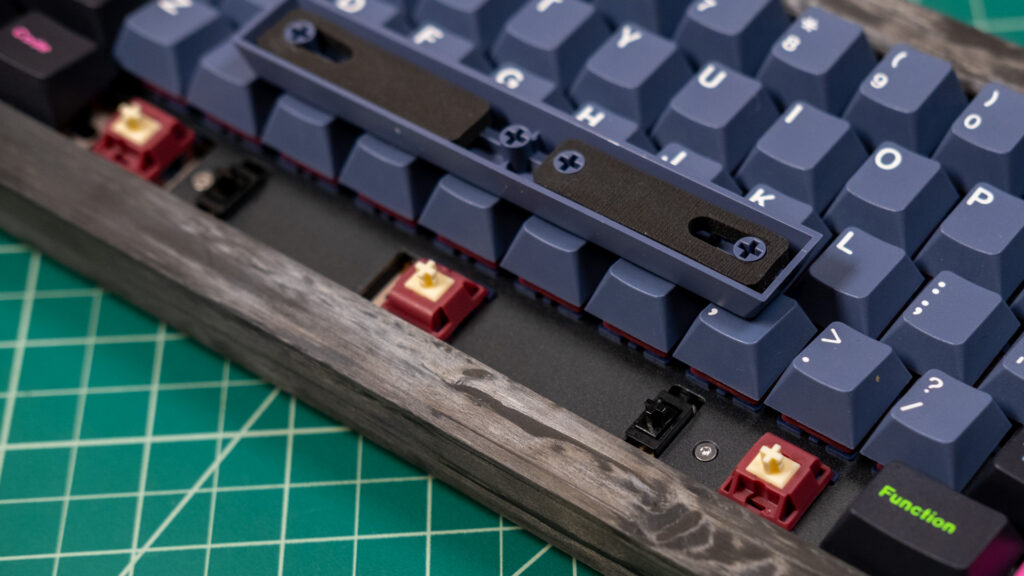
Like switches, most stabilizers are based on the old-school Cherry Inc. designs, but the specifics have morphed in recent years. Stabilizers have to adhere to certain physical measurements to properly mount on PCBs and connect to standard keycaps. However, designers have come up with a plethora of creative ways to modify and improve stabilizers within that envelope. And yes, premium stabilizers really are better.
A world of options
The stabilizers in most retail boards aren't anything special—they're just knock-offs of the classic Cherry designs that sound and perform poorly. A modest upgrade might be the venerable GMK screw-in stabilizer. GMK stabilizers are produced from the original Cherry molds, so they're compact and inexpensive, and they fit well in almost all boards. But there is an even higher echelon of luxury available.
Some stabilizers make fairly minor changes to mounting and internal geometry to great effect. For example, Zeal V2 Stabilizers look like the classic Cherry variety, but they have clear housings, beefed-up mounting hardware, vintage-style "pre-clipped" sliders, and snazzy gold-anodized hardware (which you will admittedly almost never see).
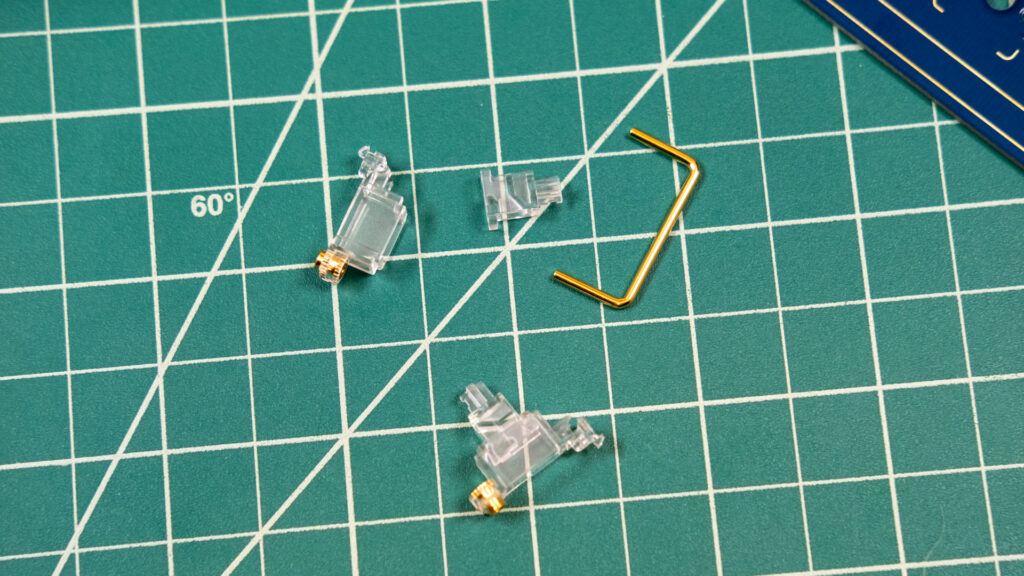
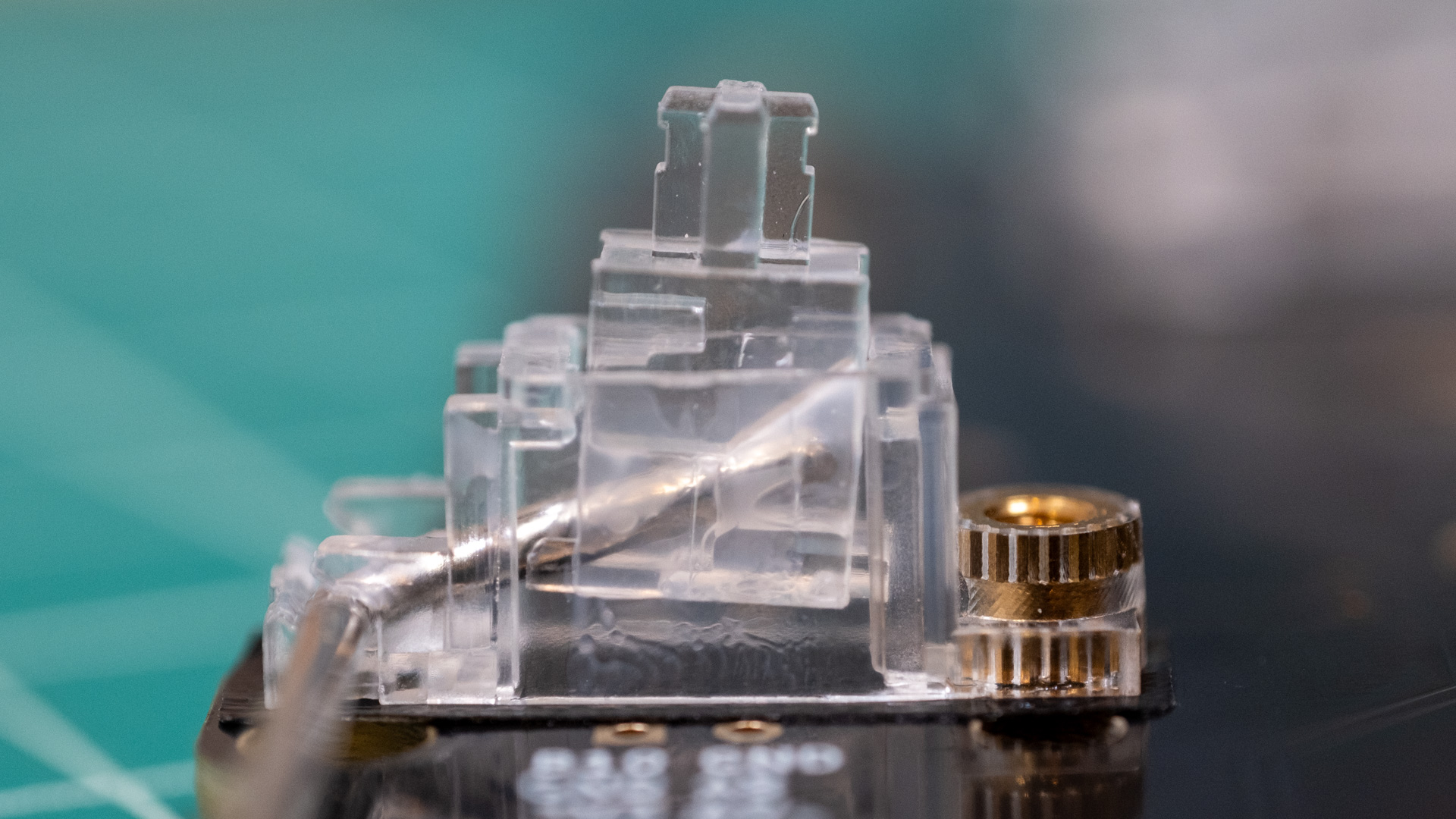
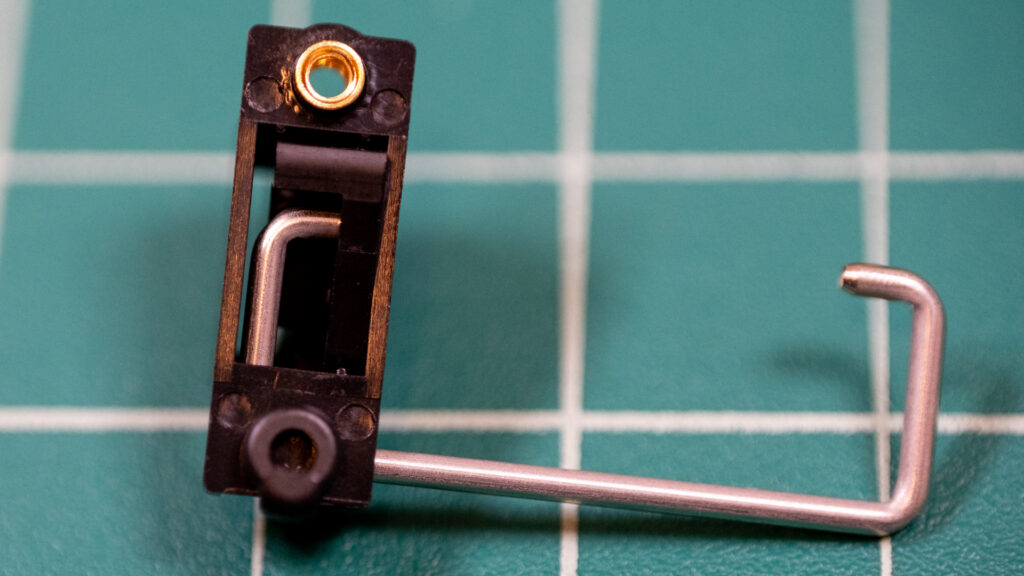
Looking for more innovation? Some stabs use multiple materials in pursuit of better performance. Swagkeys Knight stabilizers (top image) use a double-shot mold to offer polycarbonate plastic on the exterior with a softer silicone internal surface where the wires touch. Another designer, Wuque Studio, has versions of its stabilizer with a similar internal silicone surface or one with the silicone layer on the metal wire. And there are keyboard people who believe one approach or the other is clearly superior.
There are also some newer takes on key stabilization that eschew the traditional stem shape. Take, for example, the Typeplus x YiKB stabs with their "chiral" housing—instead of having identical left and right housings, the left and right sides are mirror images. The wires end in small hooks that lock them into the sliders. This design prevents wires from popping out and is more friendly to under- or over-lubrication. They're also made from a stronger polyketone thermoplastic, whereas most stabilizers are ABS or polycarbonate.
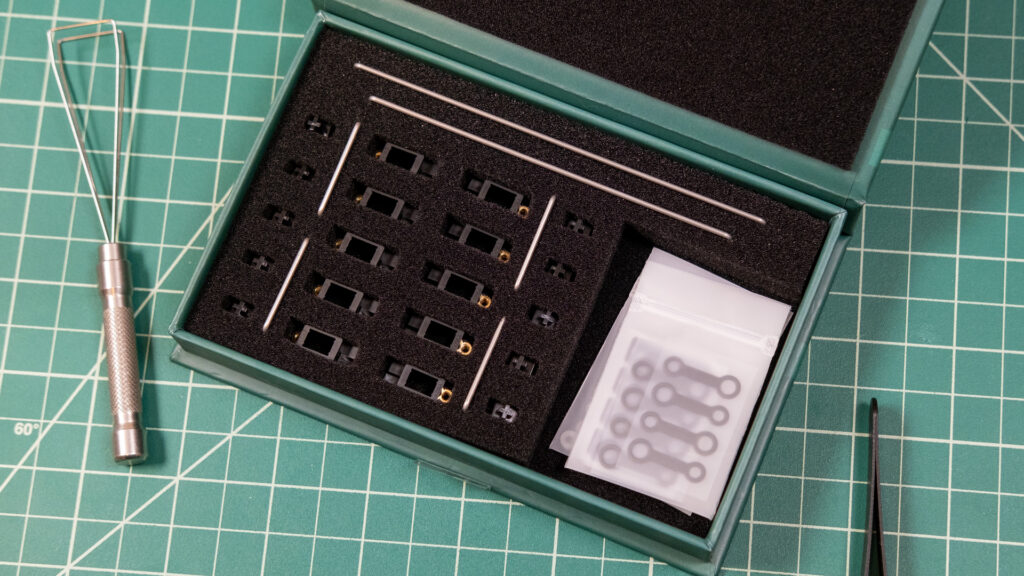
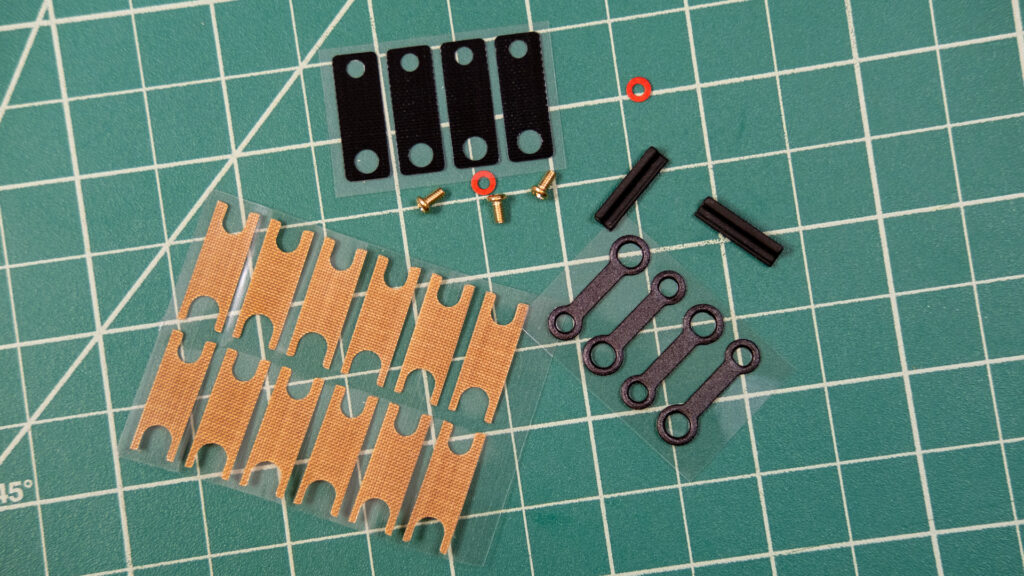
The Typeplus kit is also an example of all the fiddly little accessories that come with fancy stabilizers (and some of the best packaging I've ever seen for a product that costs under $20). There are washers for the screws, shims for thinner PCBs, and Teflon landing pads for the sliders. It's common to see a whole range of mounting hardware accessories included with fancy stabilizers, allowing for intricate customization.
This is just scratching the surface—stabilizers come in more shapes, colors, and styles than we could reasonably cover here. And they're all superior to the cheap parts used in the average retail mechanical keyboard.
More art than science
Buying a cleverly designed set of stabilizers for a keyboard is a good start, but you then have to install them correctly. Stabilizers are the "inner-most" component, sandwiched between the PCB and the switch plate. If the keyboard doesn't exist yet because you're building from a custom board from a kit, great—install the stabilizers first. Forgetting the stabilizers is a mistake you only make once.
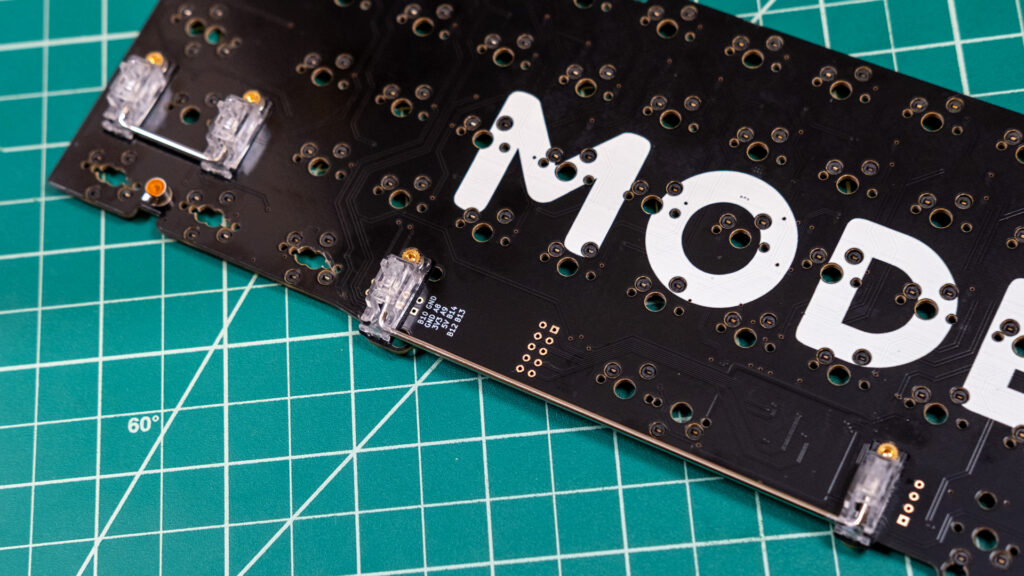
Everyone has their own way of tuning stabilizers, some of which may be little more than superstition. Maybe you want to use foam landing pads or wire guides, check every wire for warping in just the right way, or apply a preferred industrial lubricant to the wires. Some people even use different kinds of lubricant for plastic-plastic versus plastic-metal junctions. However arduous the plan, it's worth the time if you get good results that save you from an annoying rattle.
Replacing stabilizers (or going back to install them because you forgot) means completely disassembling the board, and that's particularly annoying if the switches are soldered in. In that case, you'll have to spend a few grueling hours with a desoldering iron to get to the stabilizers, which we do not recommend. Modern mechanical keyboards with hotswap switches make this much easier.
Like many hobbyists, keyboard fans have been hit hard by new US tariffs. Most custom keyboards and components are manufactured overseas and imported, and the import charge for a full kit can run into hundreds of dollars. Stabilizers aren't immune to that—GMK stabilizers come from Germany, Zeal is in Canada, and almost everything else is shipping straight from China.
Still, a good-quality set of stabilizers, properly installed and lubricated, is probably the best upgrade you can make to a mechanical keyboard.
Hope you enjoyed this news post. Feedback welcome.
Posted Saturday 27 September 2025 at 12:37 pm AEST (my time).
News posts... 2023: 5,800+ | 2024: 5,700+ | 2025 (till end of August): 4,048
- Mutton
-
 1
1
Recommended Comments
There are no comments to display.
Join the conversation
You can post now and register later. If you have an account, sign in now to post with your account.
Note: Your post will require moderator approval before it will be visible.