

3175x175(CURRENT).thumb.jpg.b05acc060982b36f5891ba728e6d953c.jpg)
The official standard isn't expected to be finalized until 2028, but Wi-Fi 8 devices have already arrived.
Wi-Fi is an ever-evolving technology that connects our favorite devices wirelessly to the internet. From routers to laptops to phones and IoT gizmos, if it gets wireless internet, it's using a Wi-Fi standard.
As it stands at the beginning of 2026, most of our hardware is still using Wi-Fi 5 (the 802.11ac standard introduced in 2013) or Wi-Fi 6 (the 802.11ax standard introduced in 2021).
What is Wi-Fi 8? Specs and jargon explained

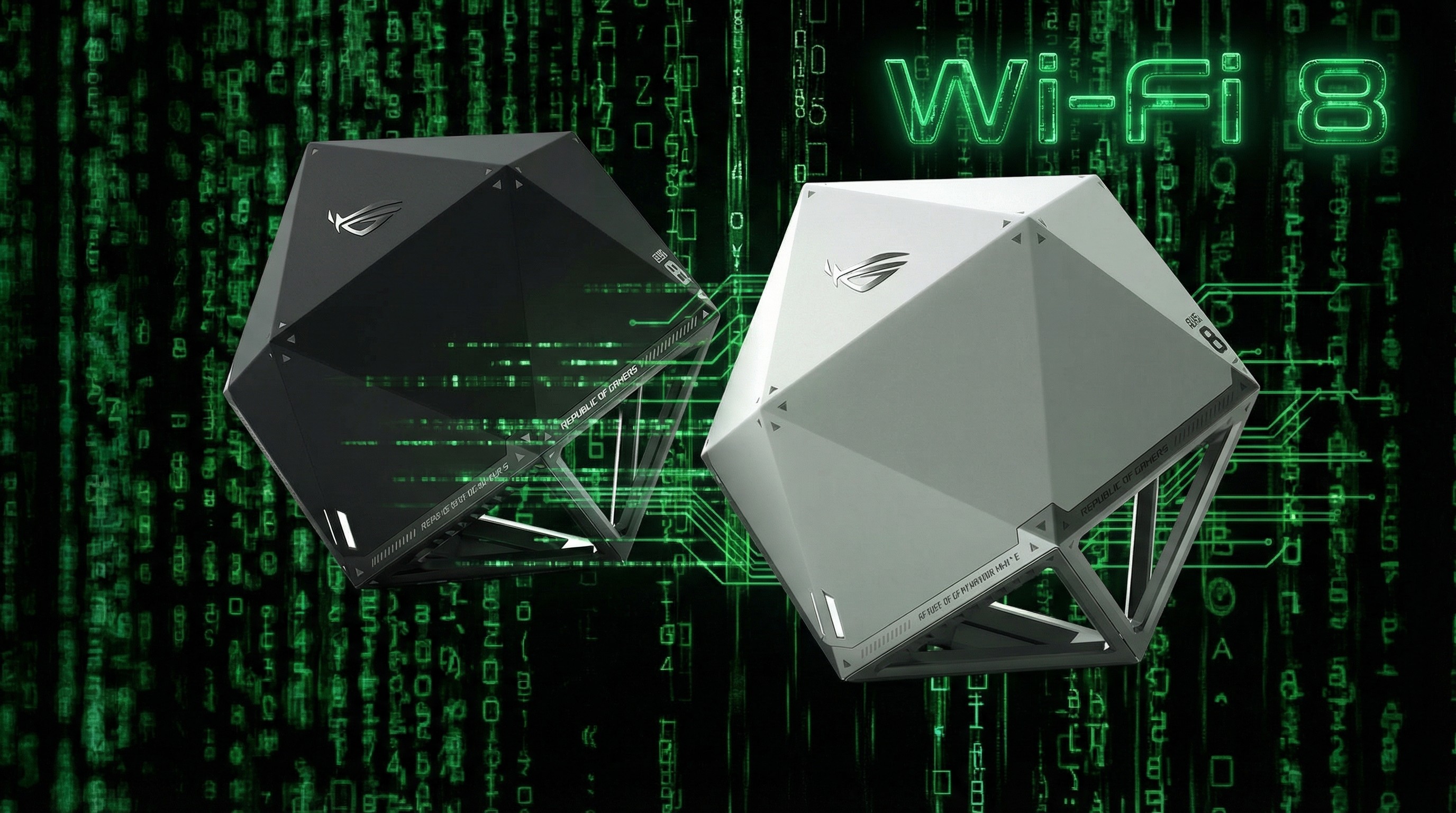
Most people are still operating on Wi-Fi 6 or Wi-Fi 7, but Wi-Fi 8 has now made an appearance.
(Image credit: Ben Wilson | Windows Central)
Wi-Fi 8 is the next standard of wireless networking, officially known as IEEE 802.11bn. It's been given the moniker Ultra High Reliability (UHR), which begins to make a lot more sense once you start to dig into the advancements it represents.
The Wi-Fi Alliance is targeting improvements to reliability instead of increased speeds, especially important in the age of ubiquitous Wi-Fi practically anywhere you go.
These advancements in reliability are seen as crucial for areas that require low-latency wireless connections. Think augmented, virtual, and mixed reality, gaming, healthcare, enterprise or public networks, and IoT.
There are several key features arriving with Wi-Fi 8 that help set it apart from previous standards.
New Modulation and Coding Schemes (MCS) values
Wi-Fi 8 comes with four new MCS values designed to reduce the impact felt when your signal weakens. You know how your internet slows down when you move further away from your router? These new MCS values will make the speed drops less pronounced.
Multi-AP coordination
Wi-Fi 8 will make networks with multiple access points (AP) much less prone to interference. This is expected to provide more reliable speeds when operating in an area with overlapping access points (like on a mesh network).
Seamless Roaming improvements
Networks with more than one access point usually shuttle your devices between those points depending on your proximity, which can lead to interruptions due to disconnects and reconnects. Wi-Fi 8 aims to solve that by enabling seamless handoffs.
Non-Primary Channel Access (NPCA) and Dynamic Sub-Channel Operation (DSO)
DSO is designed to better allocate devices to sub-channels based on their bandwidth requirements, giving more space to devices that need a lot of bandwidth. NPCA is what gives devices the ability to use those sub-channels when necessary.
Enhanced Long Range (ELR)
This one is straightforward — ELR allows for stronger signals further from your router.
Distributed-tone resource units (DRU)
DRU focuses on making uplink — the data you send from your device back to the router — much more reliable. This is achieved by increasing transmission power on wider bandwidth.
In-Device Coexistence (IDC)
IDC aims to make Wi-Fi 8 operate more reliably alongside other wireless tech like Bluetooth. Considering most devices that have Wi-Fi also have Bluetooth, this will be felt often.
High-Priority Enhanced Distributed Channel Access (HIP EDCA) & TXOP Preemption
These two new technologies work together to reduce latency, which is especially important for gamers and those who are often in video meetings.
When does Wi-Fi 8 officially arrive?
The Wi-Fi Alliance formed the Wi-Fi 8 study group in 2021. The standard entered its initial development phases in 2022, with later draft phases beginning in 2025 and expected to continue until 2027.
Currently, the Wi-Fi Alliance is targeting a September 2028 date for the final standard's approval.
That doesn't mean you won't see Wi-Fi 8 devices long before then, as evidenced by the new ASUS ROG Wi-Fi 8 router concept shown off at CES 2026. Traditionally, new Wi-Fi devices launch well before a standard is finalized. Why? There aren't often many large changes to a standard, and manufacturers want to be first to market with their products.
Wi-Fi 7 vs. Wi-Fi 8: How much of an upgrade?
Wi-Fi 8 is more about refining Wi-Fi 7's reliability and latency than it is about increasing speeds.
(Image credit: Ben Wilson | TP-Link)
For the average internet user, the differences between Wi-Fi 7 and Wi-Fi 8 won't really be noticed.
Mesh and multi-AP networks seem to stand to benefit the most, with improved consistency and more seamless handoffs between access points. You might also notice that your signal is more reliable when you're at the edge of your router's signal. Gamers will likely notice a bigger difference as latency comes down and signals become more reliable.
Does that mean you should rush out and buy a Wi-Fi 8 router as soon as it's available? No. It's going to take time for Wi-Fi 8 to arrive in our devices, and even then, it's probably not worth the cost for the vast majority of people.
Setting the improvements that I listed above to the side for a moment, you can see how similar Wi-Fi 8 is to Wi-Fi 7 in terms of raw specs.
| Header Cell - Column 0 |
Wi-Fi 8 |
Wi-Fi 7 |
|---|---|---|
|
IEEE standard |
802.11bn |
802.11be |
|
Max channel bandwidth |
320MHz |
320MHz |
|
Modulation |
4,096 QAM |
4,096 QAM |
|
Max speed |
23Gbps |
23Gbps |
|
Bands |
2.5GHz, 5GHz, 6GHz |
2.5GHz, 5GHz, 6GHz |
Wi-Fi 8: FAQ
Do I need to buy a new router to use Wi-Fi 8?
Yes, you will need to buy a new router in order to use Wi-Fi 8. To get the most out of the new standard, your devices will also require Wi-Fi 8.
My Wi-Fi seems fast enough. Do I need to upgrade to Wi-Fi 8?
If you're currently happy with your Wi-Fi network, there's really no reason to upgrade. Wi-Fi 8 is all about making some finer improvements to Wi-Fi 7's reliability rather than making your connection any faster.
When does Wi-Fi 8 launch?
The Wi-Fi 8 standard is expected to be finalized in September 2028, but we will see plenty of Wi-Fi 8 devices on the market before then.
Are there any current devices that can use Wi-Fi 8?
As far as I know, at the time of writing there is just one Wi-Fi 8 product so far revealed. It's the ASUS ROG NeoCore concept router, and it's expected to arrive sometime in 2026.
Will my older devices without Wi-Fi 8 benefit from a new Wi-Fi 8 router?
While your older devices will continue to use whatever Wi-Fi standard they shipped with, connecting them to a Wi-Fi 8 router can improve stability and coverage thanks to the newfound advancements.
Hope you enjoyed this news post. Feedback welcome.
Posted Thursday 15 January 2026 at 5:07 am AEST (my time).
News posts... 2023: 5,800+ | 2024: 5,700+ | 2025: 5,700+


Recommended Comments
Join the conversation
You can post now and register later. If you have an account, sign in now to post with your account.
Note: Your post will require moderator approval before it will be visible.