

3175x175(CURRENT).thumb.jpg.b05acc060982b36f5891ba728e6d953c.jpg)
Seagate's heat-assisted drive tech has been percolating for more than 20 years.
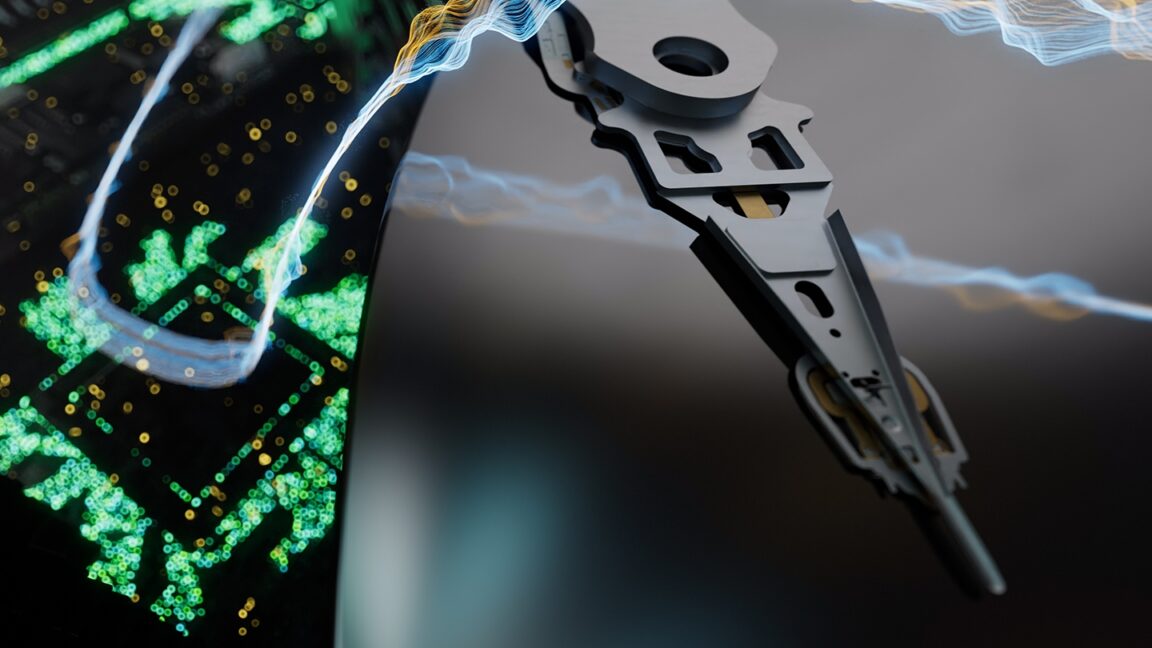
For more than two decades, hard drive manufacturer Seagate has been experimenting with heat-assisted magnetic recording (HAMR) technology for increasing hard drive density—drives that use tiny lasers to heat up and expand parts of the drive platter, write data, and then shut off to allow the platter to cool and contract, all within less than a nanosecond.
After decades of overly rosy availability predictions, Seagate announced in late 2024 that it was finally delivering HAMR-based drives with capacities of up to 36TB to some datacenter customers. Today, the drives are finally available for end users and individual IT administrators to buy, albeit only in smaller capacities for now. Seagate and other retailers will sell you massive 30TB IronWolf Pro and Exos M hard drives for $600, and 28TB drives for $570. Both drives use conventional magnetic recording (CMR) technology, which performs better than the shingled magnetic recording (SMR) technology sometimes used to increase disk density.
The drives are based on Seagate's Mosaic 3+ platform, which "incorporates Seagate’s unique implementation of HAMR to deliver mass-capacity storage at unprecedented areal densities of 3TB per disk and beyond."
Seagate's press release is focused mostly on the large drives' suitability for AI-related data storage—"AI" is mentioned in the body text 21 times, and it's not a long release. But obviously, they'll be useful for any kind of storage where you need as many TB as possible to fit into as small a space as possible.
Although most consumer PCs have moved away from hard drives with spinning platters, they still provide the best storage-per-gigabyte for huge data centers where ultra-fast performance isn't necessary. Huge data center SSDs are also available but at much higher prices.
Seagate competitor Western Digital says that its first HAMR-based drives are due in 2027, though it has managed to reach 32TB using SMR technology. Toshiba is testing HAMR drives and has said it will sample some drives for testing in 2025, but it hasn't committed to a timeline for public availability.
Hope you enjoyed this news post.
Posted Wednesday 16 July 2025 at 1:43 pm AEST (my time).
News posts... 2023: 5,800+ | 2024: 5,700+ | 2025 (till end of June): 2,864
RIP Matrix | Farewell my friend
- phen0men4 and Mutton
-
 2
2
Recommended Comments
Join the conversation
You can post now and register later. If you have an account, sign in now to post with your account.
Note: Your post will require moderator approval before it will be visible.