

3175x175(CURRENT).thumb.jpg.b05acc060982b36f5891ba728e6d953c.jpg)
Samsung is jumping back into PC silicon after more than a decade, but not in the way you might expect.
NVIDIA's bombshell RTX Spark announcement at Computex 2026 gave us a glimpse at new competition for Intel, AMD, and Qualcomm silicon in Windows PCs, and now Samsung is reportedly getting in on the fun with its own custom silicon designed for AI PCs.
This is the first PC-centric silicon that I can recall Samsung producing since its 2012 Exynos 5 Dual, which was created for Chromebooks. GAIA is reportedly being designed by Samsung's System LSI business unit, so I'm not expecting it to be a simple experiment.
Before getting too excited, it's well worth pointing out that the new silicon, which Samsung is calling GAIA, isn't a full in the general sense. Rather than incorporating a CPU and GPU, Samsung GAIA is a companion Neural Processing Unit (NPU) that can be added to other hardware to offload tasks.
As first reported by Chosun (via Tom's Hardware), GAIA is expected to use a 4nm process "that places computational functions close to memory." Samsung is also believed to be working on processing-in-memory (PIM) functions with specialized DRAM "capable of processing stored information."
The new standalone GAIA NPU is already making appearances outside the lab, with Lenovo China and HP USA receiving samples for testing.
It's not a comeback, but it could be the end of Copilot+

(Image credit: Windows Central)
I'm seeing some news reports of the Samsung GAIA chip as a sort of comeback story after more than a decade of silence from Samsung's PC silicon department. However, that's not quite the case.
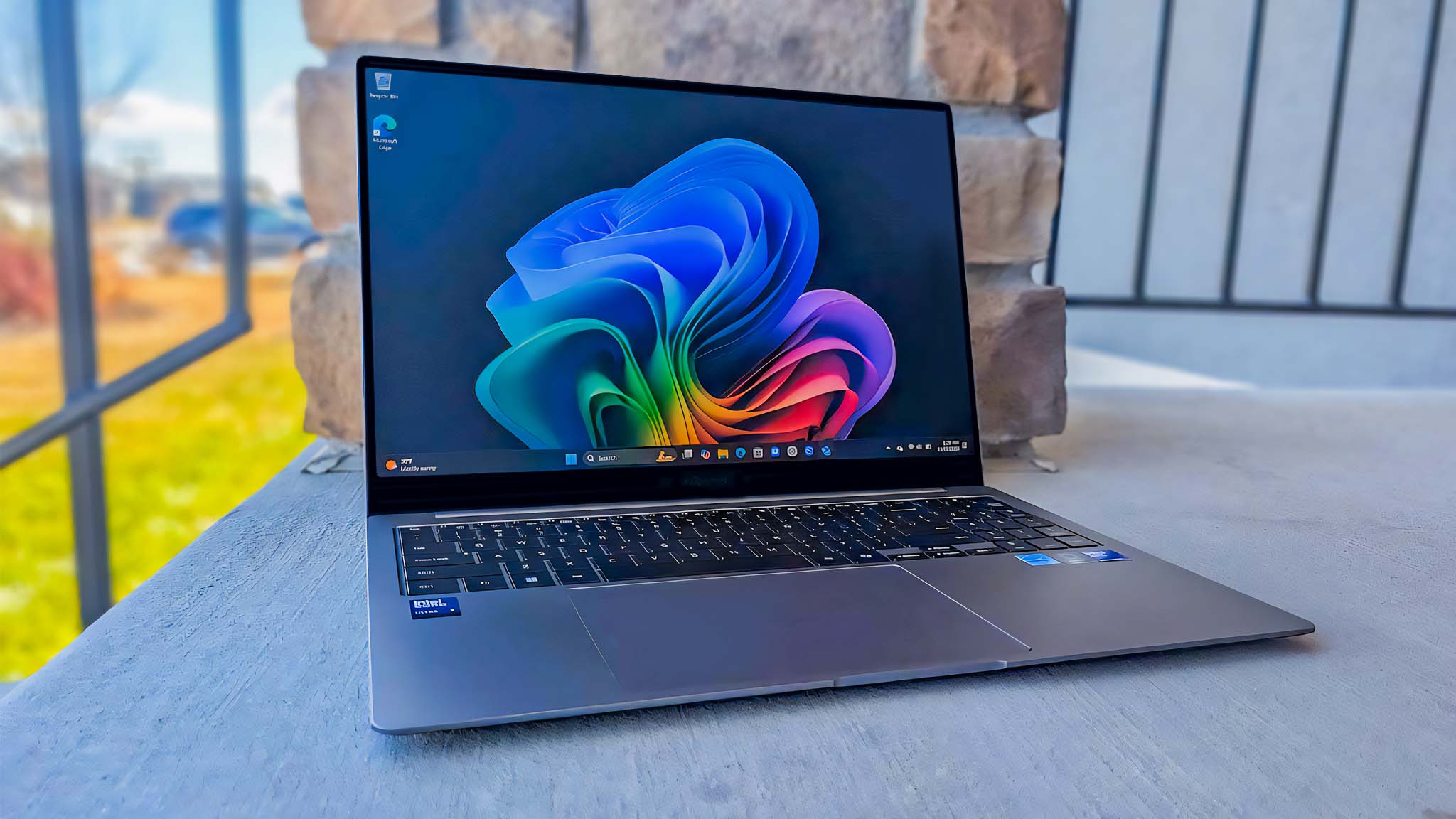
GAIA appears to be a bolt-on addition for silicon that otherwise lacks an NPU, enabling language models, translation, image generation, and much more without reaching out to the AI cloud.
Rather than asking Lenovo and HP to build new hardware around the chip, which we saw with NVIDIA's RTX Spark, Samsung seems to be going after blind spots in the AI PC race, allowing PC makers to add an NPU to an otherwise lacking CPU/GPU combination.

The Surface Laptop Ultra is a completely new device featuring NVIDIA's RTX Spark SoC.
(Image credit: Windows Central / Zac Bowden)
I view a new specialized NPU that can be added to a CPU/GPU combination as opening up a lot of possibilities for PC and silicon manufacturers.
Microsoft's Copilot+ PC certification program was built on the assumption that local AI has to live inside the main SoC. Chips like Snapdragon X/X2, Intel Core Ultra, and AMD Ryzen AI have all followed the requirement with an NPU capable of at least 40 baked into the design.
But even Microsoft hasn't exactly committed fully to this integrated approach. In June, it was reported that Microsoft is testing Copilot+ AI workloads on discrete GPUs. If this approach pans out, it could be the end of the Copilot+ PC program as we know it now. No NPU? No problem ... just as long as you have a discrete GPU to handle the AI workloads.
Samsung's GAIA, if it actually works out as intended, would functionally be another reason to scrap the rather strict Copilot+ certifications and instead focus on raw AI power, no matter where it comes from.
Many questions about Samsung GAIA remain unanswered
Samsung's GAIA silicon isn't official. There's no information about TOPS, power draw, or pricing. Microsoft hasn't publicly talked about it because there's really nothing yet to discuss.
Microsoft's Copilot+ 40 TOPS minimum threshold was set years ago for integrated NPUs as a way to measure the chip's entire throughput. Whether or not a GAIA chip working alongside an Intel or AMD CPU would be measured the same way remains to be seen.
Hope you enjoyed this news post. Feedback welcome.
Posted Tuesday 21 July 2026 at 7:24 am AEST (my time).
News posts: 2023 5,800+ | 2024 5,700+ | 2025 5,700+ | 2026 (to end of June) 2,475
Recommended Comments
There are no comments to display.
Join the conversation
You can post now and register later. If you have an account, sign in now to post with your account.
Note: Your post will require moderator approval before it will be visible.