

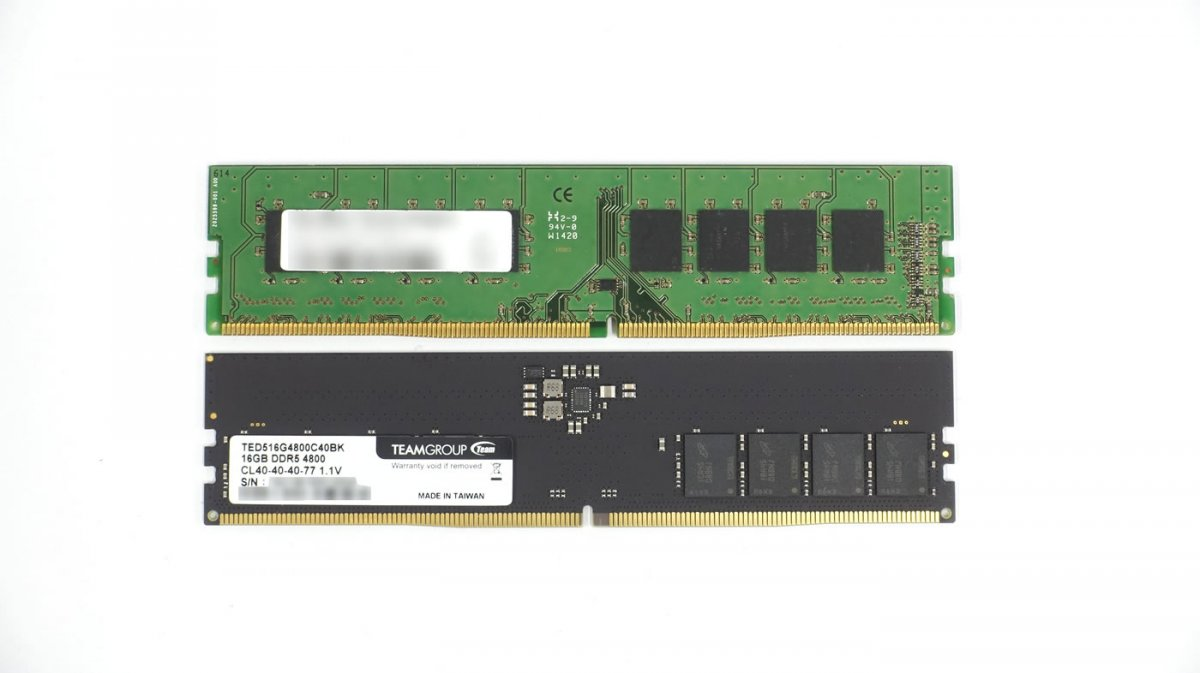

Law360 (June 25, 2026, 10:49 PM EDT) -- Artificial intelligence demands huge amounts of computer memory, causing Apple and other retailers to raise prices amid random access memory shortages, but a California federal lawsuit filed Thursday alleges Samsung Electronics Co., SK Hynix Inc. and Micron Technology Inc. have exacerbated this so-called RAMpocalypse by fixing memory supply and prices.
The three companies make almost all the world's supply of dynamic random access memory and have since 2022 fixed the supply and prices for DRAM, driving the price up some 700% over the past four years, according to the complaint filed by a proposed class of individual and business consumers.
"The DRAM oligopolists have simultaneously cut production, coordinated a pivot to [high bandwidth memory] and exit from [Double Data Rate 3] and [Double Data Rate 4], and otherwise decreased and locked up conventional DRAM supply while prices charged up with mind-blowing scale and rapidity," the consumers say.
HBM is a computer memory interface for 3D-stacked synchronous dynamic random access memory, or SDRAM, that achieves a higher bandwidth while using less power; DDR3 and DDR4 refer to older modules.
"Prices continued to rise, and still Samsung, SK Hynix and Micron continued to squeeze conventional DRAM supply, simultaneously and publicly directing their resources toward less-profitable-per-die HBM — or in some cases, simply junking conventional DRAM supply channels altogether," the consumers add.
And the defendants' alleged price-fixing plan has worked so far, the suit asserts, noting that "consumer purchasers of conventional DRAM and devices incorporating it have paid supracompetitive prices and have otherwise suffered the impacts of a distorted market crippled by the behavior of DRAM oligopolists."
Unlike the global semiconductor shortage earlier this decade that stemmed from supply chain disruptions during the COVID-19 pandemic, the current computer memory shortage is caused in large part by companies reallocating their manufacturing capacity to products for AI data center infrastructure, industry organizations told the U.S. Department of the Treasury and U.S. Department of Commerce earlier this month.
As a result, companies are raising prices on computers, smartphones and other electronics that require such memory products.
On Thursday, Apple Inc. raised the prices on its Mac computers by 15% to 20% and iPad prices by 15% to 25%, according to reporting by The Wall Street Journal. Apple CEO Tim Cook told the newspaper last week of the planned price increases, saying it was necessary to "offset the surging costs of memory and storage chips."
In their complaint Thursday, the consumers argue that no new competitors can touch Samsung, SK Hynix and Micron in the conventional DRAM market because of the sheer cost of building just one DRAM fabrication plant, which can run $15 billion to $20 billion and take years to complete.
What's more, "the process recipes that make a fab yield usable chips comprise decades of accumulated trade secrets; United States export controls bar the only other procedures, in China, from acquiring current-generation equipment; and even a finished chip must clear twelve to eighteen months of customer qualifications before a large buyer adopts it for a product," the complaint states.
"The practical consequence is that when the three firms restrict supply, no outsider can expand output to undercut them," it says.
The consumers also say this isn't the first time these same three companies have fixed the price of DRAM, pointing out that the U.S. Department of Justice investigated an alleged conspiracy that occurred between 1998 and 2022. Samsung and Hynix both pled guilty, paying fines of $300 million and $185 million, respectively, with several executives going to prison, according to the suit. Micron avoided a fine by reporting the conspiracy and cooperating with prosecutors, the suit states.
When prices spiked again in 2016 to 2018, it prompted a class action in the United States and an investigation by the Chinese government into all three companies, according to the complaint.
"The conduct alleged here is the third such cycle in the same market, among the same firms," the consumers say.
According to the complaint, demand for DRAM in 2022 was weak, and prices were falling. In October of that year, SK Hynix announced it would cut production and reduce its 2023 investment by more than half, the suit states. Micron then announced an immediate 20% cut, which it later deepened, according to the suit.
While the industry expected Samsung to hold or raise its output, as it had in prior downturns, the consumers say the company in April 2023 announced matching cuts after reporting a multibillion dollar quarterly loss in its semiconductor division.
"None of the three used the others' retreat to expand and win customers," the suit notes. "All three pulled back together."
Demand then returned, as the growth of AI "drove buyers to acquire memory in volumes the industry had not seen — both the HBM that accelerators require and the commodity DRAM that every server, computer and phone still needs," the complaint says. DRAM prices surged with a compounded price increase of about 697% from third quarter of 2024 to the first quarter of 2026, according to the complaint.
"In a competitive commodity market, prices climbing at that rate pull supply toward them," the consumers say. "At least one of three large producers, seeing record prices, would expand output of the product whose price was rising, and the others would follow or lose customers. That did not happen."
The emphasis shifted from capacity expansion to process technology upgrades and high-value products like HBM, which the consumers contend was not economically rational "but for its anticompetitive effect of restricting supply and output of conventional DRAM, driving up prices and margins."
The plaintiffs want to represent a nationwide injunctive relief class of potentially hundreds of millions of people and entities "who indirectly purchased conventional DRAM products … manufactured by one or more defendants, or electronic devices containing such DRAM, during the class period beginning October 26, 2022, through the present," as well as various state damages classes.
The suit asserts violations of the Sherman Act, the Cartwright Act, Florida's Deceptive and Unfair Trade Practices Act, Minnesota's Antitrust Law, New York's Donnelly Act, and Wisconsin's Antitrust Act.
It seeks injunctive relief to "remedy the ongoing effects of defendants' unlawful and anticompetitive conduct," as well as treble damages, litigation costs and attorney fees.
Counsel for the plaintiffs and a representative for Micron declined to comment Thursday, and representatives for Samsung and SK Hynix did not immediately return requests for comment.
The plaintiffs are represented by Yavar Bathaee, Andrew C. Wolinsky, Allison Watson, Priscilla Ghita, Brian J. Dunne, Edward M. Grauman and Bryce Talbot of Bathaee Dunne LLP.
Counsel information for Samsung, SK Hynix and Micron was not immediately available.
The case is Marc Garciaguirre et al. v. Samsung Electronics Co. Ltd. et al., case number 3:26-cv-06345, in the U.S. District Court for the Northern District of California.
By Lauren Berg
--Editing by Kristen Becker.
Source : https://www.law360.com/articles/2493985

Recommended Comments
Join the conversation
You can post now and register later. If you have an account, sign in now to post with your account.
Note: Your post will require moderator approval before it will be visible.