

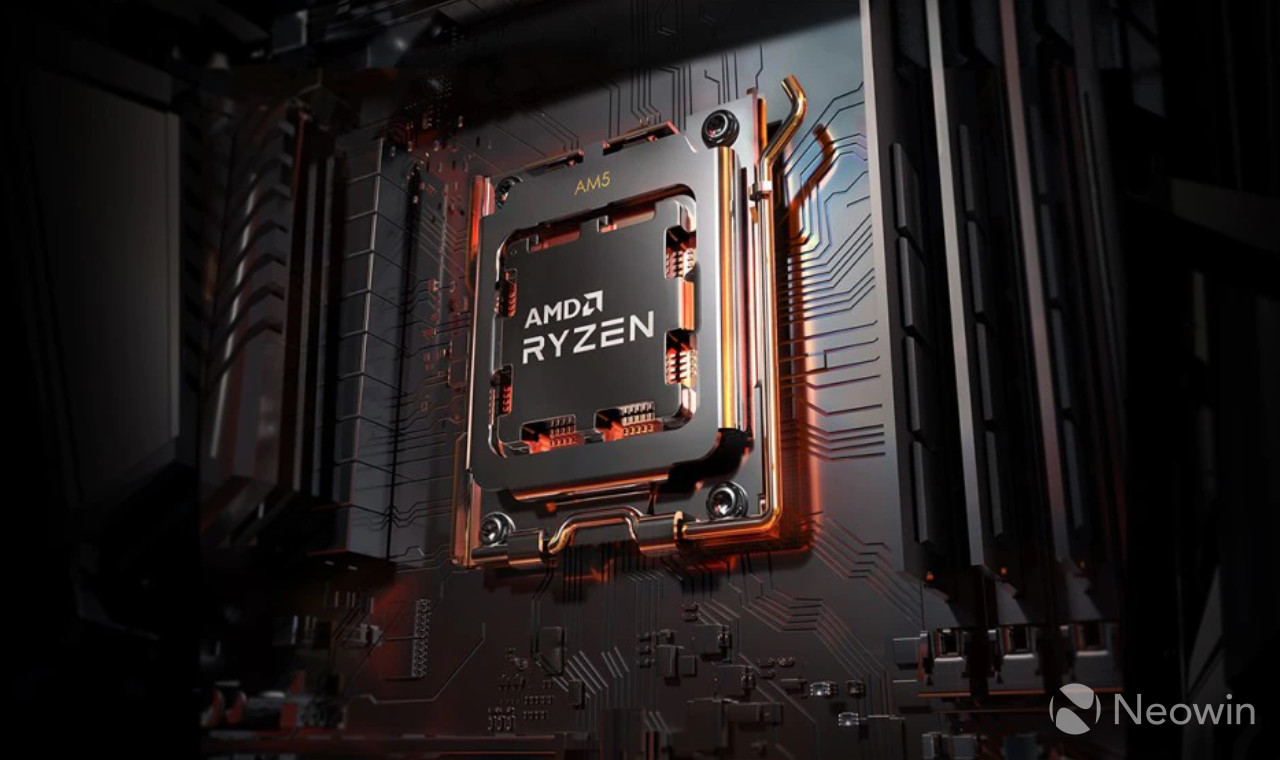

AMD is adding a new CPPC feature that should let the OS read CPU boost clocks much more accurately.
This year, Microsoft has been making an active effort to improve the performance of Windows 11 as well as the ecosystem. Now there seems to be some real competition from Linux too, with some distros like CachyOS that have recently been gaining some hefty upgrades in this department.
Of course optimization of software is only one side of the story, as performance also greatly depends on hardware. On AMD processors for example, there is a feature called Collaborative Processor Performance Control (CPPC) which helps the OS determine what the best core or the "preferred cores" that should be assigned a task or workload. This works on both Windows 11/10 as well as Linux.
Over time, additional CPPC features have been added to the kernel, which include the recent "performance priority" feature that's on track for introduction in AMD's Zen 6 architecture (the company currently has the Zen 5-based Ryzen 9000 series on the desktop). As such, we expect Windows 11 26H2 and 27H2 to have optimizations for them.
Following that, AMD is now adding a new CPPC-based element called "Highest frequency". As outlined in the latest patch series posted to the Linux kernel mailing list (LKML), this addition specifically targets a long-standing limitation in how the OS interprets CPU boost behavior. On some systems, the relationship between CPPC “performance” values and actual clock speeds isn’t perfectly linear across all cores, which means the kernel’s current method of inferring the peak frequency via interpolation can be inaccurate.
To fix this, the patch introduces support for a new HighestFreq register within CPPC. Rather than estimating the maximum achievable frequency, this register allows firmware to directly expose it to the OS. In other words, Windows or Linux will no longer have to guess what the top boost clock is as it should simply be able to read it. This will lead to more accurate CPU capacity calculations as well as better boost ratio determination, both of which are important for task scheduling and frequency scaling via the AMD P-State driver.
The changes are being prepared ahead of a future ACPI specification update 6.7, where this register is expected to be formally defined. Hence it is currently under the review of the ASWG (ACPI Specification Working Group). As part of that groundwork, the patches also add the necessary kernel-side support to read this value from the _CPC object when available. After that both Windows and Linux will likely have support for this feature.
- Mutton and Tzcon
-
 2
2
Recommended Comments
There are no comments to display.
Join the conversation
You can post now and register later. If you have an account, sign in now to post with your account.
Note: Your post will require moderator approval before it will be visible.