


3175x175(CURRENT).thumb.jpg.b05acc060982b36f5891ba728e6d953c.jpg)
It's OK, though, because for the regular WSL user there is still the official release of Fedora, which sits upstream from RHEL.
Back in April, Fedora 42 made its long-awaited arrival as an officially supported Linux distro on WSL. For Fedora lovers, such as myself, it was great news.
Since then, however, another Fedora-based distro has also, quietly, released an official image for WSL. Red Hat Enterprise Linux (RHEL) Release 10 is now available, too, as of May, despite no apparent fanfare.
Unfortunately, most of us will never be able to use it, as, like regular RHEL, it's locked behind an enterprise subscription. The IBM-owned company offers RHEL to enterprise customers backed with optimizations, certification, and full support for a range of business use.
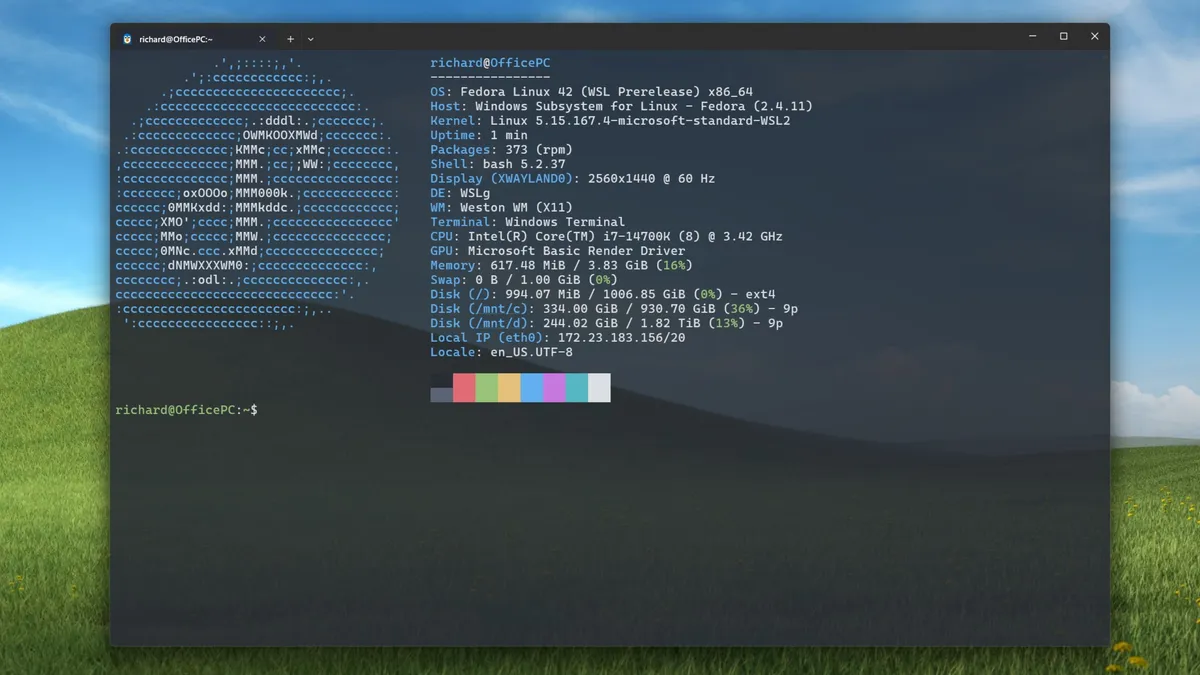
Fedora is the choice for most users.
(Image credit: Windows Central)
Fedora, upon which RHEL is based, is, by contrast, a community-supported project, sponsored by Red Hat.
It also sits upstream from RHEL, with a new version on average every six months. RHEL, as a business tool with a focus on stability, doesn't get upgraded as often. RHEL 10 has, at its core, Fedora 40, two versions behind.
If, however, you are a RHEL user and using it with WSL sounds interesting to you, there are a couple of options to get up and going. The Red Hat documentation has all the details, but essentially, you're able to download either a pre-built image or generate a custom image.
What it also does is provide another avenue for those who need Linux workflows in their day-to-day operations the chance to combine this with Windows 11, without needing to use virtual machines.


Recommended Comments
Join the conversation
You can post now and register later. If you have an account, sign in now to post with your account.
Note: Your post will require moderator approval before it will be visible.