

3175x175(CURRENT).thumb.jpg.b05acc060982b36f5891ba728e6d953c.jpg)
The new Rufus update is having an issue related to the Windows User Experience that allows several custom Windows 11 install options.
Rufus is a widely used utility for creating bootable USB drives, includes features that allow customization of Windows installation parameters, including bypassing certain system checks that were introduced with Windows 11. This past week, the tool received a major update with the final version of 4.14. The new release brings a new way to install Windows 11 with a new silent option, allows you to disable several pre-installed apps and more. Check out the full details in its dedicated piece here.
However as we reported earlier, the silent installation option is currently broken since it seems to get stuck at around 75%. The app author Pete Batard explained why that's happening.
That's not the only issue though as a newly reported bug suggests that recent changes may have introduced a problem in how user preferences are handled when creating Windows installation media. It seems that the latest Rufus update no longer remembers certain “Windows User Experience” (WUE) settings between sessions. The issue appears to be related to bypassing hardware requirements, such as TPM 2.0, Secure Boot, and RAM limits, as that option resets itself even after being manually cleared by the user.
The user, pineapple63, who helped confirm the issue, notes that earlier versions like 4.13 retained these preferences as expected. He wrote: "There does seem to be some sort of issue with the WUE option to bypass system requirements not persisting, although it seems to only happen when no WUE options are selected ... If i deselect all WUE options, click OK, and then click cancel on the warning that the drive will be erased, then click start again, it does not remember that i deselected it, and this also happens if i click OK on the warning and let it create the USB".
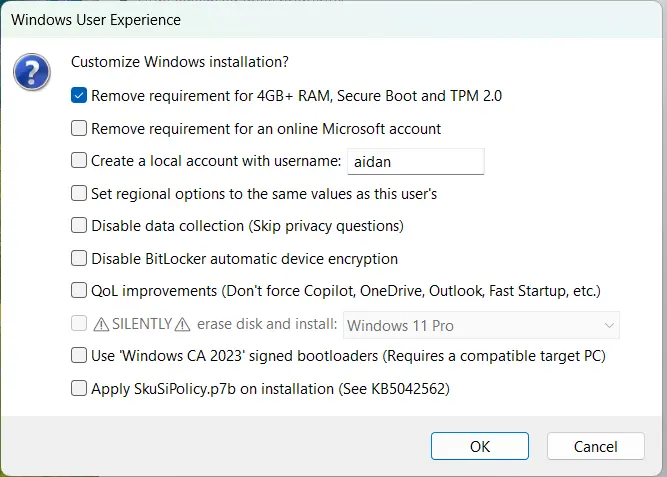
With the help of that, Pete Batard was able to figure out that the problem was a result of recent modifications to the utility's internal dialog handling that were made with the commit "92a8926". On the positive side, Rufus should still allow users to bypass Windows 11 requirements since the "remove requirement for 4GB+ RAM, Secure Boot and TPM 2.0" option always comes back checked. Batard assured of this as he wrote: "... leaving the bypass options enabled has absolutely NO negative incidence or alteration with regards to the final Windows installation on systems that have a TPM. Exactly as you should expect for the RAM bypass (which of course isn't going to restrict Windows to using only 4 GB of RAM if it has more than that), the TPM bypass also in no way prevents Windows from using it (even if it somehow was disabled during installed and then turned back on)."
At the time of writing, the issue remains open but Batard suggests that it "should be an easy fix" as he already figured out the root cause fairly quickly.
Hope you enjoyed this news post. Feedback welcome.
Posted Monday 4 May 2026 at 7:41 am AEST (my time).
News posts: 2023 5,800+ | 2024 5,700+ | 2025 5,700+ | 2026 (to end of April) 1,700


Recommended Comments
There are no comments to display.
Join the conversation
You can post now and register later. If you have an account, sign in now to post with your account.
Note: Your post will require moderator approval before it will be visible.