

3175x175(CURRENT).thumb.jpg.b05acc060982b36f5891ba728e6d953c.jpg)
A childhood favorite that survived near-cancellation, Microsoft Paint remains a simple yet surprisingly capable Windows app decades later.
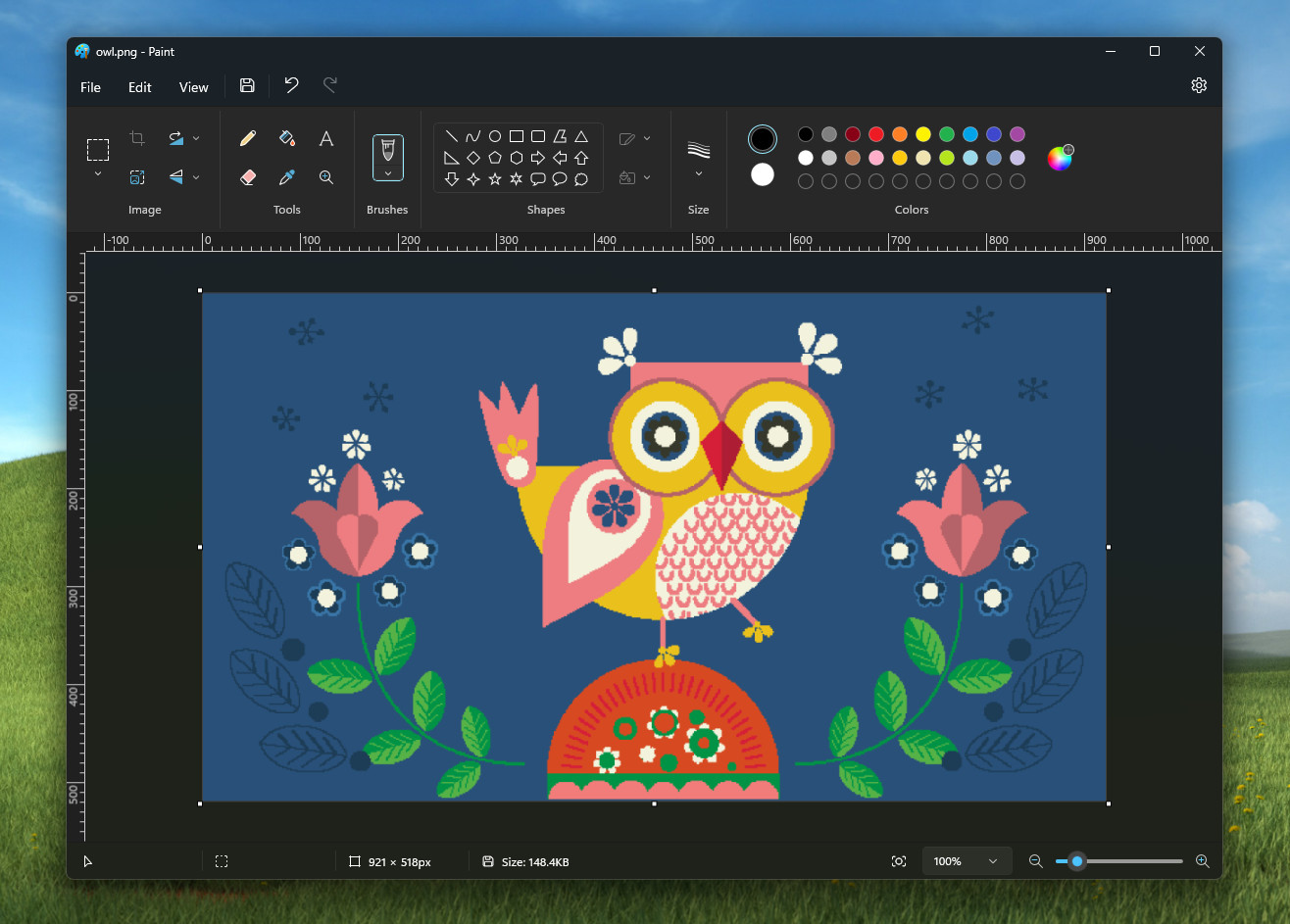
I have been using Windows since the early 2000s, when I was around 10 years old or so. I vaguely remember playing around with Windows 98 and Windows 2000, but that may have been on school PCs which had old operating systems installed. My main OS on the home PC, and the one I recall spending most time with, was Windows XP.
At that time, I used the home PC to create Word and PowerPoint documents for school, but a lot of the time, I simply used it to play games. My dad would bring game discs which we would try and install on the PC, sometimes unsuccessfully, and sometimes, we would rely on flash games in the browser, like Bubble Trouble on Miniclip.
However, the problem with the latter approach was the internet speed. On a good day, our dial-up internet would offer us speeds of 56 kbps, but on most days, it was closer to 33 kbps. This did not facilitate online gaming as I would often have to wait minutes for a game to load or "draw" on the screen, and trying to download pirated games wasn't simple either. I remember getting tired of waiting for online games to load and just downloading simulator games from the Big Fish Games website instead, only to be disappointed after finding out that I was just being given access to trial versions of the title, and I needed to fork out money to pay for the full version.
All of this is to say that it wasn't very easy to find entertainment options on the home PC when I was a kid, due to a number of reasons, mostly outside of my control. This situation pushed me towards a rather unconventional ally: Microsoft Paint.
Whenever the internet wasn't working as good as I expected, I would simply spin up Paint and draw complete rubbish on the canvas. Of course, that wasn't always the intention, but it usually happened when I messed up drawing a straight line or something, and then I would give up on that particular piece and simply draw a random collection of objects.
Microsoft Paint was extremely accessible and easy to use. Even if you weren't an artist, you could quickly understand the tools at your disposal and how to leverage them on a canvas. The absolute breadth on offer ensured that each painting was truly unique, as you could utilize various combinations of tools like the pencil, paint, spray paint, and more to truly personalize your creation.
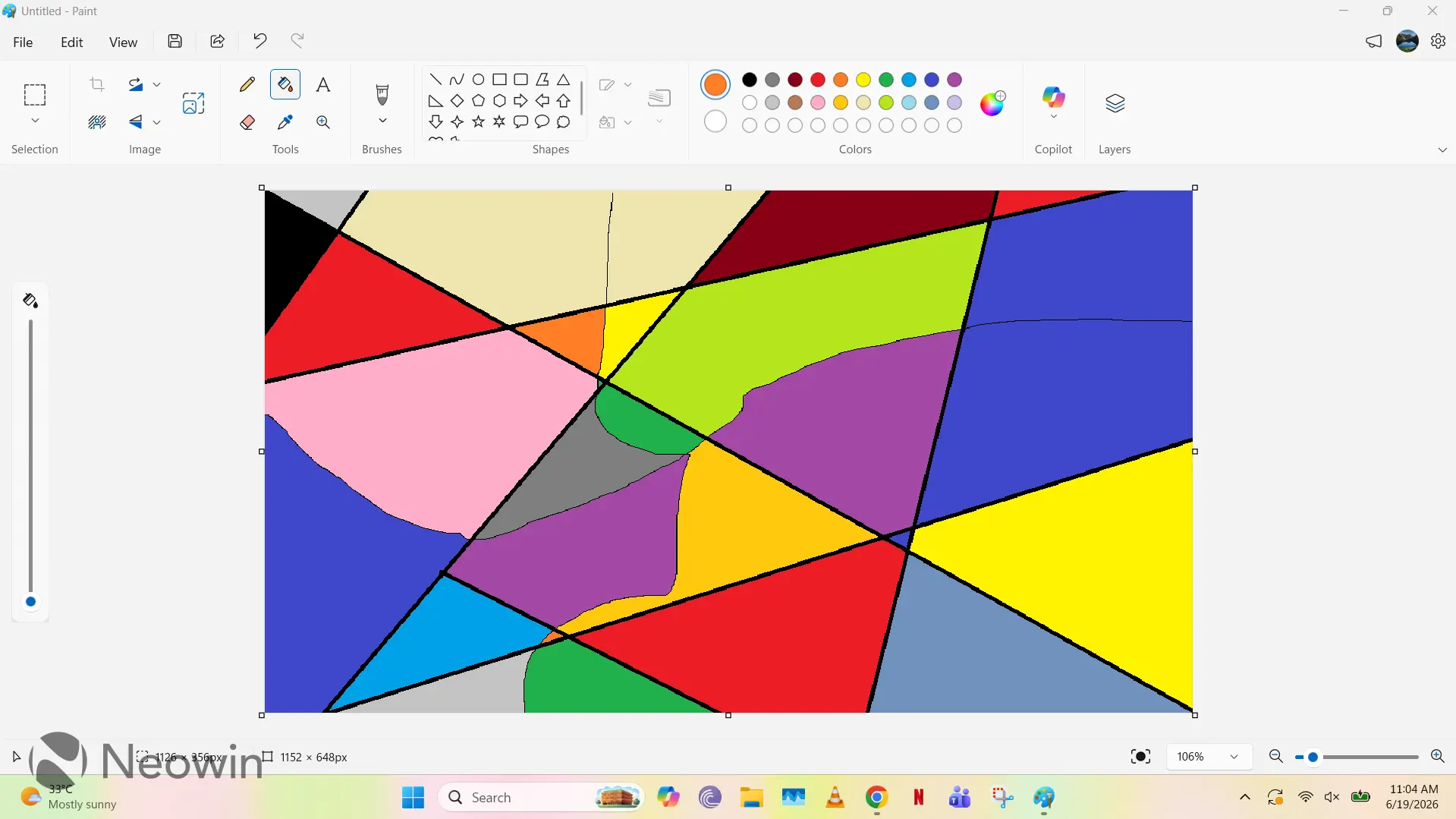
Since I wasn't particularly good at drawing both on digital screen or a physical screen, I remember that my main style of art would be to insert a bunch of randomly intersecting lines and then fill them with random colors through the paint can. I have trying to replicate that art style in the latest version of Paint below, and as you can see, it's truly Pablo Picasso-esque.
Microsoft Paint kept me occupied for hours and was my best friend when video games on the home PC were inaccessible for one reason or the other. There was no academic or professional reason for which I would need to use Paint, but I still loved using it in my personal time, even if what I created wasn't worth being shown to anyone. It was simply fun.
Fast-forward to today, and the situation is mostly the same. Now that I am almost 29 years old, and I still have no reason to use Microsoft Paint in a professional capacity. In fact, I don't even use it in a personal capacity, except to dabble with it from time to time, just to see if core functionalities are still intact. And I'm happy to say that I think Microsoft Paint still offers the same accessibility and inviting experience that it did to me a couple of decades ago, even though its UX has been refreshed and it's been integrated with Copilot features.
Interestingly, things could have been a lot different, had Microsoft had its way. Microsoft Paint was marked for deprecation with the Windows 10 Fall Creators Update in 2017, and even began displaying a product retirement alert, urging customers to shift to Paint 3D instead. Fortunately, after consumer backlash, Microsoft reversed course on this decision, and Paint continues to be a native app inside Windows installations that can also be updated quite frequently through the Microsoft Store. Instead, Paint 3D ended up on the chopping block, which is for the better, I think.
I have intermittently played around with Microsoft's refreshed Paint experience in the past few years, and I do think it has received worthwhile upgrades. the UI and the UX has been modernized while retaining core functionality, and the app is still fairly easy to use. It doesn't meet any of my use-cases, but I've never really had any use-cases ever, as described previously.
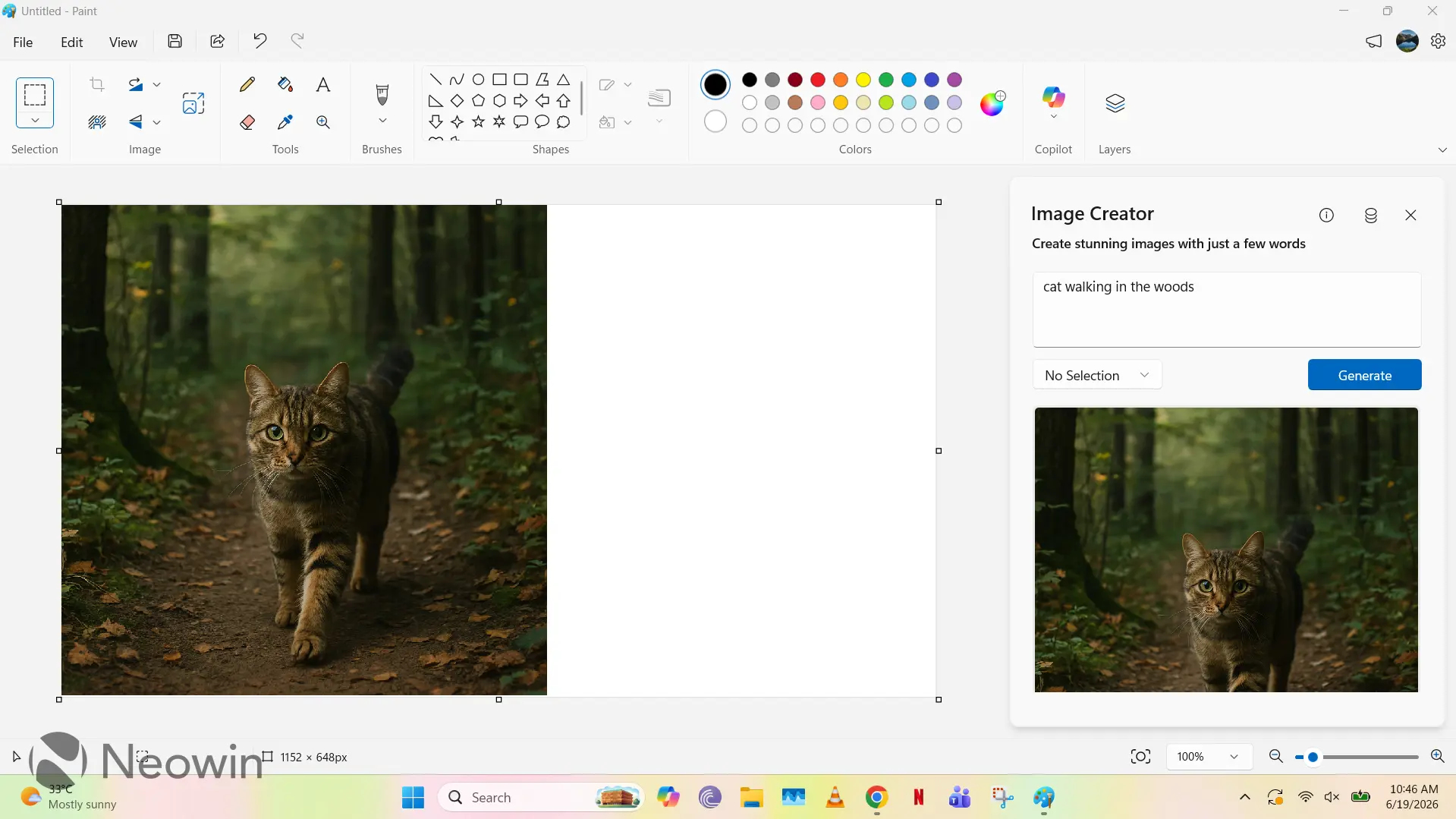
Of course, the elephant in the room is the Copilot integration. Personally, I believe that this is one place where Copilot does make sense, environmental concerns aside. I know that a lot of creatives use AI to generate images, and while some may be using professional alternatives, Paint still offers a decent casual experience, with the power of Copilot. Of course, you do need to have a valid Microsoft 365 Copilot license and available credits to use it, but even if you don't, you still get the big Copilot button in the toolbar, unfortunately.
All in all, I am glad that Microsoft Paint continues to be a native feature in Windows 11, and a piece of software that has evolved to meet modern needs without cutting off its own roots. It's just an iconic piece of Windows history that was an essential part of my childhood, and while I don't use it anymore, I'm just glad it is still there.
Hope you enjoyed this news post. Feedback welcome.
Posted Sunday 21 June 2026 at 7:47 am AEST (my time).
News posts: 2023 5,800+ | 2024 5,700+ | 2025 5,700+ | 2026 (to end of May) 2,092
Recommended Comments
There are no comments to display.
Join the conversation
You can post now and register later. If you have an account, sign in now to post with your account.
Note: Your post will require moderator approval before it will be visible.