

3175x175(CURRENT).thumb.jpg.b05acc060982b36f5891ba728e6d953c.jpg)
Microsoft looks to be making a bold rethink of its focus on AI tools and security, moving away from Bill Gates' software-centric vision.
Microsoft is arguably the world's most successful and profitable tech company, having recently unlocked $4 trillion in market capitalization ($3.84 trillion at the time of writing). This isn't just by sheer luck; hard work played an important role in the software giant's success.
But perhaps more interestingly, Microsoft co-founder Bill Gates admitted that he wasn't always confident that the company would succeed. "I wouldn’t say that I felt comfortable that we were successful until about 1998 or so," added Gates. This was 11 years after Microsoft had gone public, raising over $61 million in a single day.
What's more, the company's success had already propelled the executive into somewhat of an overnight billionaire. Recently, Microsoft revealed that over 1.4 billion Windows devices are currently in use, not forgetting the broad adoption of its Microsoft 365 productivity tools (including Microsoft Office) across organizations.
While Microsoft has stuck to the same formula to maintain its success, CEO Satya Nadella seemingly indicated that it might be time to shake things up and embrace a new strategy amid the fast-approaching AI evolution.
The company hasn't been shy about doubling down on its generative AI efforts following its multibillion-dollar bet on OpenAI and even deeply integrating the next-gen capabilities across its tech stack.
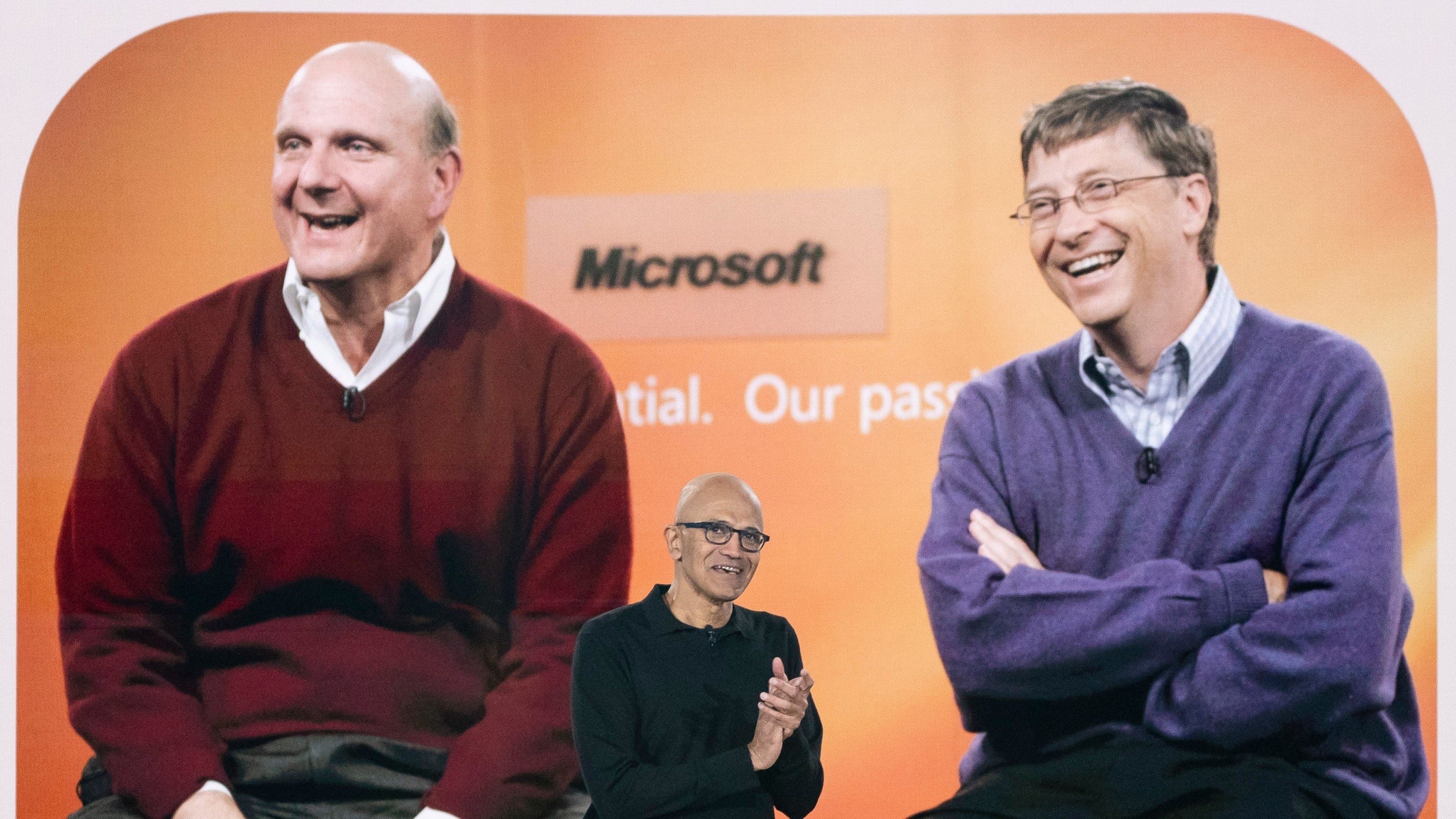
When Bill founded Microsoft, he envisioned not just a software company, but a software factory, unconstrained by any single product or category. That idea has guided us for decades. But today, it's no longer enough.
Microsoft CEO, Satya Nadella
In a recent memo addressed to Microsoft employees, Satya Nadella indicated that even Bill Gates' revolutionary vision, which predominantly helped build the tech company and contributed to its immense success, might be obsolete in the age of AI.
As you may know, the company has been hit by major layoffs recently, impacting over 9,000 workers. They came despite Microsoft sharing its impressive earnings report for the quarter ending June 30, 2025. The company's revenue reached $76.4 billion, which was up 18% year-over-year, with a net income of $27.2 billion (up 24%). The report attributed the impressive gains to its lucrative cloud and AI businesses.
What does Microsoft's future hold?
Microsoft is shifting focus to AI, security, and quality as it core business priorities.
(Image credit: Getty Images | Jason Redmond)
In the ever-evolving tech trends, Microsoft is doubling down on security, quality, and AI transformation as its core business priorities. This keen focus on security doesn't come as a surprise.
The company has been making bold moves in the category since last year, when it highlighted its plans to start holding top Microsoft executives accountable for cybersecurity by tying a section of their compensation packages to meeting the set security thresholds. It also promised quicker responses and resolution to security threats.
Security underpins every layer of the tech stack, and it's our No. 1 priority. We are doubling down on this very important work, putting security above all else, before all other features and investments.
Microsoft CEO, Satya Nadella
As for AI, Microsoft is getting ready to deeply integrate the latest technology across its wide range of products and software. More recently, Microsoft CVP and Windows lead Pavan Davuluri gave us a subtle hint of what the future of Windows could look like, and as our Senior Editor Zac Bowden reported, this 'Windows 12' of sorts is labeled as "a truly ambient and multi-modal experience made possible by AI that will redefine our usage of computers."
Microsoft has already heavily integrated AI into its tech stack, especially Windows 11, which now ships with Copilot and next-gen features like Windows Recall and Live Captions. However, some of these features are exclusive to Copilot+ PCs, which the company has been promoting to get users to upgrade as Windows 10's imminent death approaches.
The company has faced backlash over Windows Recall despite its recent efforts to make it more secure. Users have blatantly described it as a security nightmare that has turned the software into a hacker's paradise, so there's still more work to do in terms of public perception around Microsoft's AI efforts.
Hope you enjoyed this news post. Feedback welcome.
Posted Wednesday 20 August 2025 at 5:19 am AEST (my time).
News posts... 2023: 5,800+ | 2024: 5,700+ | 2025 (till end of July): 3,458
Recommended Comments
Join the conversation
You can post now and register later. If you have an account, sign in now to post with your account.
Note: Your post will require moderator approval before it will be visible.