

3175x175(CURRENT).thumb.jpg.b05acc060982b36f5891ba728e6d953c.jpg)
A classic Windows feature from the 90s is still alive in Windows 11 — and most people forgot it ever existed.
On Windows, screensavers once defined a small but memorable part of the experience. They served a clear purpose in the era of monitors in the 1980s and 1990s, preventing burn-in while adding a layer of personality to otherwise idle machines. Over time, they became part utility, part expression, and part nostalgia.
By the time Windows 95 and XP became mainstream, screensavers had changed from utility to expression. Users weren't just protecting displays anymore. They were customizing them using options like 3D Text, Bubbles, Mystify, Ribbons, and photo slideshows, which became part of the personal computing identity (don't even get us started on the awesomeness that was After Dark and flying toasters).
In 2026, that original purpose is gone. The majority of modern displays no longer require burn-in protection, and Windows 11 already relies on power management and lock screen behavior to handle inactivity more efficiently. However, screensavers still exist inside the operating system, largely unchanged and tucked away in the legacy Control Panel.
That raises a question. Do screensavers still belong on Windows 11, or are they a feature that no longer has a clear place in modern computing?
A feature that outlived its original purpose
From a technical standpoint, screensavers are no longer necessary. For example, displays now sleep intelligently, and system security is handled through the lock screen rather than idle animations.
However, screensavers were never just about utility. They also represented one of the earliest forms of personalization, which users used to express themselves. While that role has shifted to features such as lock screen images, desktop slideshows with Windows Spotlight, and widgets, none of them fully replace the experience screensavers once offered.
How screensavers are used today
Although screensavers are still available, usage has changed significantly. Today, they tend to fall into a few categories, including personal photo slideshows during inactivity and basic visuals used for aesthetic setups.
The closest the operating system gets to a modern interpretation is the "Photos" screensaver, which can cycle through images from a local folder. However, it remains limited, disconnected from cloud services, and largely untouched by modern design evolution.
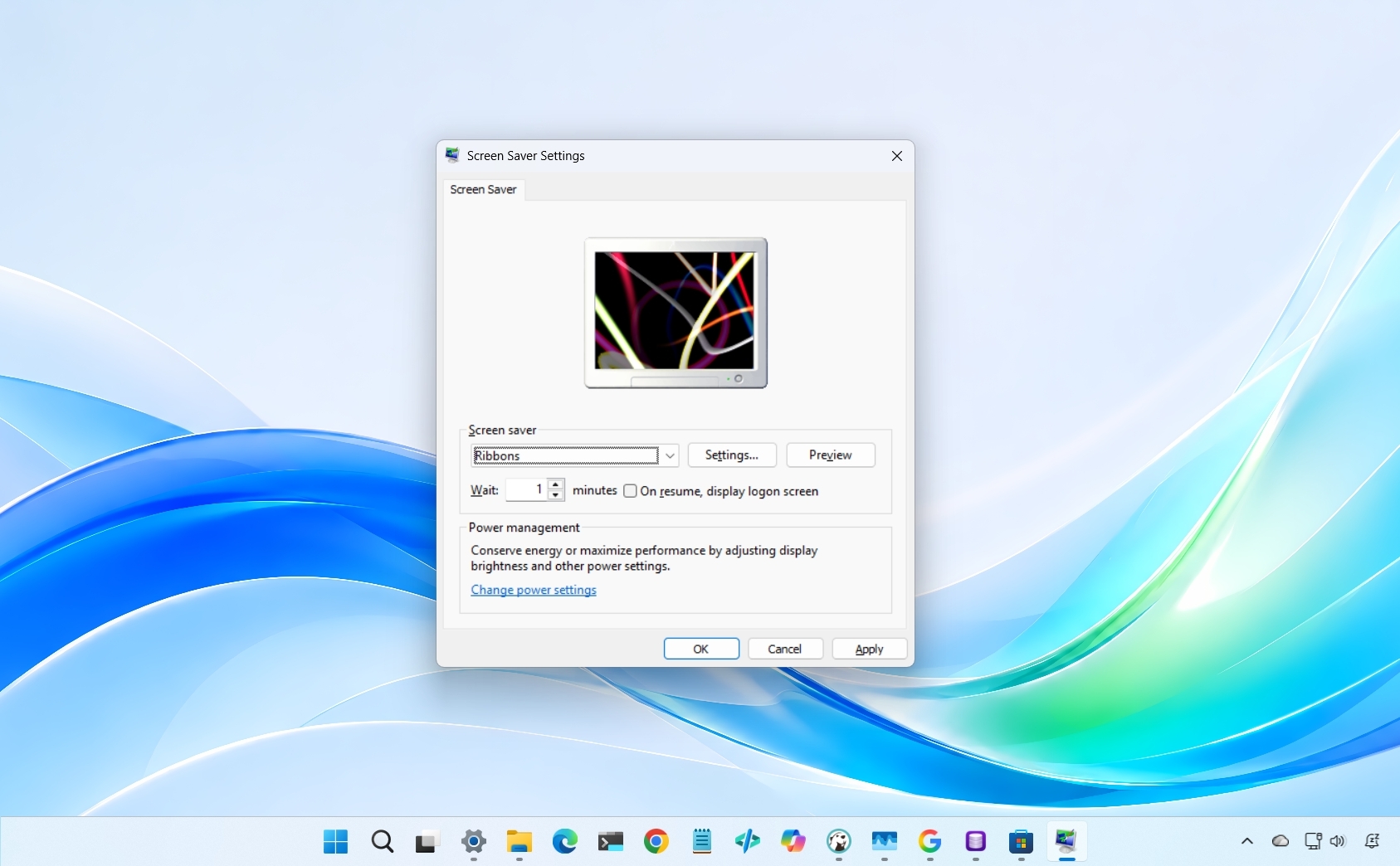
You can still access the feature from Settings > Personalization > Lock screen > Screen saver, which opens the feature through Control Panel.

(Image credit: Mauro Huculak)
As part of the options available, you can use 3D Text, Bubbles, Mystify, Photos, and Ribbons.
Microsoft's reason to keep it
Microsoft's focus has changed to bigger priorities, such as AI features, performance improvements, security, and modernizing the desktop interface. At the same time, the original reason for screensavers has disappeared, as modern displays no longer need protection from burn-in (excluding OLED displays), and the system can simply turn off the screen after a period of inactivity.
Also, Windows 11 already offers several ways to personalize the experience when you're away from the keyboard, including the lock screen, desktop backgrounds, and widgets. As a result, screensavers have become a legacy feature that the company has continued to support but has not actively developed.
Where screensavers still make sense
Even though screensavers are no longer needed to protect displays, they can still be useful in modern operating systems.

(Image credit: Mauro Huculak)
Instead of showing simple animations, screensavers could make better use of the time when a computer is idle. For example, they could display personal photos like a digital picture frame, surface useful information such as weather or calendar events, or simply add another layer of personalization to a desktop setup.
In other words, screensavers no longer need to save the screen. Their value today lies in making an idle device more useful (without affecting energy usage), more personal, and more visually appealing.
Missing evolution on Windows 11
Windows 11 already contains many of the components needed for a modern idle experience, but they exist separately.

(Image credit: Mauro Huculak)
For instance, lock and sign-in screens handle authentication and some personalization, widgets provide glanceable information, and desktop backgrounds offer static or slideshow visuals.
What's missing is a unified system that activates during inactivity and blends these experiences into a consistent, intentional layer. Instead, the system offers overlapping features that never fully converge.
Should Microsoft bring screensavers back?
The answer depends on how Microsoft approaches the feature. If screensavers remain limited to simple animations and photo slideshows, they probably don't deserve much attention. Modern power management and lock screen customization already cover that territory more efficiently.
However, if screensavers are reimagined as a modern ambient mode for Windows 11, then the idea becomes far more compelling.
In that form, they could evolve into something closer to a system-level experience, turning idle screens into personalized, context-aware displays rather than simply blank or static states.
Windows Central's Take
Screensavers solved a real problem decades ago, but I don't think that's why many people still remember them. They added personality to the operating system in a way that today's lock screen and widgets still don't quite match.
Personally, I don't miss the old screensavers themselves. I haven't used Bubbles, Mystify, or Ribbons in years. What I miss is the idea that the operating system did something interesting when I stepped away from my computer.
Windows has evolved in many ways over the years, yet when you step away from your device, it usually just shows the lock screen or turns off the display. Maybe that's enough. Or maybe the software giant is missing an opportunity to make idle time a little more useful.
What do you think? Should Microsoft bring screensavers back as a modern feature, or is it a piece of computer history that's better left in the past? Let me know in the comments.
Hope you enjoyed this news post. Feedback welcome.
Posted Thursday 18 June 2026 at 2:34 pm AEST (my time).
News posts: 2023 5,800+ | 2024 5,700+ | 2025 5,700+ | 2026 (to end of May) 2,092
- dabourzannan
-
 1
1
Recommended Comments
There are no comments to display.
Join the conversation
You can post now and register later. If you have an account, sign in now to post with your account.
Note: Your post will require moderator approval before it will be visible.