

3175x175(CURRENT).thumb.jpg.b05acc060982b36f5891ba728e6d953c.jpg)
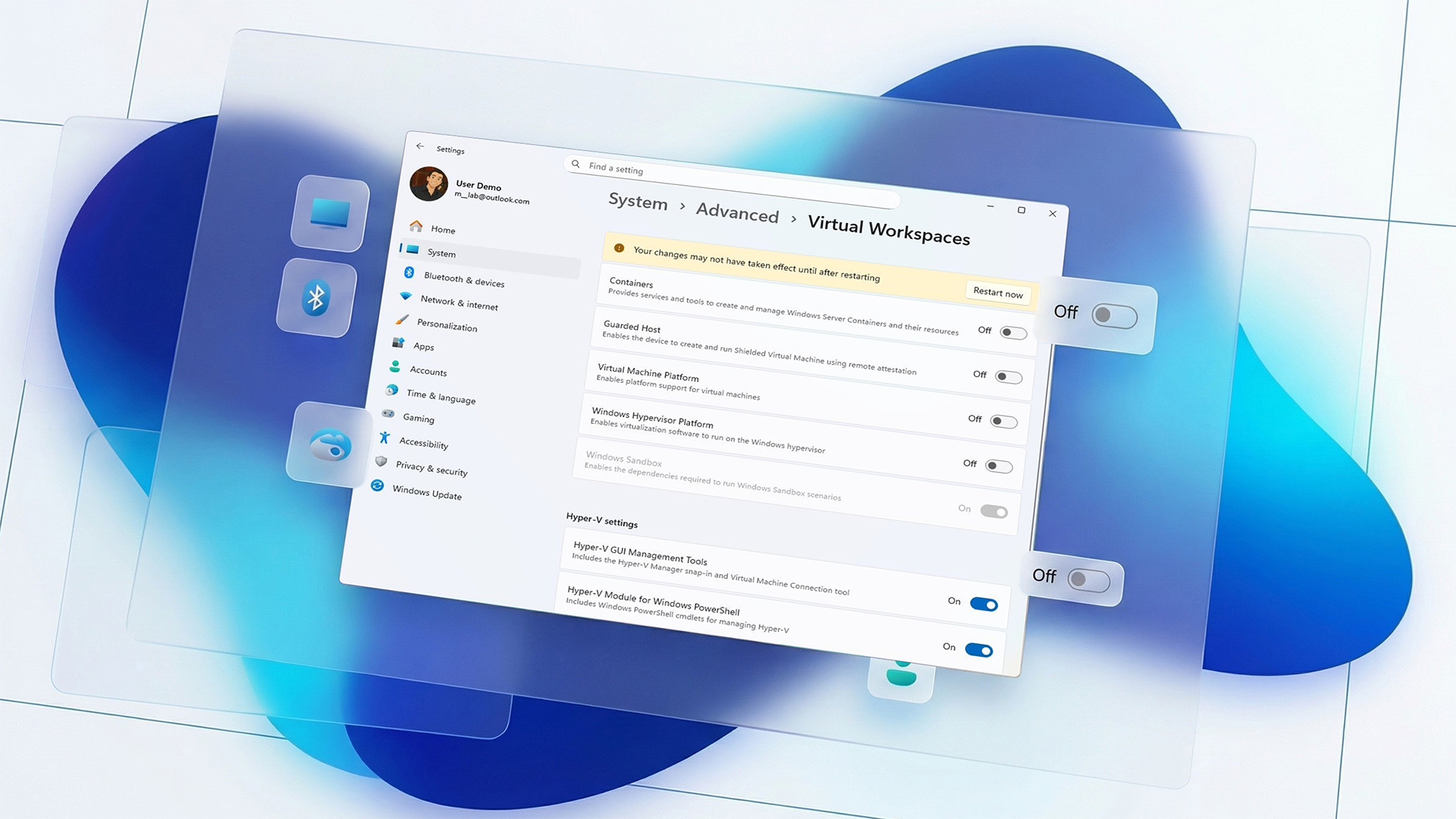
Windows 11 now lets you manage Hyper-V, Sandbox, and other virtualization features directly from the Settings app using the new Virtual Workspaces page.
On Windows 11, Microsoft has added the ability to manage pretty much all the virtualization features from the new "Virtual Workspaces" page available through the Settings app.
The software giant continues the slow process of porting legacy features to the Settings app, and even though there is still a lot of work to do, the last cumulative update for Windows 11 introduced a new version of the Settings app that includes a "Virtual Workspaces" page.
How to enable virtualization features on Windows 11
To enable virtualization features through Virtual Workspaces, use these steps:
- Open Settings.
- Click on System.
- Click the Advanced page on the right side.
- Click the Virtual Workspaces setting.

(Image credit: Mauro Huculak)
- (Option 1) Turn on the virtualization feature, including:

(Image credit: Mauro Huculak)
- Containers: Offers services and tools to create and manage Windows Server Containers and their resources.
- Guarded Host: Enables the computer to create and run a "Shielded Virtual Machine" using remote attestation.
- Virtual Machine Platform: Enables platform support for virtual machines
- Windows Hypervisor Platform: Enables virtualization software to run on the Windows hypervisor.
- Windows Sandbox: Enables the dependencies required to run the Sandbox feature.
- (Option 2) Turn on the Hyper-V available features.
- Hyper-V GUI Management Tools: Installs the Hyper-V Manager snap-in and Virtual Machine Connection tool.
- Hyper-V Module for Windows PowerShell: Configures Windows PowerShell cmdlets for managing Hyper-V.
- Hyper-V Hypervisor: Sets up the Hyper-V Hypervisor.
- Hyper-V Services: Installs the services that you can use to create and manage virtual machines and their resources.
- Click the Restart now button.
Once you complete the steps, the computer will reboot to apply the components to enable the virtualization feature.
How to disable virtualization features on Windows 11
To disable virtualization features through Virtual Workspaces, use these steps:
- Open Settings.
- Click on System.
- Click the Advanced page on the right side.
- Click the Virtual Workspaces setting.
(Image credit: Mauro Huculak)
- Turn off the virtualization feature (if applicable).

(Image credit: Mauro Huculak)
- Click the Restart now button.
After you complete the steps, the device will reboot to apply the changes to turn off the feature.
It's important to note that it's still possible to enable these and other features from the "Windows Features" page and PowerShell.
FAQs about getting started with Virtual Workspaces
These are common questions regarding Virtual Workspaces settings.
What's Virtual Workspaces on Windows 11?
Virtual Workspaces is a new page in the Windows 11 Settings app that centralizes the management of virtualization-related features. It allows you to enable or disable components like Hyper-V, Windows Sandbox, and the Windows Hypervisor Platform without using the legacy Windows Features dialog.
Which Windows 11 versions support Virtual Workspaces?
Virtual Workspaces is available on recent builds of Windows 11 after the latest cumulative updates. Availability may vary depending on the edition and update channel. Most virtualization features, such as Hyper-V, still require Windows 11 Pro, Education, or Enterprise.
What virtualization features can I manage from Virtual Workspaces?
From the Virtual Workspaces page, you can manage Hyper-V (hypervisor, services, PowerShell module, and GUI tools), Windows Sandbox, Virtual Machine Platform, Windows Hypervisor Platform, Containers, and Guarded Host.
This replaces the need to manually toggle many of these features from the legacy Windows Features page.
Do I need to restart my PC after enabling or disabling features?
Yes. Any change made through Virtual Workspaces requires a system restart to apply the selected virtualization components correctly.
Why don’t I see Virtual Workspaces in Settings?
If the option is missing, your device may not be fully up to date, your Windows 11 edition may not support certain virtualization features, or virtualization may be disabled in the system firmware.
Hope you enjoyed this news post. Feedback welcome.
Posted Wednesday 24 December 2025 at 4:08 am AEST (my time).
News posts... 2023: 5,800+ | 2024: 5,700+ | 2025 (till end of November): 5,412
- shwescorpion and dabourzannan
-
 2
2
Recommended Comments
There are no comments to display.
Join the conversation
You can post now and register later. If you have an account, sign in now to post with your account.
Note: Your post will require moderator approval before it will be visible.