

3175x175(CURRENT).thumb.jpg.b05acc060982b36f5891ba728e6d953c.jpg)
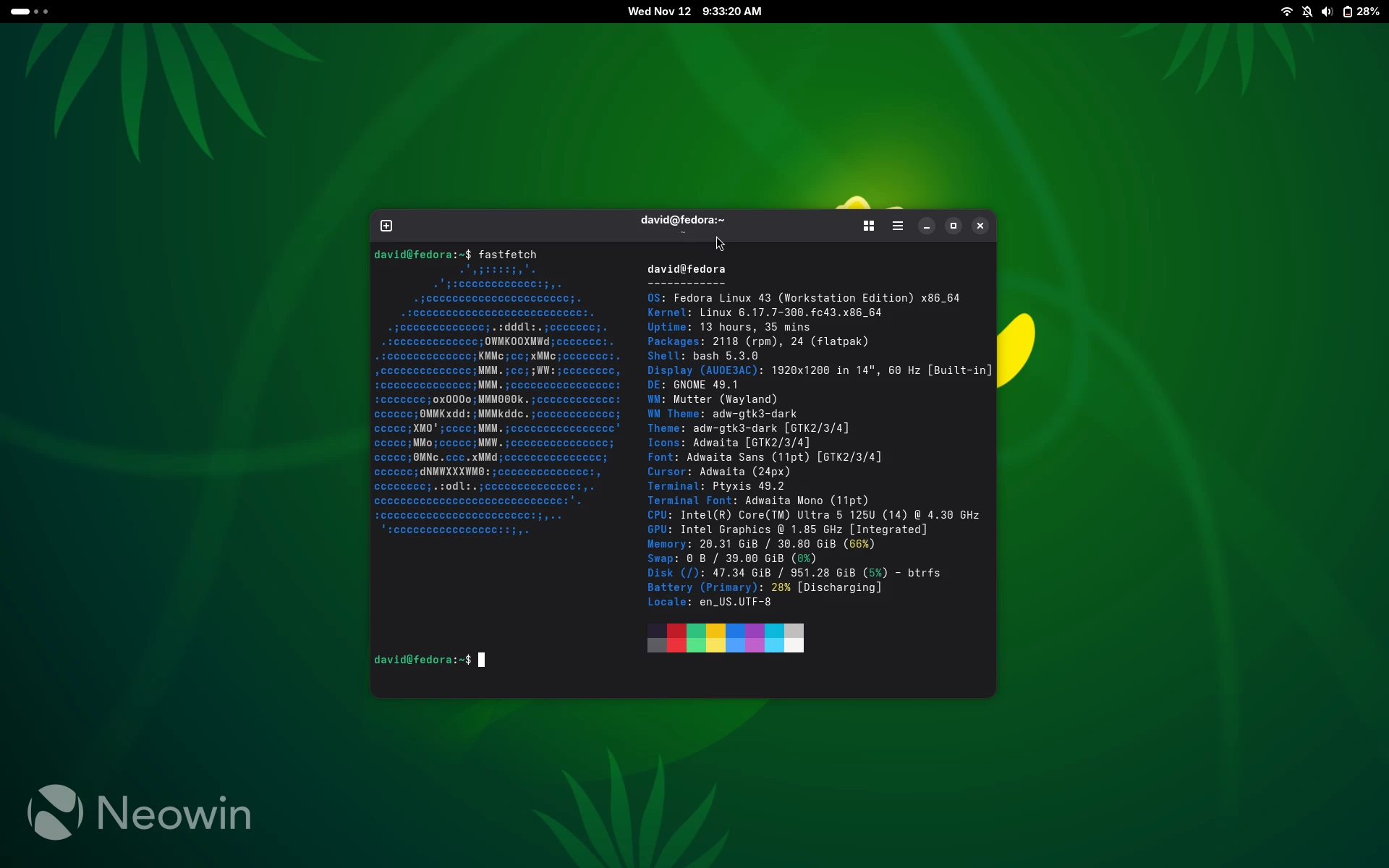
Fastfetch is a command-line utility for fetching and displaying system information in a pretty format, and it is a modern, performant replacement for the no-longer-maintained Neofetch. The utility has been updated to version 2.55, bringing dynamic output refreshing, support for media cover art as logos, and parallel command execution.
Commands are now executed in parallel by default, which improves performance when gathering data. This behavior can cause problems with certain scripts, so you can disable it in the configuration file by setting "parallel": false.
Fastfetch does not create this file by default, so you must first run fastfetch --gen-config to get one. Inside the config.jsonc file, you can control the entire look and feel of the output. You can reorder modules, disable ones you do not care about, and generally choose what information you want to see.
If you don't want to start from scratch, you can use a preset. For instance, running fastfetch --config neofetch --gen-config creates a config file that mimics Neofetch's old layout.
There's a new --dynamic-interval [interval in ms] that you can pass into the command to get an auto-refreshing output. One catch is that some modules, like Display and Media, do not support these dynamic updates because of some internal limitations.
Apart from the dynamic display, you would also find support for using the cover art from your current playing media as the logo. You can enable this by passing a flag like --sixel media-cover on the command line, or by adding the following in your config file:
"logo": {
  "type": "sixel",
  "source": "media-cover"
}
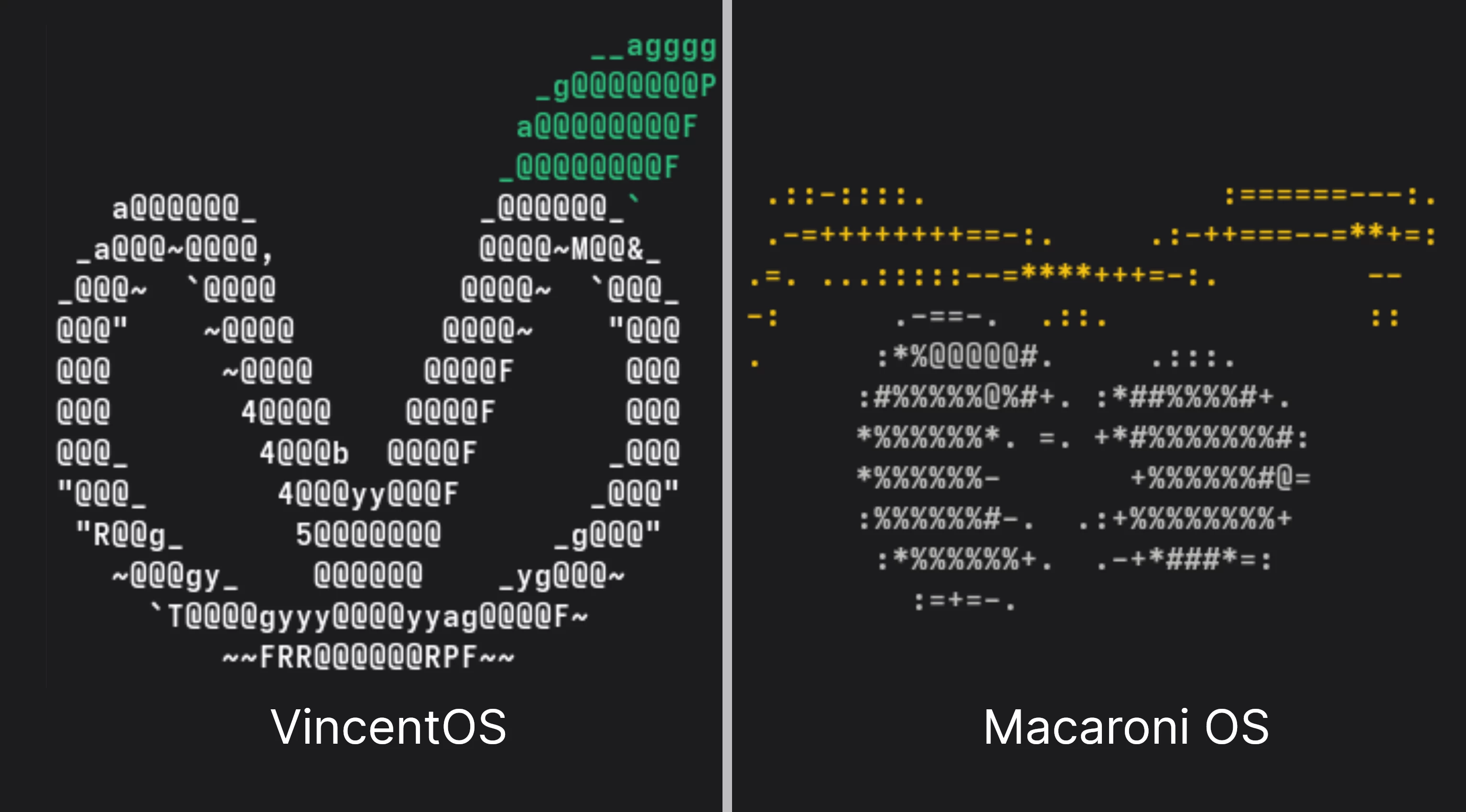
Speaking of logos, two new ones were added for Vincent OS and Macaroni OS. Here's what they look like:
Other changes include native GPU detection on OpenBSD and NetBSD, which removes a dependency on libpciaccess. Fastfetch also now supports GPU detection on GNU/Hurd, shows the Debian point release when running on Raspberry Pi OS, and can detect the version of the Brush shell.
Hope you enjoyed this news post. Feedback welcome.
Posted Thursday 13 November 2025 at 1:25 am AEST (my time).
News posts... 2023: 5,800+ | 2024: 5,700+ | 2025 (till end of October): 5,009
- Akaneharuka
-
 1
1
Recommended Comments
Join the conversation
You can post now and register later. If you have an account, sign in now to post with your account.
Note: Your post will require moderator approval before it will be visible.