

3175x175(CURRENT).thumb.jpg.b05acc060982b36f5891ba728e6d953c.jpg)
Here are all the Start menu, Taskbar, and Windows Search improvements coming with version 26H2.
Windows 11 2026 update (version 26H2) doesn't introduce a dramatic overhaul of the desktop. However, it does bring meaningful improvements to three of the operating system's most frequently used experiences, including the Start menu, Taskbar, and Windows Search.
Throughout the 2026 development cycle, Microsoft has been paying attention to adding long-requested customization options, streamlining navigation, and improving search accuracy.
Before proceeding, it's worth clarifying that while these changes are expected to appear in version 26H2, Microsoft will continue to introduce new improvements through regular monthly updates. As such, the changes for the Start menu, Taskbar, and Search are also expected to roll out for version 25H2. This could even happen before they become available for version 26H2.
In this guide, I'll walk you through the biggest changes coming with version 26H2.
Taskbar changes
When Microsoft first introduced Windows 11, it introduced a redesigned Taskbar with a cleaner, more modern look. However, that redesign also removed several long-standing customization options, including the ability to move the Taskbar to different edges of the screen. This change quickly became one of the operating system's most criticized design decisions.

(Image credit: Mauro Huculak)
On Windows 11 version 26H2, the company is finally restoring that functionality. Users can now position the Taskbar at the top, bottom, left, or right edge of the display, bringing back a level of flexibility that had been available in previous versions.
The operating system also automatically adjusts the interface based on the selected Taskbar position. For example, when the Taskbar is placed at the top of the screen, the Start menu and Search interface open downward from the top edge. Taskbar buttons, system tray icons, and the clock also reposition correctly to match the chosen layout.
There are a few differences when using a vertical Taskbar. The clock displays the year using the abbreviated format instead of the full four-digit year, and the option to show seconds isn't currently available. However, both layouts (left and right) fully support app ungrouping and labels when using the "Never combine" option.
You can change the Taskbar position from Settings > Personalization > Taskbar > Taskbar behaviors, where Microsoft also includes a live preview of each layout before you apply the change.

(Image credit: Mauro Huculak)
Another legacy customization that didn't make it into the new design was the ability to change the Taskbar size. Furthermore, the Taskbar was noticeably taller than in previous versions, in part because the company intentionally optimized the experience for touch devices.

(Image credit: Mauro Huculak)
Now, in version 26H2, there's a new option under the "Taskbar position" that allows users to make the Taskbar smaller.
One important note I want to make is that when using the smaller Taskbar, it'll also make the icons smaller, and the option to make icons smaller at the bottom of the page will be disabled.
Start menu improvements
The Start menu has been one of the most controversial parts of Windows 11 since the operating system debuted. Although the company replaced the aging Windows 10 design with a streamlined interface, the new experience sacrificed many customization options in the process. As part of Windows 11 version 26H2, the company is (somewhat) reintroducing several changes that give users more control over how the Start menu looks and behaves.

(Image credit: Mauro Huculak)
Although the redesign modernized the Start menu, it also removed several customization options, making it one of the most criticized parts of Windows 11. Since its debut, users have repeatedly asked for greater flexibility and control over the experience.
In this release, Microsoft is addressing many of those requests with a series of long-awaited improvements.
The Start menu is also becoming more customizable. Rather than forcing a layout based on your display size, Windows 11 will include different size options that you can select yourself. You still won't be able to drag the edges to resize the menu or switch to a full-screen layout like Windows 10, but having preset sizes is a welcome improvement.
Microsoft is also adding more ways to customize the Start menu. You can now choose whether the "Pinned," "Recent" (previously Recommended), and "All" sections appear, making it easier to hide the parts you don't use.

(Image credit: Mauro Huculak)
The company is also separating file recommendations from system recommendations. As a result, users can turn off recommended content in the Start menu without affecting recent files or Jump Lists elsewhere on the desktop, such as on the Taskbar and in File Explorer.
The company is also adding a privacy feature for the Start menu. A new setting hides the user account name and profile picture while sharing screen, helping prevent personal or work-related information from appearing during meetings, presentations, or live streams.
Windows 11 is also getting a new privacy option for the Start menu. The feature is designed for users who share their screen during meetings, presentations, or live streams by hiding sensitive content that could reveal personal or work-related information.

(Image credit: Mauro Huculak)
These new customization and privacy settings are available from Settings > Personalization > Start, giving users more control over one of Windows 11's most frequently used experiences.
Search changes
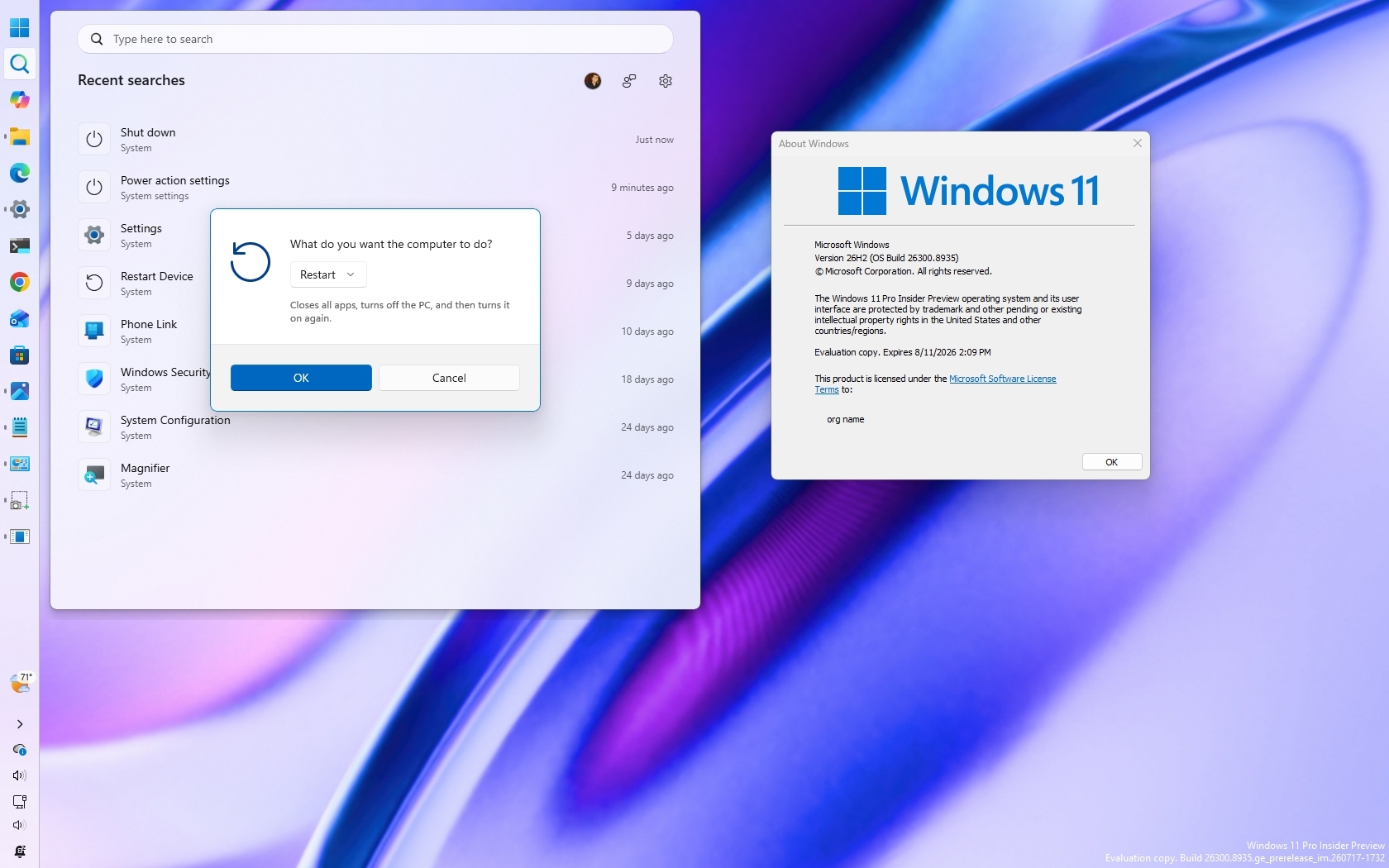
Windows Search is also receiving one of its biggest updates since Windows 11 launched, with Microsoft focusing on a cleaner interface, more relevant results, and greater user control.

(Image credit: Mauro Huculak)
One of the most noticeable changes is a redesigned Search home page. Instead of displaying trending topics, promotional content, and other distractions, the experience now centers on your recent searches, making it easier to jump back into previous queries while reducing visual clutter.
Microsoft is also changing how Windows Search displays results. When a web result is the best match, Search now puts the answer front and center instead of prioritizing products or sponsored content. The interface has also been updated with better spacing, clearer source labels, and thumbnail previews to make results easier to scan.
For users who prefer a local search experience, Windows 11 now includes separate options to turn off web results and Microsoft Store suggestions. These settings are available from Settings > Privacy & security > Search, allowing you to tailor the experience to your preferences.

(Image credit: Mauro Huculak)
Behind the scenes, the software giant has also updated the ranking system to prioritize local content. For example, apps, settings, and files now appear ahead of web and Microsoft Store results when they're the most relevant match, making it faster to find content stored on your computer. As part of these improvements, settings searches are more accurate and consistently rank higher in the results.

(Image credit: Mauro Huculak)
The company has also enhanced search accuracy by improving support for misspelled queries, missing or extra letters, and partial words. In addition, Windows Search can now find local files using as little as two characters and does a better job of identifying matching cloud and connected files when they're the most relevant result.
Finally, Microsoft is also making the Search box taller by increasing its height by four pixels.
Windows Central's Take
I think version 26H2 is shaping up to be another practical update. Instead of chasing another visual redesign or introducing features that only appeal to a small group of users, the company is finally improving parts of Windows 11 that millions of people interact with every day. The reversal of a movable Taskbar, more control over the Start menu, and a cleaner Windows Search experience show that Microsoft is listening to user feedback.
I also like that these changes focus on giving users more choice rather than forcing a new way of using the operating system. While I would've liked to see even more customization, such as freeform Start menu resizing or additional Taskbar options, this is a meaningful step in the right direction.
What are your thoughts on the new Start menu, Taskbar, and Search changes coming to Windows 11 26H2? Let me know in the comments.
Hope you enjoyed this news post. Feedback welcome.
Posted Monday 27 July 2026 at 8:21 am AEST (my time).
News posts: 2023 5,800+ | 2024 5,700+ | 2025 5,700+ | 2026 (to end of June) 2,475
Recommended Comments
There are no comments to display.
Join the conversation
You can post now and register later. If you have an account, sign in now to post with your account.
Note: Your post will require moderator approval before it will be visible.