

3175x175(CURRENT).thumb.jpg.b05acc060982b36f5891ba728e6d953c.jpg)
Here's your in-depth break down on silicon-carbon batteries, and why you should care about this next-gen technology.
Batteries are all around us, in almost all of the tech that billions of people use every day. Our phones, laptops, handhelds, wireless accessories, and more — all reliant on the battery inside.
Most of those rechargeable batteries are lithium-ion, and have been for a long time. That's starting to change with the arrival of new silicon-carbon batteries (especially in high-end smartphones), which promise a range of benefits.
What are silicon-carbon batteries?
Silicon-carbon batteries are a newer technology that promises a range of benefits, including greater cell density (basically, more capacity in the same space), faster charging, and improved efficiency. These batteries are actually an evolution of the lithium-ion technology we've been using for decades, though, rather than a complete replacement.
We're already starting to see impressive silicon-carbon batteries in high-end smartphones, but the technology will likely continue to expand to other personal electronics like laptops and accessories. Electric vehicle manufacturers like Tesla are also exploring silicon-carbon batteries for cars.
How is silicon carbon different from lithium ion?
The general construction of a silicon-carbon battery is actually identical to a traditional lithium-ion battery. To greatly simplify, you have the negative anode, the positive cathode, and the electrolyte medium that acts as the bridge between the two halves, moving electrons through an external circuit to your device and ions through the battery as they're charged or discharged.
Most lithium-ion batteries use stable graphite for the anode and a lithium compound for the cathode. Silicon-carbon batteries instead use a silicon mixture for the anode, as silicon has a far greater potential capacity (up to ten times more) — at the cost of massively expanding and contracting throughout charge cycles, which complicates the manufacturing process and risks increased degradation over time.
That's where carbon comes in. Interlacing the silicon anode with carbon stabilizes it, tempering drawbacks while retaining the benefits. The actual process of converting these chemicals into electrical energy is the same, though, so you can actually call these silicon-carbon lithium-ion batteries (or Si/C Li-ion, if you don't want to spend all day writing).
What are the benefits of silicon-carbon batteries?
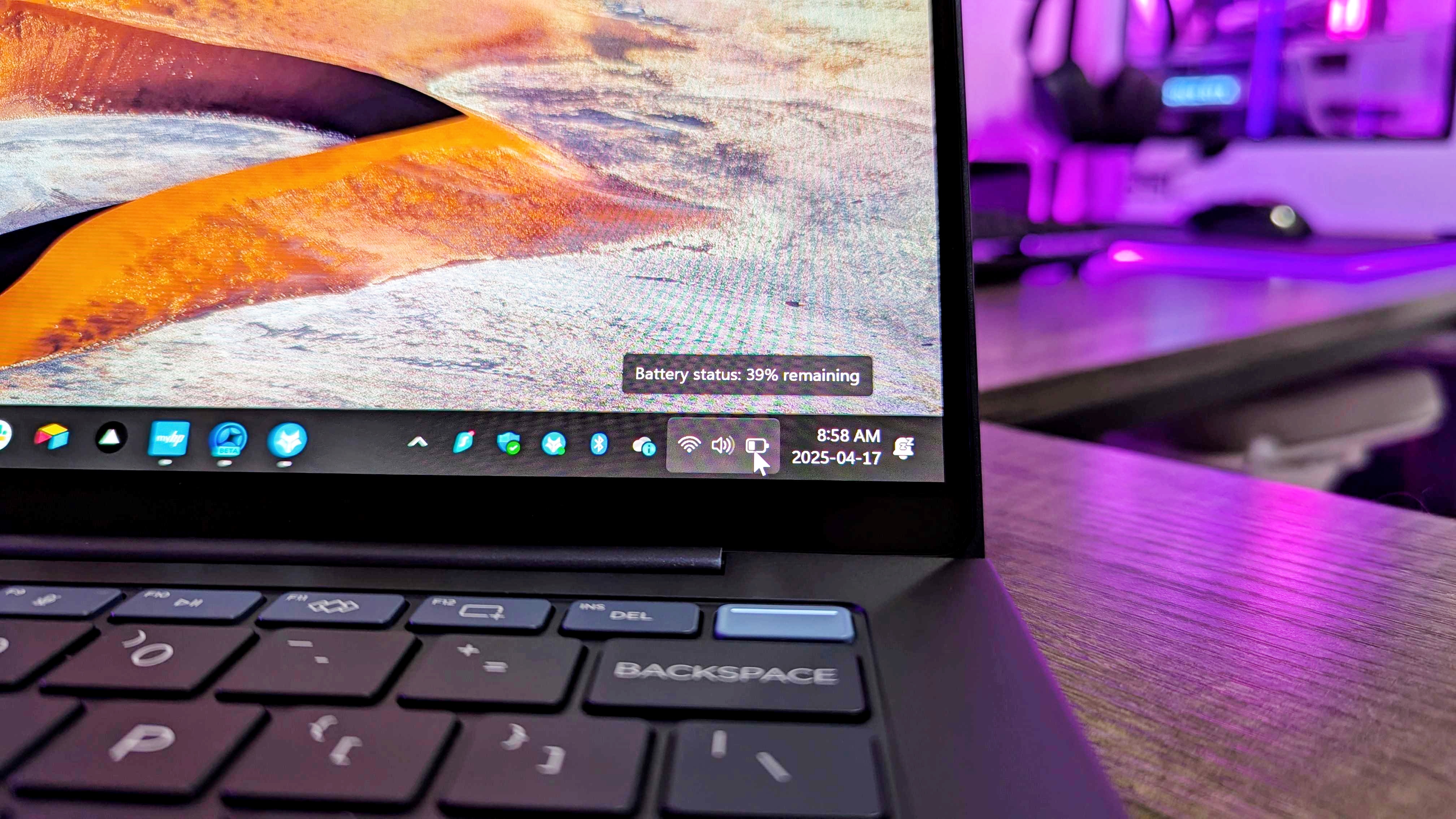
Silicon carbon could mean bigger batteries in our laptops.
(Image credit: Ben Wilson | Windows Central)
Silicon-carbon batteries are an upgrade over traditional lithium-ion cells overall, but the benefits are largely centered around one thing: greater cell density. Basically, silicon-carbon has a much higher capacity in the same volume (around 20-30% more), allowing for bigger batteries that aren't actually bigger.
Where 5,000mAh batteries used to be considered "large," we're now regularly seeing normal-sized smartphones with battery capacities exceeding 6 or even 7,000mAh. Let's break it down even further, though. Here are four benefits of silicon-carbon batteries over lithium-ion batteries.
- Better battery life. More battery capacity obviously plays a huge role in delivering greater battery life, and that's exactly what we're seeing with smartphones rocking silicon-carbon batteries. True two-day phones aren't as uncommon with silicon carbon.
- Slimmer phones. Greater battery density also means being able to make thinner, lighter smartphones that don't compromise on battery life. This is especially important for foldable smartphones, which benefit from being as slim as possible.
- Faster charging. Silicon-carbon batteries also boast greater thermal conductivity and stability, which allows for faster charging rates. Manufacturers split lithium-ion batteries into multiple cells to accomplish this, but silicon-carbon batteries can push boundaries even further.
- Improved performance. That improved thermal stability can also translate to greater sustained performance and less overheating when you're truly pushing your phone to the limit, like playing demanding games or taking lots of photos on a hot summer day.
Any phone can benefit from a silicon-carbon battery, but the upgrades are most notable with foldable smartphones, like the Samsung Galaxy Z Fold7 we reviewed. Foldables are designed to be the ultimate powerhouses for the most demanding users, but often have to compromise on battery life and charging performance because they pack so much into a slim frame.
The aforementioned Z Fold7 has a meager 4,400mAh lithium-ion battery, while the Chinese-bound Oppo Find N5 has a massive 5,600mAh silicon-carbon battery. That's around 27% more battery while being relative in overall size, weight, and thickness.
Do silicon-carbon batteries have any downsides?
Because silicon-carbon batteries are fairly new, the compromises aren't well-documented yet. Apart from the technology still being more expensive than normal lithium-ion batteries, we do know of one possible downside: longevity.
Each time a battery is charged and then depleted, it completes a charge cycle. This is also the primary metric for quantifying a rechargeable battery's potential lifespan, as each charge cycle very slightly decreases the efficiency and maximum capacity of a battery. It's here that lithium-ion batteries still have the advantage.
As I mentioned before, pure silicon as a graphite replacement for battery anodes is flawed because — despite boasting many times the maximum capacity — the rate of physical expansion and depression through charge cycles is too severe. To put it simply, it destroys the battery too quickly to make sense for products we may rely on day after day for several years.
Silicon-carbon batteries almost completely fix this issue, providing the benefits listed above without entirely sacrificing longevity — but the best lithium-ion battery is practically guaranteed to survive more charge cycles than the best silicon-carbon battery.
That being said, the gap shouldn't be severe enough for most people to ever notice, and the inherent advantages of silicon-carbon batteries make the shortened lifespan even less of an issue.
For one, the higher capacities of silicon-carbon batteries should lead to far better battery life — which means less charging and less frequent completely charged cycles. A great way to extend a battery's lifespan is by avoiding charging it to 100% (a maximum of 80% is the ideal), too, and larger silicon-carbon batteries fare a better chance of delivering still-great battery life even without that headroom.
What products use silicon-carbon batteries?

The OnePlus 15 has one of the largest batteries I've ever seen in a smartphone.
(Image credit: Android Central)
You might be wondering if you should be looking for silicon-carbon batteries among the best Windows laptops, but the technology hasn't really made the leap beyond smartphones yet.
In the future, we could see tablets, laptops, and gaming handhelds with larger batteries and enhanced longevity, but silicon-carbon batteries are still in the early adoption stage, even among smartphones. So far, mostly Chinese smartphone brands like Oppo and Xiaomi have used it.
Easily the best example of a smartphone truly taking advantage of silicon-carbon technology (that many of us will actually be able to buy) is the OnePlus 15. This flagship smartphone boasts an insane 7,300mAh battery split between two 3,650mAh cells, with up to 120W wired charging and 50W wireless charging.
For comparison, the Samsung Galaxy S25 Ultra is bigger, heavier, and more expensive, and only has a 5,000mAh battery with 45W wired charging and 15W wireless charging. That's a big difference. You can read more about the OnePlus 15 at AndroidCentral.com, our sister site.
Unfortunately, none of the biggest smartphone brands in the United States (that being Apple, Samsung, and Google) are likely to adopt silicon batteries any time soon. Apple is famously conservative about embracing new technologies, Samsung avoids taking battery- and charging-related risks thanks to the infamous Samsung Galaxy Note 7 fiasco, and Google's Pixel devices have never been on the cutting edge hardware-wise.
Hopefully, though, I'll be proven wrong and we'll see a rapid increase in silicon-carbon batteries in the next few years.
Is silicon carbon the same as silicon carbide?
No, silicon carbon is very different from silicon carbide. The former is a type of battery, while the latter is a type of semiconductor that is used in a variety of applications, but especially in large-form, high-voltage, and high-capacity charging, like electric vehicle charging stations and renewable energies.
Silicon carbide is actually closer to gallium nitride (GaN), another semiconductor becoming increasingly common with smaller high-capacity chargers for smartphones and laptops. In the future, we're almost guaranteed to see silicon-carbon batteries in our devices paired with gallium-nitride chargers more often.
Is silicon carbon the future of battery technology?
In a sense, it does seem like silicon-carbon batteries are the future, but it's certainly not the only path forward. Especially with the growth of the electric vehicle market and the lessened reliance on fossil fuels for energy, investment in battery technology is only continuing to increase.
To provide just one example, many companies — like Samsung and a variety of vehicle and drone manufacturers — are heavily interested in the development of solid-state batteries. Solid-state batteries dramatically change how rechargeable batteries are constructed by switching to a solid electrolyte instead of the gel-like polymers used in current batteries, massively increasing density, capacity, and potentially safety. Solid-state batteries are already used in a variety of small form-factor products like pacemakers, but investment in the technology could see it scaled to many more categories.
Traditional lithium-ion batteries also aren't going anywhere. It's a mature technology with decades of improvement in manufacturing, making it cheaper (at least right now) and easier to produce than newer technologies.
Hope you enjoyed this news post. Feedback welcome.
Posted Friday 14 November 2025 at 4:04 am AEST (my time).
News posts... 2023: 5,800+ | 2024: 5,700+ | 2025 (till end of October): 5,009
- DLord and phen0men4
-
 2
2
Recommended Comments
There are no comments to display.
Join the conversation
You can post now and register later. If you have an account, sign in now to post with your account.
Note: Your post will require moderator approval before it will be visible.