

3175x175(CURRENT).thumb.jpg.b05acc060982b36f5891ba728e6d953c.jpg)
“One of the questions is what the initial orbit will be for Artemis III.”
NASA’s Artemis II mission has yet to return to Earth—it will do so on Friday evening, splashing down into the Pacific Ocean off the coast of San Diego—but the agency is already nearing some key decisions on the next Artemis mission.
The US space agency announced six weeks ago that it was modifying its Artemis timeline to insert a mission before beginning planned lunar landings. This new mission, designated Artemis III and intended to fly in Earth orbit rather than to the Moon, would attempt to “buy down” risk to give the lunar landing mission (now Artemis IV) a higher chance of success.
NASA Administrator Jared Isaacman said Tuesday afternoon that the space agency is debating about which orbit to fly Artemis III in before locking in a blueprint, noting that the first “senior level” Artemis III mission design discussion had taken place earlier in the day.
Where will it occur?
“One of the questions is what the initial orbit will be for Artemis III,” Isaacman said during a news conference. “Is it going to be LEO or HEO? There are pros and cons for each of them, for sure.”
Low-Earth orbit, or LEO, is designated as a distance of about 160 km to 2,000 km above the Earth’s surface. High-Earth orbit is considered to be greater than 36,000 km from the Earth’s surface, above geosynchronous orbit.
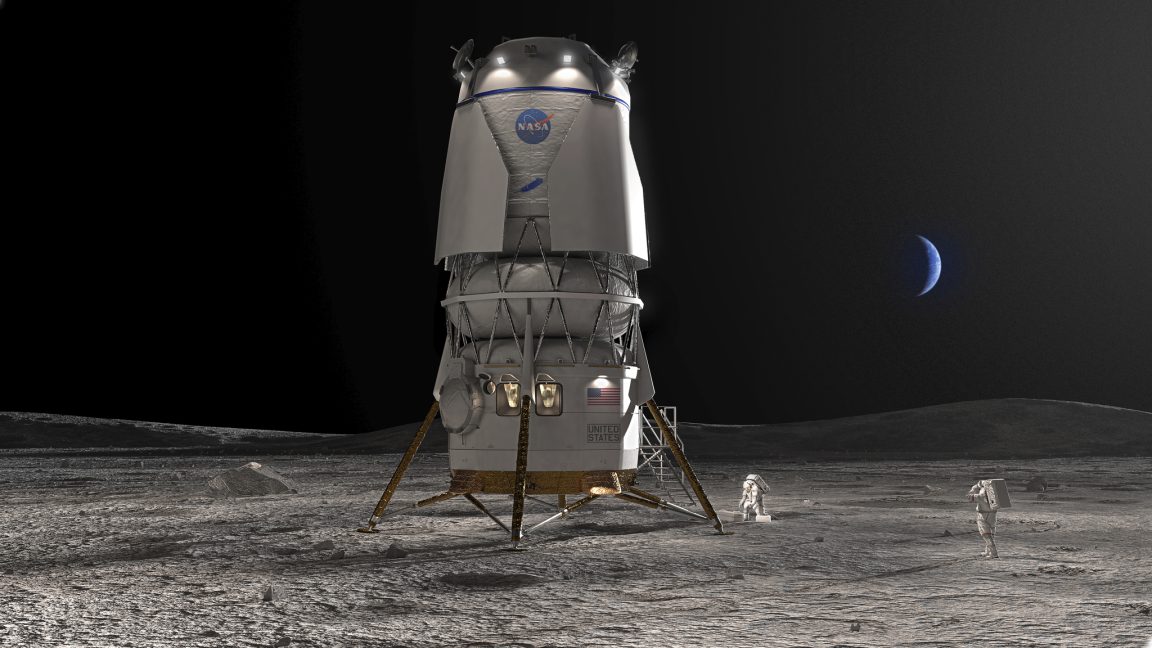
During Artemis III, the Orion spacecraft will launch (presumably with four astronauts) on a Space Launch System rocket from Florida. In Earth orbit, they will rendezvous with one or both of NASA’s Human Landing Systems. These are the Starship vehicle’s upper stage under development by SpaceX and a modified Blue Moon lander being built by Blue Origin.
A rendezvous in low-Earth orbit would potentially allow NASA to fly the SLS rocket without using an Interim Cryogenic Propulsion Stage, or ICPS. This is valuable because it could then save this final remaining ICPS stage for the Artemis IV mission (for future SLS missions, NASA would use a Centaur V upper stage, also provided by United Launch Alliance). For an Artemis III mission in a higher orbit, however, NASA would need the ICPS to push Orion there.
A rendezvous in high-Earth orbit would better mimic thermal and other conditions near the Moon, and this might be a more benign environment for the Orion spacecraft, which is sensitive to thruster pluming and other thermal issues. High-Earth orbit would also provide a stiffer test for Orion’s modified heat shield.
The closest Apollo analog to this plan, the Apollo 9 mission, during which the Apollo spacecraft tested rendezvous with the Lunar Module, took place in low-Earth orbit between 200 and 500km.
What will Orion dock with?
The other major unknown is which of the lunar landers Orion will dock with. NASA’s preference is to perform a test with both Starship and Blue Moon to get good data on their performance and confidence in their handling.
Isaacman seemed to think this was possible for a mission in 2027. “There are a lot of things based on the information we have available today, from feedback from our vendors, that we know are achievable,” he said.
But that will depend on the readiness of Starship and Blue Moon. Starship V3, the latest generation of SpaceX’s massive rocket, is undergoing final testing before a debut launch that could take place in about a month. And Blue Origin’s initial Blue Moon Mk. 1 lander is, Isaacman said, “wrapping up” vacuum-chamber testing at Johnson Space Center in Houston.
Isaacman said it is important for SpaceX’s Starship and Blue Origin’s New Glenn rocket to reach higher launch cadences to support not just Artemis III but many future missions to the lunar surface. NASA is clearly watching both closely.
“We’ll all have a sense of which path we’re going to go down based on launch cadence of our two HLS (human landing system) providers, both of which have launches coming up in the next month or less,” Isaacman said. “A big key to our strategy—to not just return to the Moon but to stay and build a base—is the rapid reusability of heavy-lift launch vehicles. The more they get experience doing that, the more options that are available to us for Artemis III.”
Hope you enjoyed this news post. Feedback welcome.
Posted Thursday 9 April 2026 at 5:38 am AEST (my time).
News posts: 2023 5,800+ | 2024 5,700+ | 2025 5,700+ | 2026 (to end of March) 1,297
- Mutton
-
 1
1
Recommended Comments
There are no comments to display.
Join the conversation
You can post now and register later. If you have an account, sign in now to post with your account.
Note: Your post will require moderator approval before it will be visible.