

3175x175(CURRENT).thumb.jpg.b05acc060982b36f5891ba728e6d953c.jpg)
The AI bubble might be closer to bursting than anyone wants to admit.
The AI market is undeniably booming. The six companies at the top of the world's valuation index, including NVIDIA, Microsoft, Apple, Google, Amazon, and Meta, are all deeply invested in AI in some form, and it seems like US stock markets are largely being held afloat by the unbelievable profits raked in by the firms.
NVIDIA, the company supplying the world with an estimated 90% of the specialized GPUs required in AI data centers, recently became the first company to hit (and surpass) a $4 trillion market valuation.
Microsoft also passed the $4 trillion valuation milestone roughly a week later, and it has invested a massive sum in OpenAI, its ChatGPT LLM, and Windows 11's Copilot AI assistant.
Despite all of the promises and hypotheses from major AI players as to what their technology will unleash on the world, for good or for bad, tech trends and major studies have increasingly pointed to the AI boom being one massive bubble that will rival (or surpass) the dot-com era.
A new report published by MIT's NANDA initiative — a program designed to help develop a "true internet of AI agents" — suggests that only about 5% of AI pilot programs actually make it beyond the incubation stage (via Fortune).
A new report published by MIT's NANDA initiative suggests that only about 5% of AI pilot programs actually make it beyond the incubation stage.
MIT's research involves surveys and interviews with hundreds of employees and heads of firms, as well as outside analysis of hundreds of AI pilot programs that may or may not have found success before completely stalling out.
What are those other 95% of AI pilot programs doing to fail? MIT's report suggests that it's the enterprise sector and its inability to easily adapt to AI tools that's the issue, rather than a lack of quality in the offered AI models.
As Fortune points out, resource misallocation is also a cause, with "more than half of generative AI budgets" being spent on marketing tools rather than what makes the most money — using AI to automate and streamline.
MIT's paper arrives about a month after a report from Gartner predicted that "at least 30% of generative AI projects will be abandoned after proof of concept by the end of 2025."
What lessons can be learned from the 5% of successful AI pilot programs?
When nearly every AI pilot winds up a cautionary tale, the most exceptional successes now stand out, not because they cracked some secret algorithm, but because they treated AI like any other high-stakes investment.
The 5% that succeed start with a problem worth solving.
Successful companies are not after generative AI because it's trendy, but because they are chasing inefficiencies or opportunities with measurable upside. That means setting KPIs (key performance indicators) before a line of code is written and attaching those metrics directly to revenue, cost savings, or reduced risk.
They also build for adoption, not just proof-of-concept glory. Good pilots are built to fit in with what already exists with as little friction as possible, and the step from "pilot" to "production" should feel effortless.
Finally, they have champions at every level—from engineers who can iterate rapidly to executives who appreciate their strategic value and are willing to protect the project from short‑term budget cutbacks. That cross-functional alignment maintains momentum when early results are messy and is usually the difference between a pilot that scales and one that stalls.
In short, the successful 5% aren't just lucky. They are disciplined, purposeful, and relentlessly focused on business outcomes.
AI was just booming, but now it's a bubble. What gives?
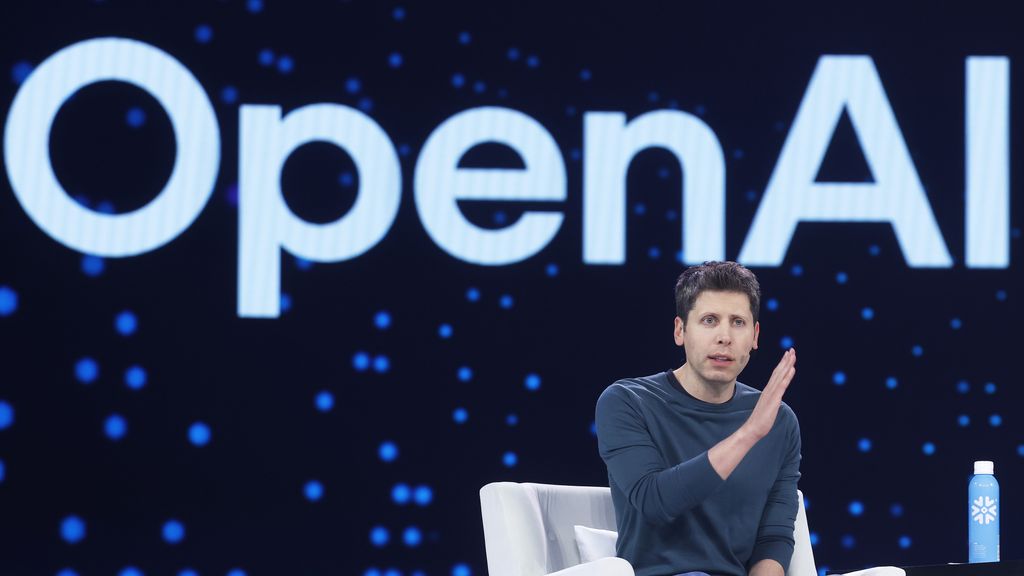
Open AI CEO Sam Altman speaks during Snowflake Summit 2025.
(Image credit: Getty Images | Justin Sullivan)
Following the release of the MIT NANDA paper, tech stocks in the US shed about $1 trillion worth of value over the course of four days. The main culprit? Overevaluation of AI companies that have no problem sucking up billions of dollars in investments, with meager results to show.
OpenAI CEO Sam Altman — creator of the most popular AI model, ChatGPT — didn't help the situation. Five days earlier, The Verge interviewed Altman and quoted him as saying that AI is in a bubble.
When bubbles happen, smart people get overexcited about a kernel of truth. If you look at most of the bubbles in history, like the tech bubble, there was a real thing. Tech was really important. The internet was a really big deal. People got overexcited. Are we in a phase where investors as a whole are overexcited about AI? My opinion is yes.
Sam Altman, speaking with The Verge
Altman's comments arrived following the disastrous rollout of OpenAI's latest model, GPT-5. GPT-5, which Altman hyped to incredible heights, was so bad that it forced OpenAI to resurrect older models, including GPT-4o.
The catch? GPT-4o is no longer free, forcing users to pay a monthly subscription to return to what they viewed as the superior AI model.
OpenAI's failure to live up to its GPT-5 promises didn't come out of nowhere. A report from 2024 suggested that OpenAI, Google, and Anthropic had hit a wall in terms of developing advanced AI models. Microsoft's founder, Bill Gates, predicted in 2023 that this type of plateau seen with GPT-5 would play out at some point.
Consumer perception is not only a PR problem; it's a measure of survival. Now, AI is caught up in a hype wave that's half excitement, half suspicion. Each over‑promised rollout (hello there, GPT‑5) erodes public trust. When users feel like they're beta-testing half-baked technology, they're less likely to stick around — and less likely to rave about it within their companies or networks.

Gary Marcus on center stage during opening night at Web Summit Vancouver 2025.
(Image credit: Getty Images | Sam Barnes)
Gary Marcus, a psychologist, cognitive scientist, and AI researcher who publishes the "Marcus on AI" Substack and newsletter — of which I've been an avid reader for the past 16 months — has also been sounding the AI bubble alarm for several years.
A recent entry published August 20 from Marcus highlights the MIT NANDA study, stock market concerns, and the changing temperature surrounding AI firms and their promises.
Marcus originally broached the AI bubble subject when OpenAI was still working with GPT-2, positing that the economics of AI simply don't make sense. As Marcus says, "But until recently enthusiasm kept rising and rising, no matter what I said."
But then we all saw what happened with GPT-5; Altman spent years promising the moon, and in the end, long overdue, didn’t even come close to delivering. A lot of people took note.
Gary Marcus, Marcus on AI
Leading figures in the AI world haven't been shy about laying out the destruction that AI will bring to white collar job sectors and even to humanity itself. And there's certainly the potential for this sort of dystopian future to arrive.
But as I (and many others) have begun to suspect, these prosthelytizations could be more for the sake of bolstering hype and investments than accurate warnings of the future.
AI has the potential to do great things, and I don't imagine it's going anywhere in the near future. But is there an inflating bubble that's threatening now more than ever to pop? Absolutely.
What are your thoughts on the recent MIT study and the implications it has on the AI market? Is AI overhyped and in a massive bubble? Let me know in the comments section below!
Hope you enjoyed this news post. Feedback welcome.
Posted Friday 29 August 2025 at 12:33 pm AEST (my time).
News posts... 2023: 5,800+ | 2024: 5,700+ | 2025 (till end of July): 3,458
- Mutton
-
 1
1
Recommended Comments
There are no comments to display.
Join the conversation
You can post now and register later. If you have an account, sign in now to post with your account.
Note: Your post will require moderator approval before it will be visible.