

3175x175(CURRENT).thumb.jpg.b05acc060982b36f5891ba728e6d953c.jpg)
Europe takes another step toward fostering competition in a stagnant launch market.
The European Space Agency has selected five launch startups to become eligible for up to 169 million euros ($198 million) in funding to develop alternatives to Arianespace, the continent's incumbent launch service provider.
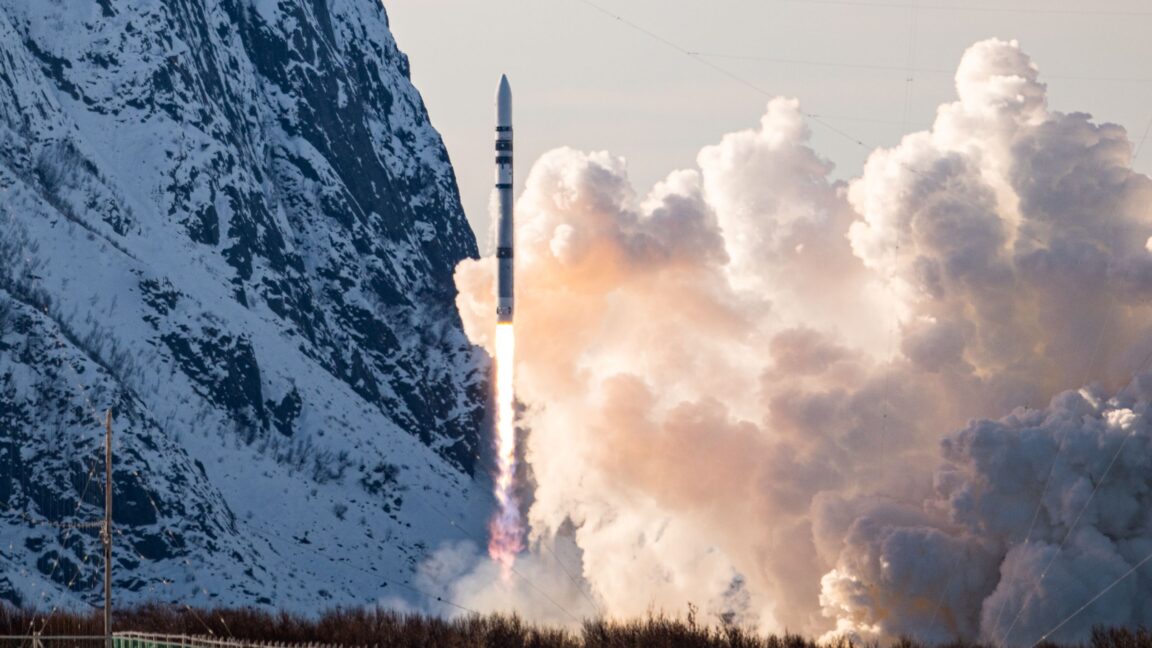
The five companies ESA selected are Isar Aerospace, MaiaSpace, Rocket Factory Augsburg, PLD Space, and Orbex. Only one of these companies, Isar Aerospace, has attempted to launch a rocket into orbit. Isar's Spectrum rocket failed moments after liftoff from Norway on a test flight in March.
None of these companies is guaranteed an ESA contract or funding. Over the next several months, the European Space Agency and the five launch companies will negotiate with European governments for funding leading up to ESA's ministerial council meeting in November, when ESA member states will set the agency's budget for at least the next two years. Only then will ESA be ready to sign binding agreements.
In a press release, ESA referred to the five companies as "preselected challengers" in a competition for ESA support in the form of launch contracts and an ESA-sponsored demonstration to showcase upgraded launch vehicles to heave heavier payloads into orbit. So far, all five of the challengers are focusing on small rockets.
Earlier this year, ESA released a request for proposals to European industry for bids to compete in the European Launch Challenge. ESA received 12 proposals from European companies and selected five to move on to the next phase of the challenge.
A new way of doing business
In this competition, ESA is eschewing a rule that governs nearly all of the space agency's other programs. This policy, known as geographic return, guarantees industrial contracts to ESA member states commensurate with the level of money they put into each project. The most obvious example of this is Europe's Ariane rocket family, whose development was primarily funded by France, followed by Germany in second position. Therefore, the Ariane 6 rocket's core stage and engines are built in France, and its upper stage is manufactured in Germany.
European Space officials have cited the rule of geographic return as a reason for delays and cost overruns on ESA projects, including the Ariane 6, which debuted in July 2024, several years behind schedule. Essentially, the policy compels ESA to choose contractors in countries providing funding to each program, regardless of whether they offer the most reliable or cost-effective solution.
With the European Launcher Challenge, ESA is upending this policy by first selecting the launch contractors, then going to their home governments to secure funding for the program.
Two of the challengers selected by ESA are from Germany. Isar Aerospace, headquartered in Munich, is developing a small two-stage orbital launch vehicle named Spectrum. Just to the northwest of Munich, Rocket Factory Augsburg is developing a rocket called RFA One with similar capabilities to Spectrum.
MaiaSpace is owned by ArianeGroup, the parent company of Arianespace, based in France. Spanish company PLD Space is developing a launch vehicle called the Miura 5 and in 2023 launched its first liquid-fueled rocket into the upper atmosphere on a suborbital test flight. Orbex, headquartered in the United Kingdom, is working on a rocket named Prime. All five companies' rockets are currently gearing their efforts toward the small satellite launch market.
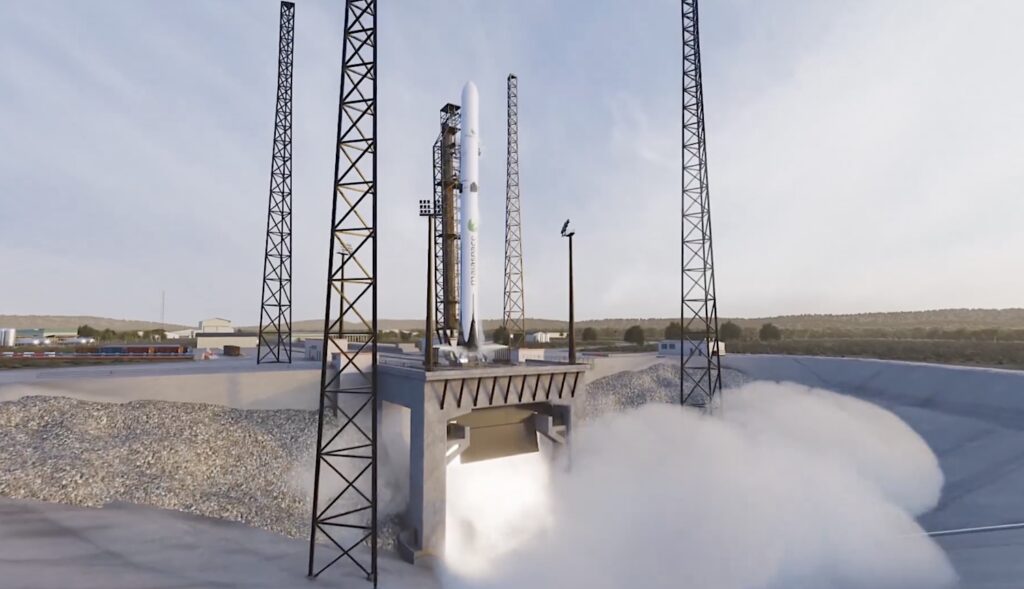
The European launcher challenge will include two components, the first of which will be for launch services for ESA missions slated for launch from 2026 through 2030. The second part will be a contract to demonstrate a launch service capacity upgrade, including at least one flight demonstration of the augmented launch vehicle. The cap of 169 million euros per challenger will encompass all activities under both parts of the challenge.
"With this initiative, ESA is taking decisive steps towards commercialization and expansion of launch services, which are essential for ensuring sovereignty in space," Isar Aerospace wrote on X.
ESA said it evaluated several criteria before selecting the five companies that will proceed to the next phase of the challenge. These criteria included technical maturity, business maturity and sustainability, the institutional market each company plans to serve, and compliance with procurement rules.
An infusion of up to 169 million euros would be welcome news to any of the five launch challengers. To date, these companies have primarily relied upon private investment and some funding from their home governments.
The most well-funded and advanced launch startups in Europe are primarily based in Germany, and to a lesser degree, France. Last year, Rocket Factory Augsburg and Isar Aerospace appeared to be neck-and-neck in a race to become the first company to attempt an orbital flight from a launch pad in Western Europe. Isar ultimately won the race, but its Spectrum rocket didn't make it far off the launch pad.
Let's take a look at each of the five challengers. We'll list them in order from most likely to least likely to reach orbit, as ranked by Ars Technica's space reporters.
- Isar Aerospace: Isar Aerospace is at the top of our list after becoming the first company in the group to launch an orbital-class rocket earlier this year. Isar Aerospace is the most well-funded European rocket startup, after raising more than 550 million euros ($645 million) since its founding in 2018. Most recently, Isar raised 150 million euros ($175 million) in the form of a convertible bond agreement with the American firm Eldridge Industries. Isar's Spectrum rocket is designed to place up to 1 metric ton (2,200 pounds) of payload mass into low-Earth orbit, or 700 kilograms (1,543 pounds) into a polar Sun-synchronous orbit. It stands 92 feet (28 meters) tall and is powered by engines burning a mixture of propane and liquid oxygen propellants. After the launch failure in March, Isar says it is building its second and third Spectrum rockets, with plans to return to the launch pad at Andøya Spaceport in northern Norway before the end of 2025.
- MaiaSpace: Among the five challengers, Paris-based MaiaSpace is farthest along on the path toward developing a reusable rocket. This company's launch vehicle, simply named Maia, is designed with a recoverable and reusable booster stage that will land on an offshore barge following liftoff from the Guiana Space Center in South America. Established in 2022, MaiaSpace is 100 percent owned by ArianeGroup, the only existing company in Europe that has developed a liquid-fueled orbital rocket. ArianeGroup, itself a joint venture between Airbus and Safran, has committed 125 million euros ($147 million) to kick-start the design, manufacturing, and testing of the Maia launch vehicle. Maia will stand 164 feet (50 meters) tall, with two stages powered by methane/liquid oxygen engines and the capability to deliver 1.5 metric tons (3,300 pounds) of payload mass to a Sun-synchronous polar orbit in expendable mode. MaiaSpace and its customers will have the option to fly the rocket with or without a booster recovery kit. The company aims to launch the first Maia rocket next year from the old Soyuz launch pad in French Guiana. MaiaSpace's relationship with ArianeGroup, its use of an existing launch facility, and its use of a relatively mature engine—the Prometheus engine well along in development in partnership with the European Space Agency—led us to rank MaiaSpace second among the European launch startups most likely to reach orbit.
- Rocket Factory Augsburg: Third on our list is Rocket Factory Augsburg, headquartered in the Bavarian city of the same name, with plans for a three-stage rocket dubbed RFA One that could eventually deliver up to 1.3 metric tons (2,866 pounds) of payload mass into a polar Sun-synchronous orbit. Rocket Factory Augsburg hoped to launch its first rocket before the end of last year, but the booster stage for its first RFA One rocket was destroyed last August after catching fire on a test stand at SaxaVord Spaceport in Scotland. Rocket Factory Augsburg has not returned to the spaceport to attempt another test-firing of the booster, so it's safe to assume the anomaly set the company back by at least a year. This is starting to put the company's goal of launching before the end of 2025 in doubt. The company says it has already qualified the rocket's second and third stages, while engineers prep another first stage booster for static fire testing. The RFA One rocket is designed to fly with nine first stage engines consuming kerosene and liquid oxygen propellants. It's not easy to get a precise number for how much money RFA has raised since it was founded in 2018, but adding up publicly announced fundraising rounds and government investments brings the total to somewhere near 100 million euros ($117 million).
- PLD Space: PLD Space comes in at No. 4 on our list of European launch challengers. Headquartered in Elche, Spain, PLD Space celebrated its first suborbital launch in October 2023, when the company shot a test rocket into the upper atmosphere from southern Spain in a demonstration of the propulsion technology to be used on its orbital rocket, the partially reusable Miura 5. PLD Space released few technical or schedule updates after the 2023 test flight until last month, when it announced engineers were on the cusp of beginning the "flight qualification campaign" for the Miura 5's kerosene-fueled main engines. PLD Space also signed a contract with the French space agency, CNES, last month to authorize the start of construction work at the Miura 5's launch pad in French Guiana, aiming for a first flight sometime next year. Miura 5 is designed to ferry up to 540 kilograms (1,190 pounds) of payload to Sun-synchronous orbit, and PLD Space last year revealed a bigger medium-lift rocket named Miura Next on the company's roadmap. Founded in 2011, PLD Space has raised more than 160 million euros ($188 million) to date, but the company is highly leveraged, with half of its cash coming in the form of loans.
- Orbex: At first glance, ESA's choice of Orbex is a little puzzling. The rocket Orbex has been working on for the better part of a decade is still nowhere near a launch pad, and just last year, the UK-based company abandoned construction of its primary launch site in favor of SaxaVord Spaceport in Scotland's Shetland Islands. The launch of the first Prime vehicle is at least a year away, but Orbex has released scant information on the status of the rocket's development for the last several years, instead favoring updates on leadership changes, education and outreach opportunities, and the company's participation in conferences. The Prime rocket is relatively modest in performance compared to the other challengers, with a capacity for about 180 kilograms (400 pounds) of payload to low-Earth orbit. Orbex revealed last year it planned to develop a medium-lift rocket named Proxima that will be better suited to ESA's needs. This will be an expensive undertaking, and the company's total fundraising to date of approximately £130 million ($177 million) isn't enough. Orbex isn't in the best position to win all 169 million euros available to it through ESA's launcher challenge, but if it does receive the money, it will be a lifeline that might save the company from failure. ESA's selection of Orbex over other interesting launch challenge contenders, such as HyImpulse of Germany and Latitude of France, provides some geographic diversity to the competition and could pressure the UK government to increase its contributions to ESA.
Hope you enjoyed this news post.
Thank you for appreciating my time and effort posting news every day for many years.
News posts... 2023: 5,800+ | 2024: 5,700+ | 2025 (till end of June): 2,864
RIP Matrix | Farewell my friend
Recommended Comments
There are no comments to display.
Join the conversation
You can post now and register later. If you have an account, sign in now to post with your account.
Note: Your post will require moderator approval before it will be visible.