

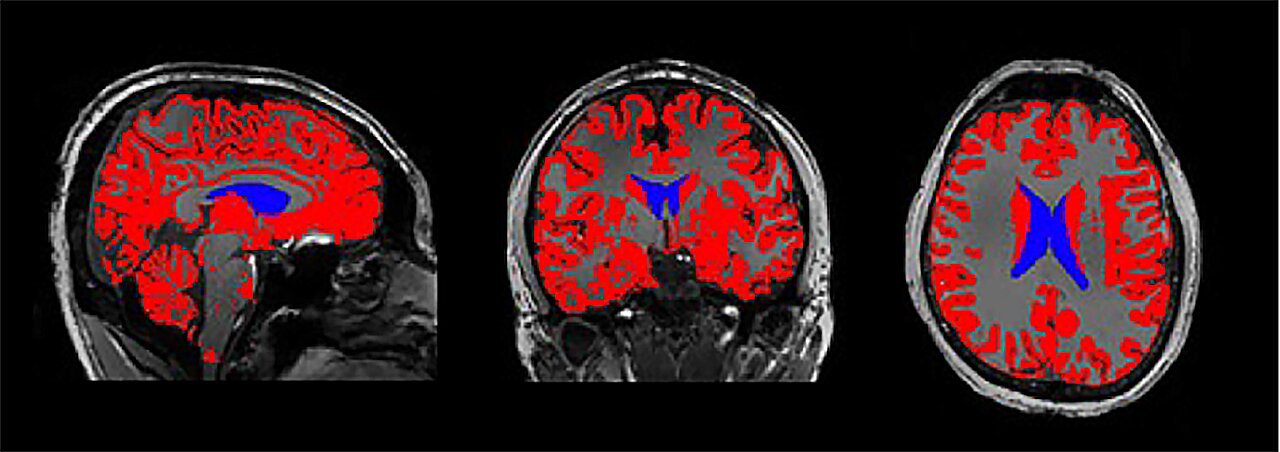

Every night, as we drift into slumber, our brains enter a remarkable state of restoration and renewal. While our bodies may seem still, the brain is alive with hidden rhythms—slow waves pulsing like tides, signals rising and falling in perfect harmony. A new study from the RIKEN Center for Brain Science in Japan has revealed one of the most fascinating aspects of this nightly symphony: a deep link between our slow, dreamless sleep and the flow of cerebrospinal fluid—the clear liquid that bathes and protects the brain.
Led by neuroscientist Masako Tamaki, the research team has discovered how the ebb and flow of this fluid are closely synchronized with brain activity during deep sleep. Their findings, published in the Proceedings of the National Academy of Sciences (PNAS), shed new light on one of biology’s oldest mysteries—why we sleep, and what happens inside the brain when we do.
A Closer Look at Sleep’s Hidden Purpose
For decades, scientists have known that sleep is not just a period of rest. It is vital for learning, memory, emotional stability, and even the brain’s own housekeeping. Throughout the day, our neurons fire constantly, building up molecular “waste” as a natural byproduct of their activity. Sleep seems to act as the brain’s cleaning crew, clearing away this debris and restoring balance.
The cerebrospinal fluid, or CSF, plays a central role in this process. It cushions the brain and spinal cord while also circulating nutrients and removing waste. But exactly how the CSF moves during sleep—and how that movement is linked to brain activity—has remained largely unknown.
Understanding this connection could explain why deep, stable sleep is so essential for normal brain function, especially in areas responsible for learning and memory.
The Challenge of Studying Deep Sleep
Studying sleep inside an MRI scanner poses a significant challenge. The machines are notoriously loud, producing rhythmic clanging and buzzing sounds that make it difficult for participants to fall into—and remain in—deep sleep. For researchers trying to observe how brain fluids behave during this stage, the noise has been a frustrating obstacle.
Tamaki and her team found a clever solution. They developed a technique known as sparse functional MRI (fMRI), which takes images intermittently—about once every three seconds—rather than continuously. The quiet gaps between scans allowed participants to fall into deeper stages of non-REM sleep naturally, while the fMRI and brainwave recordings continued collecting valuable data.
A Window into the Sleeping Brain
As volunteers slept inside the MRI, the researchers monitored two things simultaneously: the flow of cerebrospinal fluid and the slow, rhythmic brain waves characteristic of deep sleep. These slow waves are thought to reflect synchronized bursts of neural activity, when vast networks of neurons briefly turn on and off together.
The results were striking. During deep non-REM sleep, the team observed that slow brain waves triggered frequent, moderate increases in cerebrospinal fluid signals within about eight seconds. These patterns were distinct from what occurred during other stages of sleep.
In light sleep or moments of brief arousal, the fluid signals behaved differently—each slow wave produced a larger but less frequent surge, occurring more slowly. During REM sleep, when we dream, the changes were even subtler, taking nearly thirty seconds and remaining very small in amplitude.
These findings revealed that each sleep stage has its own unique relationship with cerebrospinal fluid flow, suggesting that the brain’s “cleaning cycles” are not uniform but finely tuned to the type of rest we are experiencing.
The Memory Network Awakens in Sleep
Sleep is not just about rest—it’s about reorganization. While we dream and drift, the brain’s memory centers, including the hippocampus and frontal cortex, are surprisingly active. These regions replay and strengthen the day’s experiences, converting fragile short-term memories into stable long-term ones.
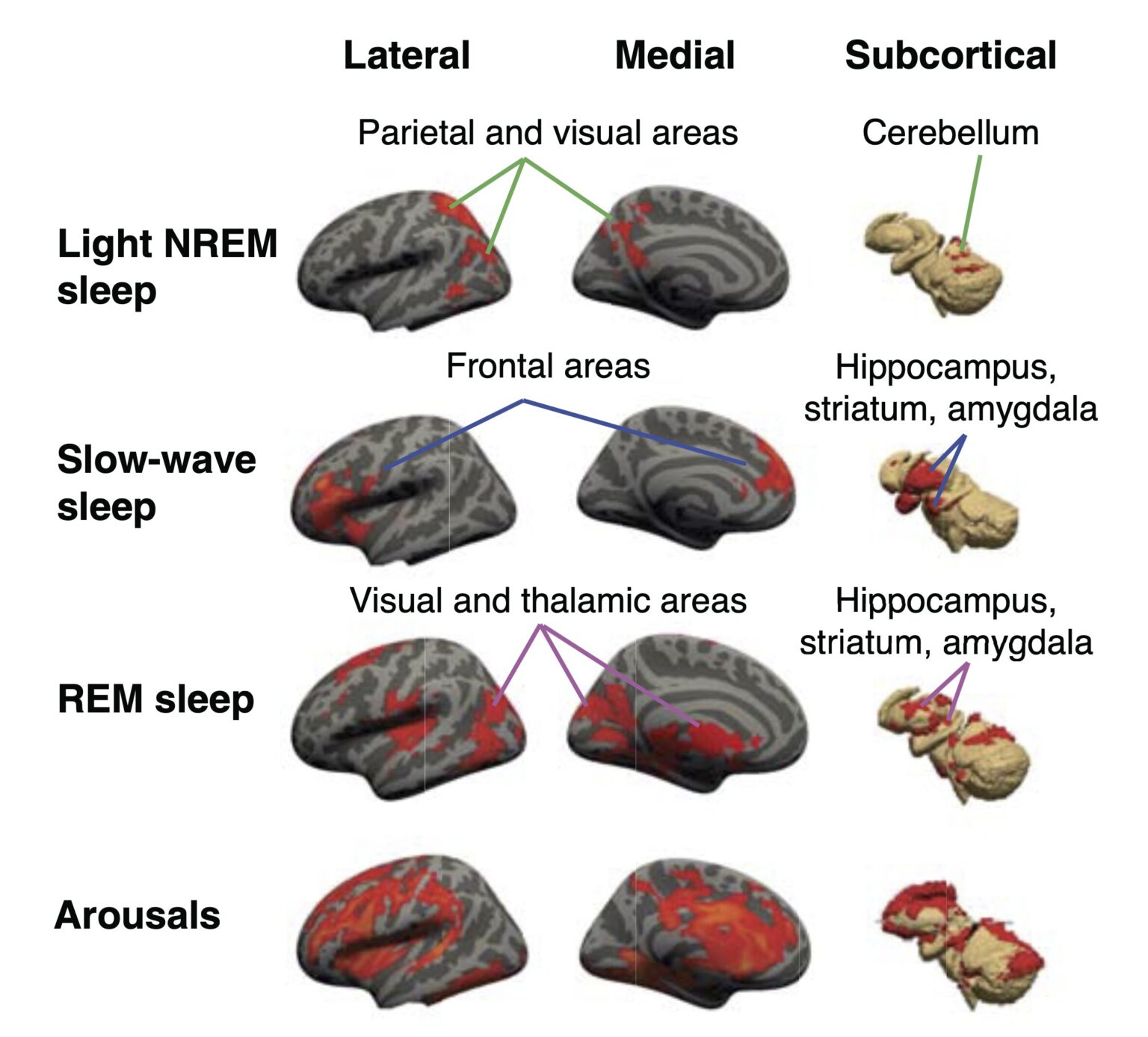
Brain regions recruited during different stages of sleep. Slow-wave sleep induces activity in brain regions involved in learning and memory circuits. Credit: RIKEN
Tamaki’s study found that during deep sleep, when this memory network was most active, the cerebrospinal fluid patterns were especially distinct. The synchronized dance of slow waves and fluid signals seemed to occur only when these learning and memory regions were engaged.
This suggests that the same neural rhythms that consolidate our memories might also coordinate the brain’s cleaning system—clearing away the waste generated by intense mental activity while we are awake.
A Mystery Hidden in the Fluid
Despite these advances, one puzzle remains. The fMRI detects changes based on magnetic properties of hemoglobin in the blood, yet cerebrospinal fluid contains no blood at all. So why does it produce such clear signals?
The researchers suspect that these signals may reflect a complex mix of factors—perhaps small changes in surrounding brain tissues, shifts in pressure or volume, or subtle movements of the fluid as it circulates through the brain’s ventricles. Whatever the exact mechanism, the synchronization between deep sleep waves and CSF flow points to an intricate biological system evolved to keep our brains clean and healthy.
“Our findings indicate that deep sleep affects cerebrospinal fluid signals differently than do light sleep, REM sleep, or arousal,” explains Tamaki. “The rapid, yet moderate increases in the signal might relate to a process that is necessary for removing the particular kinds of waste that tend to accumulate within the learning and memory brain network during the day.”
The Cleansing Rhythm of Rest
What emerges from this research is an image of the sleeping brain not as idle or passive, but as exquisitely active in ways that sustain our mental life. During deep sleep, waves of neural activity wash through memory centers, setting off corresponding pulses in cerebrospinal fluid that may sweep away metabolic waste.
This nightly cleansing could be crucial for preventing neurological decline. Scientists have already linked poor sleep to conditions such as Alzheimer’s disease, where toxic proteins like beta-amyloid accumulate in the brain. If deep sleep helps clear such molecules, maintaining healthy sleep cycles might be one of our most powerful tools for long-term brain health.
The Beauty of the Sleeping Brain
There is something deeply poetic about the idea that, while we sleep, our brains quietly repair and renew themselves. What feels like stillness from the outside is, in truth, a complex ballet of waves, pulses, and flows—a living rhythm that has evolved over millions of years.
Tamaki’s research reminds us that deep sleep is not a luxury but a biological necessity. It is the time when our memories take root, our emotions settle, and our minds are cleansed of the noise of waking life.
- Adenman and new1born
-
 2
2
Recommended Comments
There are no comments to display.
Join the conversation
You can post now and register later. If you have an account, sign in now to post with your account.
Note: Your post will require moderator approval before it will be visible.