

3175x175(CURRENT).thumb.jpg.b05acc060982b36f5891ba728e6d953c.jpg)
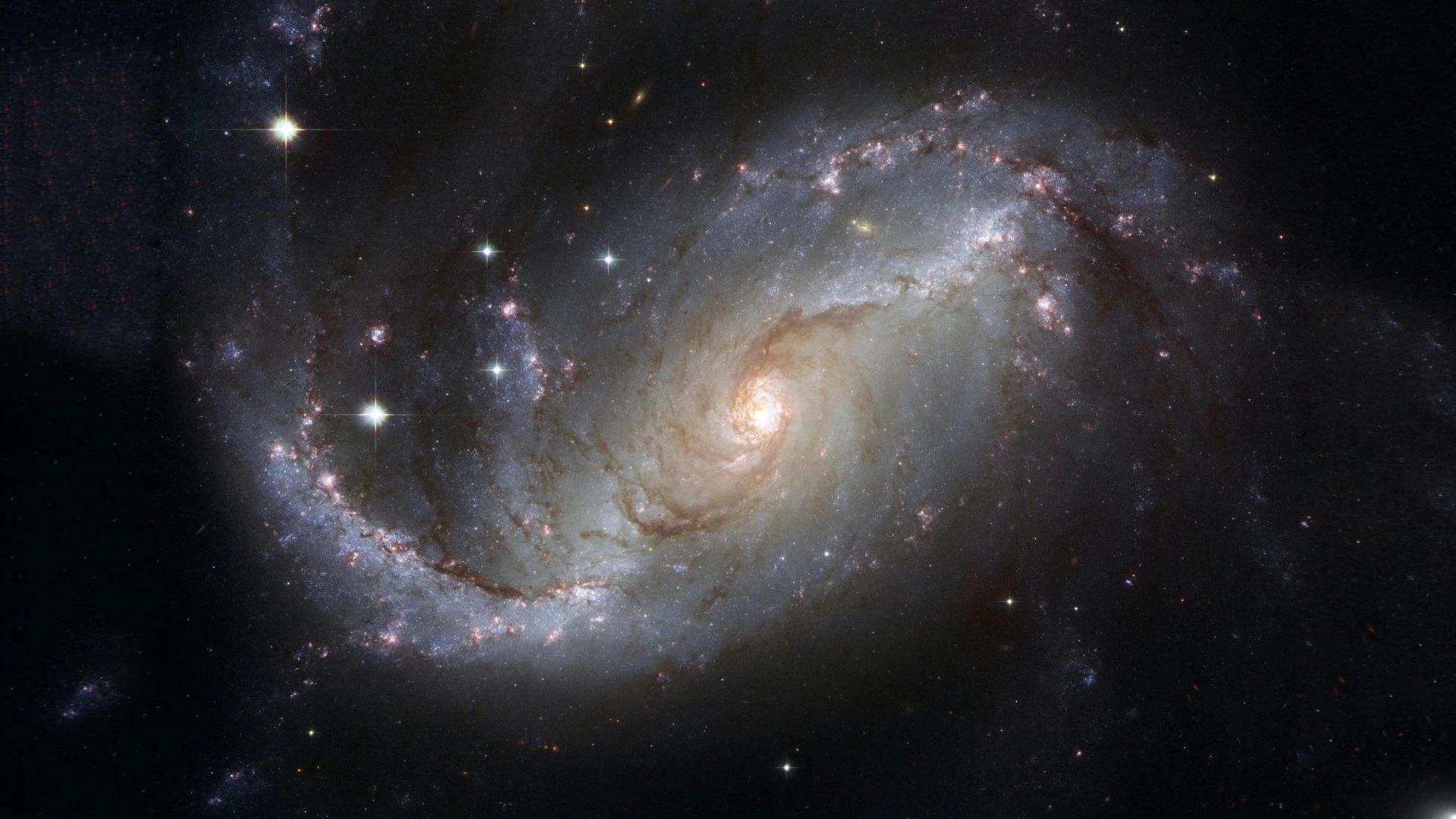
Astronomers studying the early universe have found a surprisingly modern-looking galaxy that was forming stars at an extreme pace over 11 billion years ago when the universe was just 2.6 billion years old. The galaxy, called J0107a, isn’t just massive, it’s about 10 times bigger than the Milky Way, and is creating new stars nearly 300 times faster. What’s unusual is that this galaxy shows no signs of colliding with another galaxy, which is normally how such intense star-forming activity is triggered.
Instead, researchers using the Atacama Large Millimeter/submillimeter Array (ALMA) and the James Webb Space Telescope (JWST) found that J0107a has a structure similar to disk galaxies we see today, with a clear barred spiral shape. This “bar” is a straight feature made of stars and gas cutting across the galaxy’s center, and it plays a major role in pushing gas inward. That inflow is a key driver of star formation, and possibly also feeds the central supermassive black hole.
Bars like this are common in local galaxies, around half of them have one, and they’re thought to be long-lasting. But they’ve rarely been spotted this far back in time because distant galaxies are hard to study in detail. In this case, scientists used ALMA (a powerful radio telescope array in Chile) to study how gas moves through the galaxy by observing emissions from carbon monoxide and atomic carbon.
Their data showed that the gas inside J0107a’s bar moves and spreads in a way very similar to bars found in nearby galaxies. But one major difference is in the amount of gas. In modern galaxies, the bar holds less than 10% of the galaxy’s total mass in gas. In J0107a, it’s about 50%, and this heavy load of material seems to be fueling an intense flow of gas toward the center—about 600 solar masses every year. That’s what’s powering the huge burst of star formation.
The bar also creates strong non-circular motions that overpower the normal spinning of the galaxy’s disk. This isn’t something older galaxy models predicted. The gas flow stretches across about 20,000 light-years, roughly the distance from the center of the Milky Way to Earth.
According to Shuo Huang, the lead researcher, “The substantial amount of gas required for the growth of giant galaxies is supplied by galactic mergers or inflows from the cosmic web. While no sign of a galactic merger exists, a large gas disk has been detected around J0107a... Based on this, we assume it was created from a large amount of gas flow (called cold streams) spiraling toward the galaxy from the cosmic web.”
This finding changes how scientists think massive galaxies evolved in the early universe. Instead of forming only through violent collisions, it looks like smooth, large-scale gas flows from space itself can build disk-shaped galaxies and trigger bar formation. These bars then stir up the galaxy and push gas into the center, igniting rapid star birth. And that was already happening 11 billion years ago.
This article was generated with some help from AI and reviewed by an editor. Under Section 107 of the Copyright Act 1976, this material is used for the purpose of news reporting. Fair use is a use permitted by copyright statute that might otherwise be infringing.
Hope you enjoyed this news post.
Posted Monday 28 July 2025 at 12:34 pm AEST (my time).
News posts... 2023: 5,800+ | 2024: 5,700+ | 2025 (till end of June): 2,864
RIP Matrix | Farewell my friend
- Mutton
-
 1
1
Recommended Comments
There are no comments to display.
Join the conversation
You can post now and register later. If you have an account, sign in now to post with your account.
Note: Your post will require moderator approval before it will be visible.