

3175x175(CURRENT).thumb.jpg.b05acc060982b36f5891ba728e6d953c.jpg)
Imagine being able to listen to your favorite song or podcast out loud without disturbing anyone nearby even without wearing headphones. That’s what a team at Penn State University has been working on. Led by acoustics professor Yun Jing, they’ve come up with a clever way to create invisible audio zones called “audible enclaves” where sound can be heard only at one exact spot.
They use ultrasound, which is normally inaudible to people, along with something called acoustic metasurfaces—tiny lenses that can bend sound in specific directions. By combining two ultrasound beams that travel in curved paths and meet at a single point, they’re able to make sound audible only at that intersection. As Jing explained, “The person standing at that point can hear sound, while anyone standing nearby would not. This creates a privacy barrier between people for private listening.”
To make this happen, the system includes two ultrasonic speakers and the metasurface lenses, which were 3D printed by Xiaoxing Xia from Lawrence Livermore National Lab. Each beam has a slightly different frequency, and when they meet, a local reaction makes the sound audible. Neither beam is loud on its own—the sound only forms at that shared point.
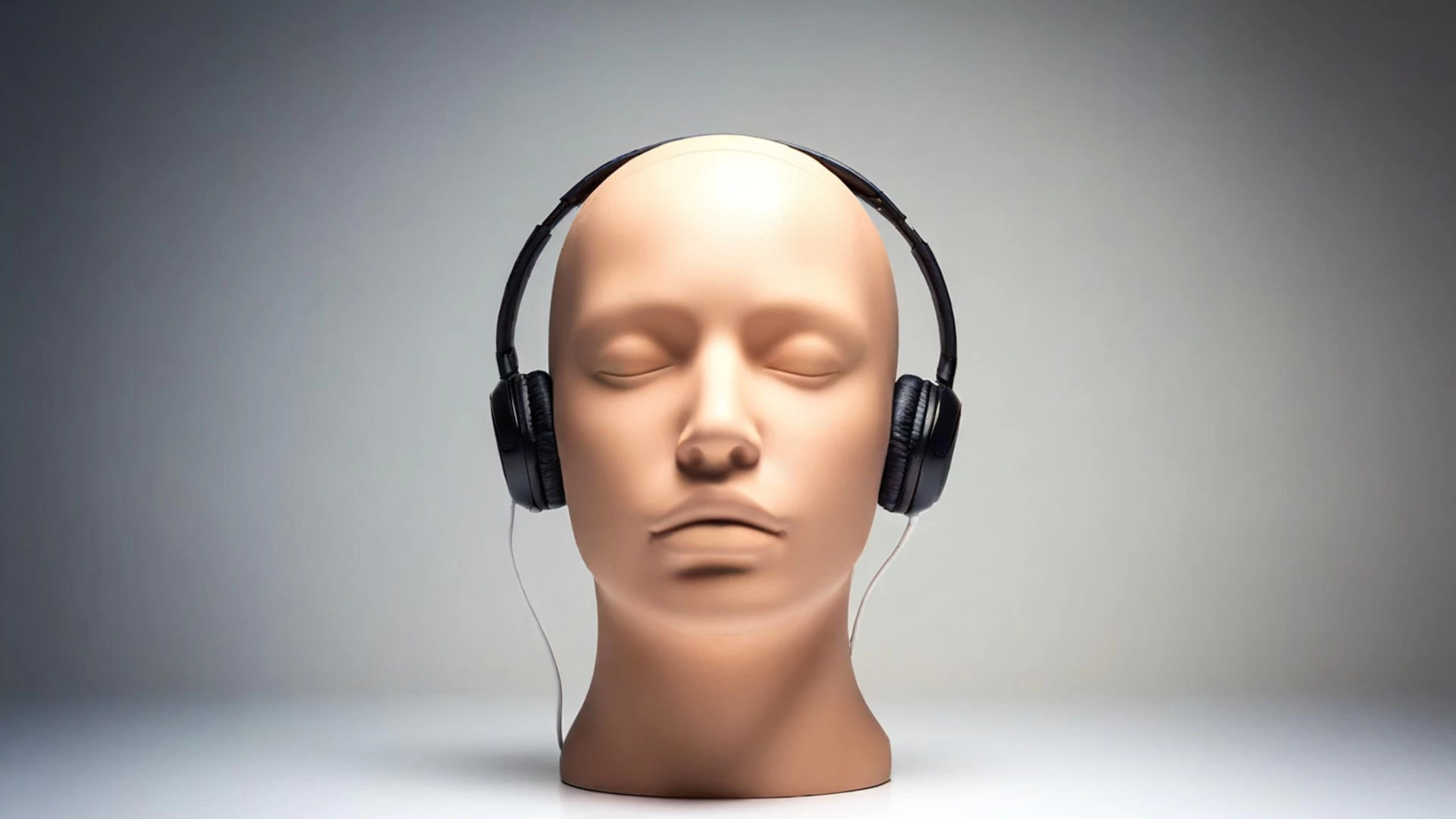
Jia-Xin “Jay” Zhong, one of the researchers, shared how they tested the idea: “We used a simulated head and torso dummy with microphones inside its ears to mimic what a human being hears at points along the ultrasonic beam trajectory, as well as a third microphone to scan the area of intersection. We confirmed that sound was not audible except at the point of intersection, which creates what we call an enclave.”
One of the biggest advantages of their approach is that it works across a wide range of sound frequencies—between 125 Hz and 4 kHz, which covers most of what people can hears. Even in rooms where sound usually bounces around, their system held up well. And it’s surprisingly compact too: the whole setup measures about 16 centimeters, roughly the size of a pencil case.
“We essentially created a virtual headset,” Zhong said. In practice, it means that someone standing in the audible enclave can hear what’s being played clearly, while everyone else around hears nothing at all. That could be especially useful in shared spaces like cars, classrooms, or open offices.
Right now, the sound can travel about one meter and hits around 60 decibels which is similar to regular talking volume. The team believes they can push those limits further by using stronger ultrasound.
All this might seem futuristic, but it’s grounded in solving a basic problem: how to direct sound only where it’s needed. If you’re into tech and sound design, this could open up a whole new world of personalized audio experiences.
Source: Penn State, PNAS | Image via Depositphotos
This article was generated with some help from AI and reviewed by an editor. Under Section 107 of the Copyright Act 1976, this material is used for the purpose of news reporting. Fair use is a use permitted by copyright statute that might otherwise be infringing.
Hope you enjoyed this news post.
Posted Sunday 20 July 2025 at 4:27 pm AEST (my time).
News posts... 2023: 5,800+ | 2024: 5,700+ | 2025 (till end of June): 2,864
RIP Matrix | Farewell my friend
- Mutton and lurch234
-
 2
2
Recommended Comments
Join the conversation
You can post now and register later. If you have an account, sign in now to post with your account.
Note: Your post will require moderator approval before it will be visible.