

3175x175(CURRENT).thumb.jpg.b05acc060982b36f5891ba728e6d953c.jpg)
CT scans hint at hybridization, but it will take extracting and analyzing a DNA sample to be certain.
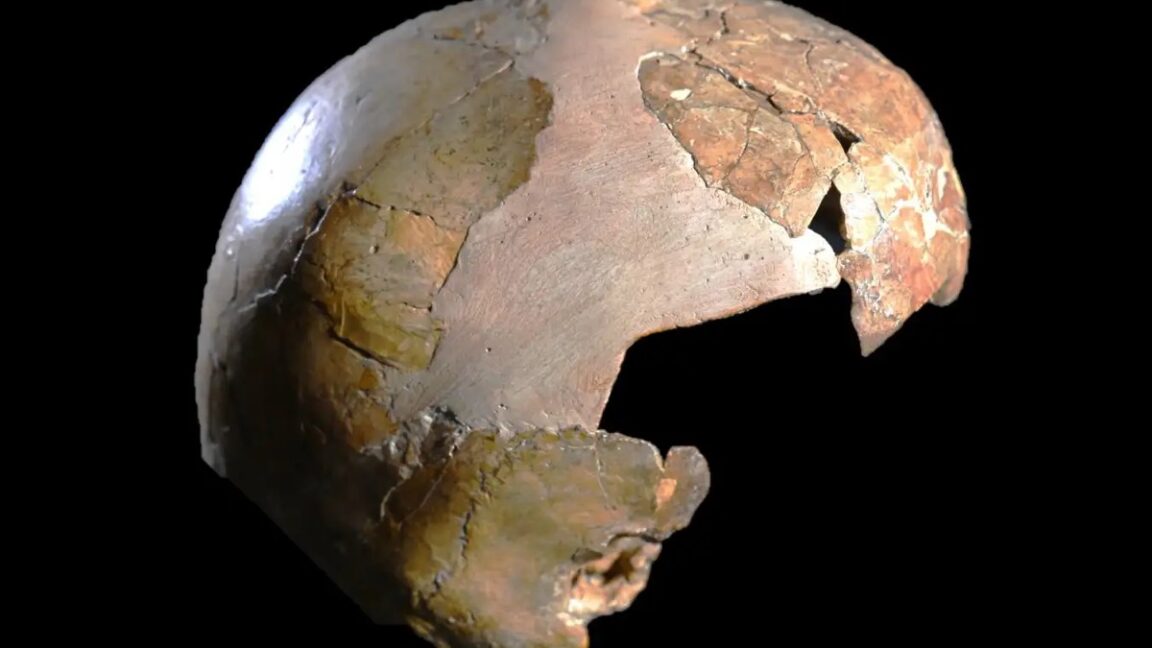
Back in 1929, archaeologists unearthed several human skeletons (seven adults and three children) while excavating Skuhl Cave just south of Haifa, Israel. Dating back 140,000 years to the end of the Middle Pleistocene, most were classified as early Homo sapiens. But one skeleton was that of a child, between the age of 3 and 5 years old whose features seemed to show a mix of early human and Neanderthal characteristics. A new analysis involving CT scanning may resolve the long-standing debate, according to a new paper published in the journal L’Anthropologie.
Neanderthals and Homo sapiens traded genes frequently during the period when their populations overlapped. "The two came in contact as modern humans began their major expansion out of Africa, which occurred roughly 60,000 years ago," Ars Science Editor John Timmer previously reported. "Humans picked up some Neanderthal DNA through interbreeding, while the Neanderthal population, always fairly small, was swept away by the waves of new arrivals."
Nor is this the first case of a possible hybrid hominid species. In 2018, scientists analyzed a sliver of bone excavated from a cave site in Russia. The findings made global headlines when the team concluded that the individual to whom it belonged—a young girl of about 13, dubbed "Denny"—was the offspring of a Neanderthal mother and a Denisovan father. This suggested that rather than dying out, Neanderthals may have been absorbed by other species; such inbreeding may have been more common than previously thought.
The authors of this latest paper focused on the neurocranium of the Skuhl Cave child's skeleton for their study, as well as the mandible and teeth, since these showed the unusual mix of features that gave rise to the debate in the first place. The full skeleton is largely complete, with the left side better preserved, since that's how the body was buried.
The mandible had been separated from the skeleton, and both it and the neurocranium are incomplete, so they were reconstructed and consolidated with plaster. CT scanning made it possible to check that older reconstructive work to ensure it had not masked any elements that may have influenced the taxonomic classification, per the authors. The team also scanned the skulls of three Homo neanderthalensis skulls in the collection of the Musee de l'Homme in Paris and compared those skull characteristics with the Skuhl Cave skull and mandible.
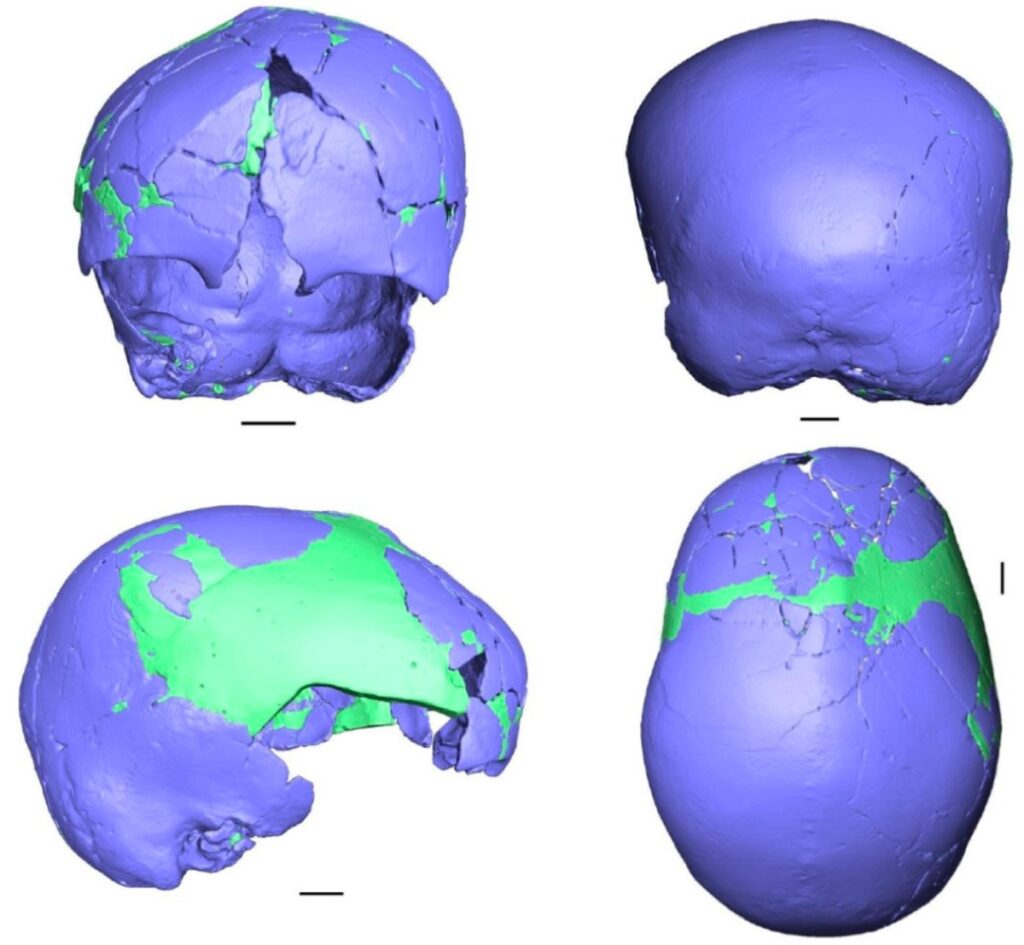
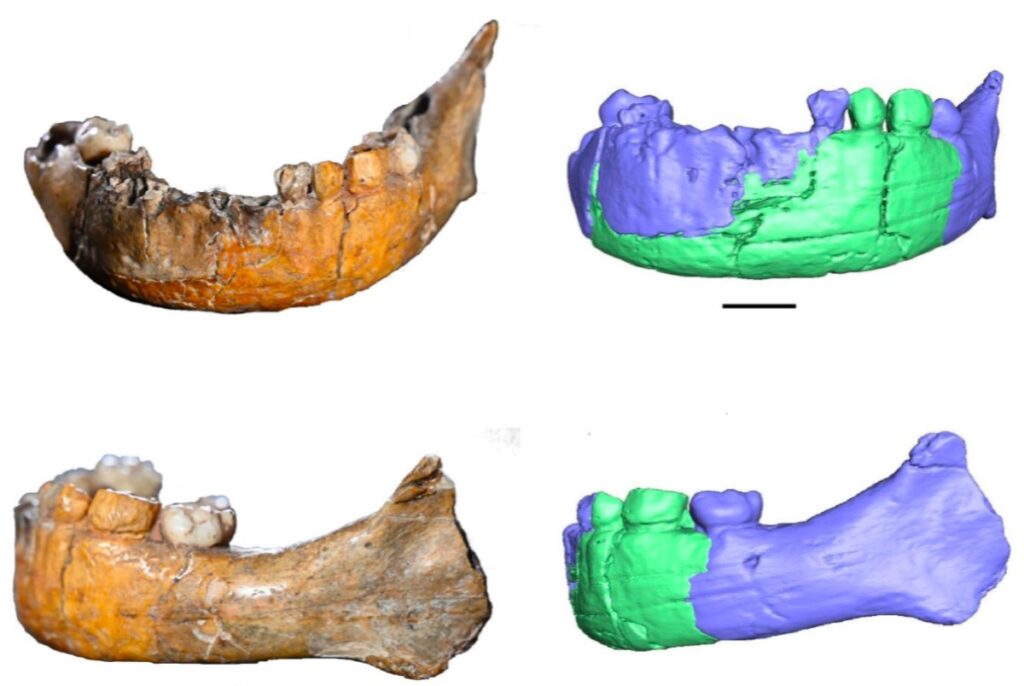
They concluded that the neurocranium's parietal and temporal bones, and the shape of the bony labyrinth, were consistent with Homo sapiens. However, other features, like the receded and high location of the posterior rim of the foramen magnum, indicated a possible Neanderthal lineage. And the mandible showed distinct Neanderthal characteristics, leading to the determination that the child was a hybrid of the two species.
Co-author Anne Dambricourt Malassé of the Institute of Human Paleontology in Paris admitted that she once thought such a hybridization would not have been viable; the results of their analysis demonstrate that it is possible, although the child in question died very young. These findings may also prompt a revisiting of the longstanding assumption that Skuhl Cave was a Homo sapiens gravesite.
“This study is maybe the first that has put the Skhul child’s remains on a scientific basis,” John Hawks of the University of Wisconsin-Madison, who wasn’t involved with the study, told New Scientist. “The old reconstruction and associated work, literally set in plaster, did not really enable anyone to compare this child with a broader array of recent children to understand its biology.” That said, he cautioned that without extracting and analyzing a DNA sample, one can't make a definitive determination: "Human populations are variable and there can be a lot of variability in their appearance and physical form even without mixing with ancient groups like Neanderthals."
L’Anthropologie, 2025. DOI: 10.1016/j.anthro.2025.103385 (About DOIs).
Hope you enjoyed this news post.
Thank you for appreciating my time and effort posting news every day for many years.
News posts... 2023: 5,800+ | 2024: 5,700+ | 2025 (till end of June): 2,864
RIP Matrix | Farewell my friend
- karman
-
 1
1
Recommended Comments
There are no comments to display.
Join the conversation
You can post now and register later. If you have an account, sign in now to post with your account.
Note: Your post will require moderator approval before it will be visible.