

3175x175(CURRENT).thumb.jpg.b05acc060982b36f5891ba728e6d953c.jpg)
Study finds human vision has detail limits; beyond certain resolutions, extra display pixels offer no noticeable visual improvement.
Researchers from the University of Cambridge and Meta Reality Labs have found that there is a limit to how much detail the human eye can detect on a display, suggesting that higher screen resolutions do not always produce a noticeable improvement in image quality.
The findings, published in the journal Nature Communications, come as manufacturers continue to introduce higher-resolution displays for televisions, smartphones, computers, cars, and augmented reality (AR) and virtual reality (VR) devices. AR overlays digital content onto the real world, while VR creates a fully digital environment. The researchers said knowing the point at which extra pixels stop making a visible difference could help companies build displays that are more efficient and avoid unnecessary processing power and costs.
The study examined what is often called "retinal resolution," which is the highest resolution at which an image appears completely sharp without any noticeable blur. Although the term refers to the retina, the light-sensitive layer at the back of the eye, the researchers noted that the limit may not be caused by the retina alone. Instead, it depends on how the entire visual system, including the brain, processes what we see.
To measure this limit, the team built a special setup with a sliding display that allowed them to continuously change the viewing distance and control the effective resolution seen by participants. They said this approach overcame a key limitation of earlier studies, which could not adjust resolution so precisely.
Instead of looking only at the number of pixels on a screen, the researchers measured pixels per degree (PPD), which shows how many screen pixels fit within one degree of a person's field of vision. Unlike standard screen resolution, PPD also takes viewing distance into account, making it a more practical way to judge how sharp a display actually appears from where someone is sitting.
Participants were shown very fine patterns in greyscale and colour and asked whether they could distinguish the lines. The researchers tested both central vision, known as foveal vision, and peripheral vision at different viewing distances. Foveal vision comes from the small central part of the retina and is responsible for seeing fine details, while peripheral vision covers the outer areas of the visual field and is better at detecting movement than small details. The study also compared achromatic (black-and-white) patterns with chromatic (red-green and yellow-violet) patterns to understand how colour affects the eye's ability to resolve detail.
The results showed that the eye can detect more detail than the widely accepted limit of 60 PPD, which is based on the traditional 20/20 vision standard measured using the Snellen eye chart. This eye test, first introduced in the 19th century, measures visual acuity, or the ability to distinguish fine details under standard conditions.
For greyscale images viewed with central vision, participants reached an average resolution limit of 94 PPD. The limit was 89 PPD for red-green patterns and 53 PPD for yellow-violet patterns. The findings also showed that people are much less able to detect very fine detail in colour than in black-and-white images, particularly outside the centre of their vision.
"Our brain doesn’t actually have the capacity to sense details in colour very well, which is why we saw a big drop-off for colour images, especially when viewed in peripheral vision," said Professor Rafał Mantiuk from Cambridge's Department of Computer Science and Technology. "Our eyes are essentially sensors that aren’t all that great, but our brain processes that data into what it thinks we should be seeing."
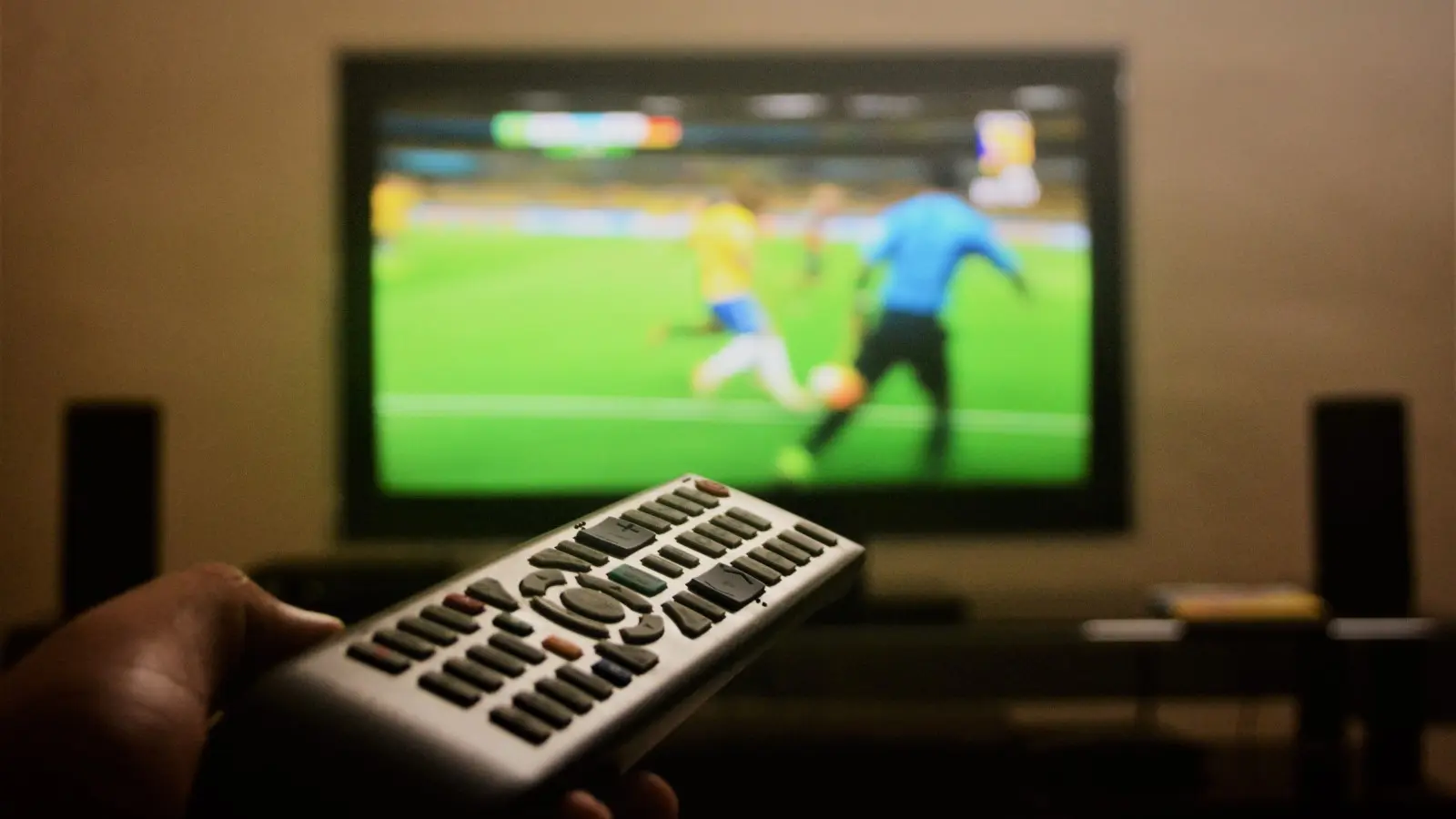
The researchers said the practical benefit of higher display resolutions depends on several factors, including screen size, viewing distance and room lighting. For example, in an average UK living room, where a viewer sits about 2.5 metres from the television, a 44-inch 4K or 8K TV would not provide a noticeable improvement over a Quad HD (QHD) TV of the same size because the extra pixels would be beyond what the eye can detect at that distance.
"As large engineering efforts go towards improving the resolution of mobile, AR and VR displays, it’s important to know the maximum resolution at which further improvements bring no noticeable benefit," said lead author Dr Maliha Ashraf. "But there have been no studies that actually measure what it is that the human eye can see, and what the limitations of its perception are."
The team also modelled how the resolution limit varies across the population, allowing manufacturers to design displays that achieve retinal resolution for most users rather than only an average observer. Based on this work, they developed a free online calculator that estimates the most suitable display resolution using a room's dimensions, viewing distance and screen size. The tool can help people compare the display they own with one they are considering buying.
The researchers said the findings could also influence technologies beyond televisions. Display manufacturers could use the results to avoid adding pixels that users cannot see, reducing the computing power needed to drive screens. The benchmarks may also help improve rendering, the process of generating digital images from computer data, and video coding, which compresses video so it can be stored or streamed efficiently while maintaining image quality.
"Our results set the north star for display development, with implications for future imaging, rendering and video coding technologies," said co-author Dr Alex Chapiro from Meta Reality Labs.
Source: University of Cambridge, Nature
This article was generated with some help from AI and reviewed by an editor. Under Section 107 of the Copyright Act 1976, this material is used for the purpose of news reporting. Fair use is a use permitted by copyright statute that might otherwise be infringing.
Hope you enjoyed this news post. Feedback welcome.
Posted Thursday 9 July 2026 at 12:11 pm AEST (my time).
News posts: 2023 5,800+ | 2024 5,700+ | 2025 5,700+ | 2026 (to end of June) 2,475
- Matt
-
 1
1
Recommended Comments
There are no comments to display.
Join the conversation
You can post now and register later. If you have an account, sign in now to post with your account.
Note: Your post will require moderator approval before it will be visible.