

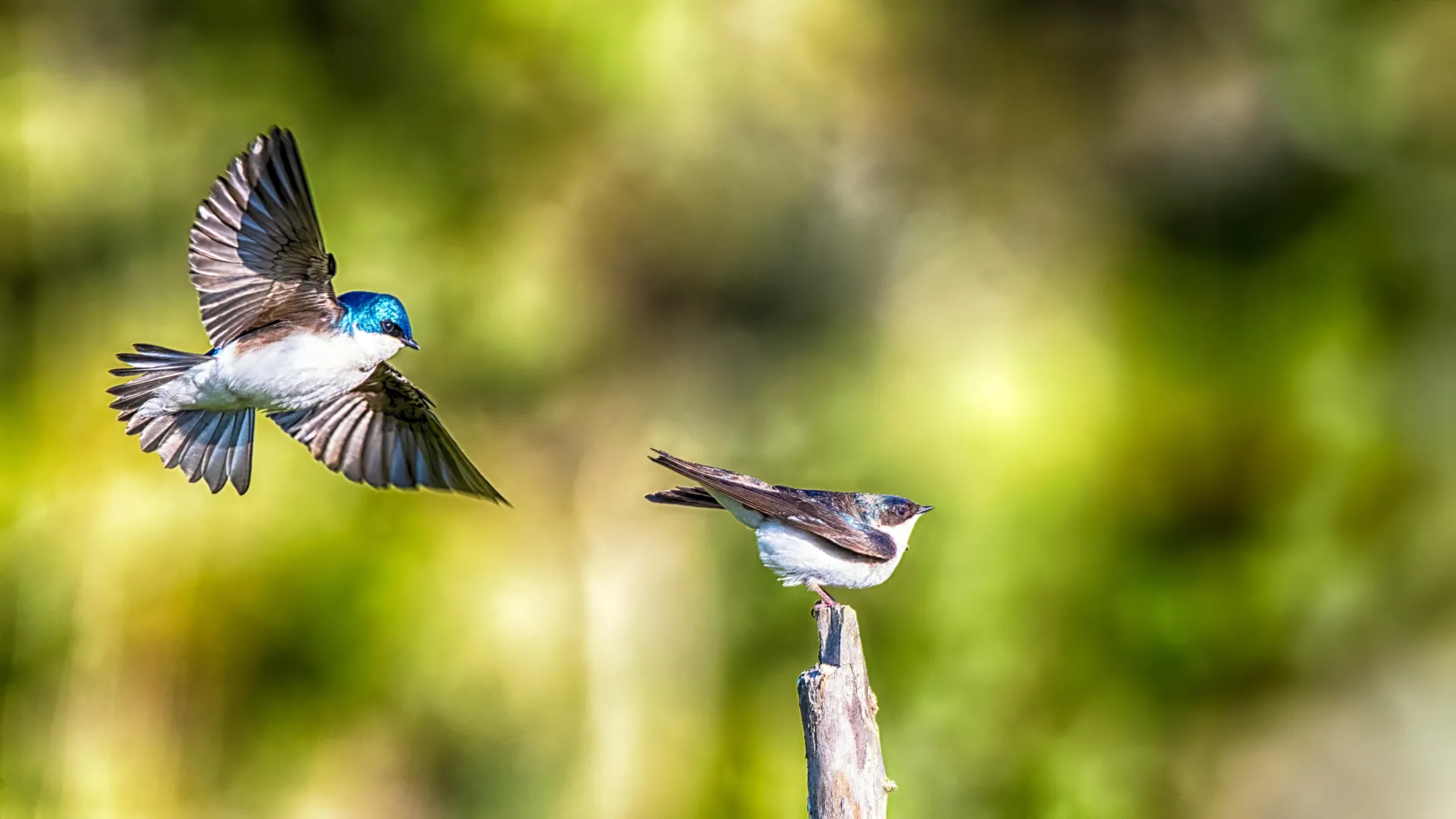

Summary: Tree swallows in polluted U.S. regions are accumulating high levels of “forever chemicals.” These durable pollutants, used in firefighting foams and consumer products, are found everywhere from soil to human blood. Surprisingly, researchers observed no significant impact on the birds’ reproduction, suggesting possible resilience in wild populations.
A new paper in Environmental Toxicology and Chemistry, published by Oxford University Press, indicates high levels of exposure to "forever" chemicals in the environments of many tree swallow bird groups in the United States. Despite this, chemical exposure did not seem to affect the reproductive health of the birds.
Manufactured materials made of per- and polyfluoroalkyl substances, often referred to as "forever chemicals," are a worldwide environmental contaminant. These chemicals come into ecosystems through manufacturing plant discharges or areas where workers use such chemicals to suppress fires. They can also come from wastewater treatment plants that emit reside from common consumer products, including stain-resistant fabrics, nonstick cookware and utensils, and food packaging.
These chemicals are extremely durable and resistant to environmental breakdown. Researchers have found forever chemicals in soil, water, plants, animals, and humans across all continents. While researchers have linked forever chemicals to serious health issues, including various cancers and reproductive problems, their ecological effects remain poorly understood. While numerous laboratory researchers have investigated chemical exposure levels in various animals, scientists are less clear on the impact of these chemicals on wild populations. Field studies, which could fill this gap, are rare because they require considerable time and financial resources.
Researchers here examined chemical levels in the tissues and diet of tree swallows, a migratory bird native to North America, at sites with differing contamination histories. They also assessed how exposure affected the birds' reproductive success.
The researchers investigated tree swallow health at various military bases at sites including Willow Grove, Pennsylvania; Lakehurst, New Jersey; Camp Springs, Maryland; Chesapeake Beach, Maryland; Laurel, Maryland; Ashumet Pond, Massachusetts; Lake Elmo, Minnesota; Grey Cloud Island, Minnesota; Gibson City, Illinois; and Scanlon, Minnesota.
The researchers found much higher concentrations of forever chemicals at sites treated with firefighting foams, as well as those closer to urban areas. Researchers noted the high concentration of forever chemical perfluorohexane sulfonate at a site whose sources include residual from the manufacturing plant near Cottage Grove, Minnesota, and associated waste disposal sites, but also from other numerous other household and industrial sources originating in the Minneapolis/St. Paul metropolitan area.
The investigators found that despite differences in exposure levels to these chemicals, there was no statistically significant association between chemical exposure and reproductive outcomes such as whether birds hatched or grew to the point where they could take flight. The health of the bird chicks appeared unaffected by levels of chemical exposure.
- Adenman
-
 1
1
Recommended Comments
There are no comments to display.
Join the conversation
You can post now and register later. If you have an account, sign in now to post with your account.
Note: Your post will require moderator approval before it will be visible.